
Solar power in Ecuador as of September 2026
A practical guide to solar installation prices, batteries, grid connections, regional conditions and government support in Ecuador, with information current as of September 2026.
Read explainer →News, weather and events
Ecuador reference library
Background guides to Ecuador’s politics, economy, history, environment and everyday life.
Evergreen context for understanding the people, institutions and issues behind the news.
Economy & Business
22 articles
A practical guide to solar installation prices, batteries, grid connections, regional conditions and government support in Ecuador, with information current as of September 2026.
Read explainer →Caso Progen is a major Ecuador public-contracting scandal involving emergency electricity contracts signed during the 2024 power crisis.
Read explainer →The SUCRE was not the old Ecuadorian sucre currency. It was the Sistema Unitario de Compensación Regional de Pagos — a regional payment-clearing system created within the ALBA-TCP bloc to settle trade among member countries without using U.S. dollars directly in every transaction. Ecuador joined during the government of Rafael Correa, when regional integration with countries such as Venezuela, Bolivia, Cuba, and Nic…
Read explainer →Think of Country Risk (often called "Sovereign Risk") as a credit score for an entire nation. Just as a bank checks your credit score to decide if they should lend you money for a car—and at what interest rate—global investors use this number to judge how likely a country is to pay back its debts. In Ecuador, you will often hear this number referred to in "points" or "basis points." Here is a breakdown of what that…
Read explainer →The Coca Codo Sinclair (CCS) hydroelectric plant, built by the Chinese firm Sinohydro, is Ecuador's largest infrastructure project and arguably its most controversial. As of April 2026, the project has reached a critical legal and technical crossroads. 🏗️ The Infrastructure at a Glance Located between the Napo and Sucumbíos provinces, the dam was designed to generate 1,500 MW, theoretically covering 30% of Ecuador's…
Read explainer →The recent difficulty in using foreign bank cards (US, European, etc.) at Cooperative ATMs (like JEP, Pilahuin Tío, or Alianza del Valle) is not a random technical glitch. It is the result of a significant regulatory overhaul that reached a critical implementation phase on March 1, 2026. 1. The "Tax Wall": SRI Resolution No. NAC-DGERCGC26-00000009 The most immediate cause is a new tax directive from the Internal Rev…
Read explainer →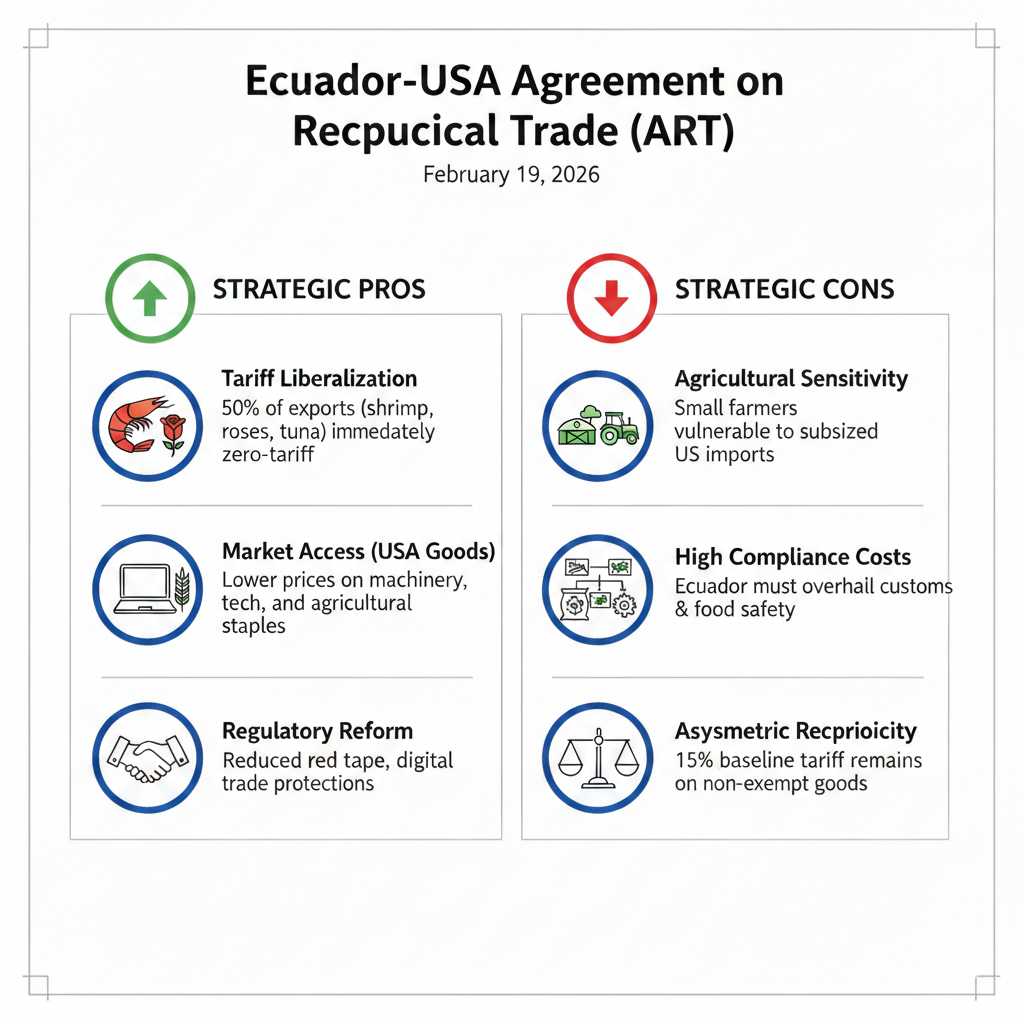
As of February 19, 2026, the United States and Ecuador have substantially concluded negotiations for the Agreement on Reciprocal Trade (ART). This bilateral pact marks a transition from unilateral trade preferences to a formalized, two-way market access framework. The following is an informative summary of the agreement's primary provisions and the associated economic trade-offs. 📈 Strategic Pros (Benefits) 1. Tarif…
Read explainer →If oil is the traditional engine of the Ecuadorian economy, shrimp is its modern heartbeat. As of 2026, Ecuador has solidified its position as the world’s largest shrimp exporter, outperforming massive competitors like India and Vietnam. For the average resident or investor, the shrimp industry isn't just about what's on the dinner plate—it is a $9 billion-a-year juggernaut that dictates everything from national sec…
Read explainer →If you’ve noticed the headlines this week, the relationship between Ecuador and its northern neighbor, Colombia, has suddenly hit a freezing point. What started as a dispute over border security has rapidly escalated into a full-blown "tit-for-tat" trade war involving 30% tariffs, energy blackouts, and oil threats. Here is the deep dive into why this is happening, where the "battle lines" are drawn today, and what t…
Read explainer →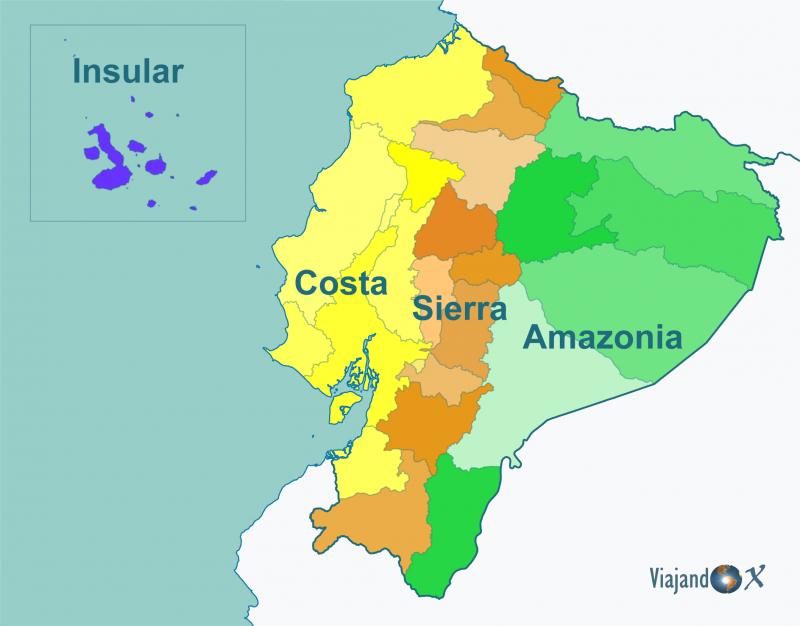
People in Ecuador often talk like there are three countries inside one: the Coast (Costa), the Highlands (Sierra), and the Amazon (Oriente/Amazonía). That shorthand is real and useful—because the Andes act like a giant spine that shapes climate, travel, jobs, food, and even political priorities. Britannica describes Ecuador’s mainland as divided into these three main physical regions: Costa, Sierra, Oriente. (Encycl…
Read explainer →Explainer: Ecuador’s “Triple A” case (ongoing) First, a quick clarification because the name causes constant confusion: the “Caso Triple A” (fuel case) is not the “Plan Triple AAA” drinking-water project in Portoviejo. They’re unrelated topics that happen to share a similar nickname. (Fiscalía General del Estado) ENGLISH What is it? The “Caso Triple A” is a criminal case led by Fiscalía General del Estado investigat…
Read explainer →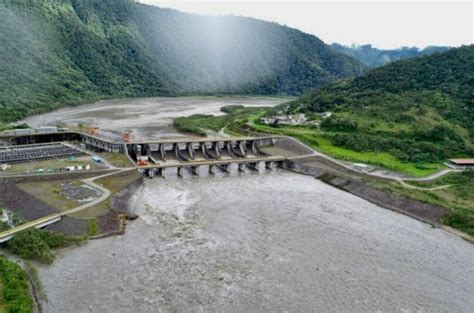
Ecuador’s Sistema Nacional Interconectado (SNI) leans heavily on hydroelectricity—at times covering around 90% of national demand (per CENACE figures cited by Lupa). (LupaMedia) Where the big hydropower plants are (high-level “map”) Think of Ecuador’s hydropower as clusters along major river basins: Amazon/Andes (north-east): Coca Codo Sinclair (the country’s largest) is located between Napo and Sucumbíos and has 1,…
Read explainer →Here’s an Explainer on the Sinohydro bribery case in Ecuador — neutral, friendly, and up to date as of 10 December 2025. This is an ongoing case: no one has been convicted in this specific process yet, and all accused are presumed innocent. 1. What is Sinohydro and what is Coca Codo Sinclair? Sinohydro is a large Chinese state-owned construction company, active around the world in hydroelectric dams and other big in…
Read explainer →1. How Ecuador ended up dollarized In the late 1990s Ecuador went through a devastating crisis: Banks failed, deposits were frozen, and many people lost part or all of their savings. Inflation shot up and the sucre collapsed in value: it lost around two-thirds of its dollar value in 1999, and then another quarter in just the first week of 2000. Poverty and unemployment surged, with especially harsh impacts in rural…
Read explainer →Here we go—Ecuador & oil, big-picture explainer. 1. Why oil still matters so much to Ecuador Oil is still one of the pillars of Ecuador’s economy, even if its relative weight is slowly shrinking. In 2023, crude petroleum was Ecuador’s single biggest export, worth about US$13.1 billion. At the same time, Ecuador spent about US$4.2 billion importing refined fuels (gasoline, diesel, etc.), because its refineries cannot…
Read explainer →[ratemypost] [ratemypost-result] (Article created by ChatGPT / Artículo creado por ChatGPT) 1. What this article does (and doesn’t) do 1. Qué hace (y qué no hace) este artículo EN:Ecuador doesn’t publish a perfect, regularly updated ranking of cities by GDP, so any list has to be approximate. In this explainer, created by ChatGPT from official census data and economic studies, we look at population (2022 census) plu…
Read explainer →An explainer on Ecuador’s place in the world and how it deals with its main partners. 1. Big picture: a small country in a busy neighborhood Ecuador is a small, dollarized country on the Pacific, squeezed between Colombia and Peru and highly dependent on trade, migration and security cooperation with others.
Series: Ecuador-politics · Part 1
Read explainer →Here’s your explainer on mining in Ecuador, with Dundee / Loma Larga folded in. 1. Big picture: where mining fits in Ecuador’s economy Ecuador has large deposits of copper, gold and silver, similar in potential to Peru and Chile, but it is still a latecomer to large-scale mining. For decades, the extractive sector was basically oil + small-scale gold mining. Now metals are growing: Mining exports were a bit over USD…
Read explainer →Explainer – How the Illegal Drug Trade Is Affecting Ecuador’s Economy Over the last decade, Ecuador has gone from being a quiet neighbor between Colombia and Peru to being described as a key hub of the global cocaine trade. Weak institutions, a dollarized economy, modern ports, and a free-trade link with Europe have made it attractive for foreign cartels and local gangs. (Crisis Group) The economic impact is two-sid…
Read explainer →Over the last decade, Ecuador has gone from being a quiet neighbor between Colombia and Peru to being described as a key hub of the global cocaine trade. Weak institutions, a dollarized economy, modern ports, and a free-trade link with Europe have made it attractive for foreign cartels and local gangs.
Series: Economy of Ecuador · Part 2
Read explainer →Ecuador’s Real Economy: Value and Cost of Its Key Sectors When people talk about Ecuador’s economy, they usually mention oil first. That makes sense: oil exports and oil-related revenues still play a big role in public finances.
Series: Economy of Ecuador · Part 1
Read explainer →The Asamblea Nacional is Ecuador’s single national parliament – it’s unicameral, meaning there’s just one chamber, not two like in some countries. Right now it has 151 members (asambleístas), elected for four years. They come from three kinds of districts: 15 national members (elected by the whole country), 130 provincial/district members (elected in each province and big metro area according to population), 6 repre…
Read explainer →