Ecuador reference library

Explainers

Background guides to Ecuador’s politics, economy, history, environment and everyday life.

← All resources

Evergreen context for understanding the people, institutions and issues behind the news.

Clear

History & Culture

Browse explainers

39 articles

History & Culture

The Virgen de EL Cisne

The Virgen de El Cisne is a centuries-old Marian image kept in a rural sanctuary near Loja. Every August, devotees carry her approximately 70–75 kilometres to the city, where she remains until around November 1. The pilgrimage began as a rural religious devotion, was linked by Simón Bolívar’s 1829 decree to the Feria de Loja, and today serves simultaneously as an act of faith, a major economic and civic event, a connection to Loja’s rural heritage and a symbol of home for Lojanos living around the world.

Read explainer →

Why was Portoviejo Founded?

Portoviejo holds a prestigious spot in history as one of the oldest Spanish-founded cities in present-day Ecuador. Founded on March 12, 1535, it wasn't just a random settlement—it was a calculated move by the Spanish Empire to secure the coast. Why was Portoviejo Founded? The founding of San Gregorio de Portoviejo by Captain Francisco Pacheco was driven by three main goals: Strategic Control: The Spanish needed a ba…

Read explainer →
History & Culture

The “Limpia” and Traditional Healing in Ecuador

If you’ve spent any time wandering through an Ecuadorian market—from the historic stalls of Quito to the humid plazas of Portoviejo—you’ve likely encountered a specific, pungent aroma: a mix of crushed green herbs, floral cologne, and woodsmoke. You’ve stumbled upon the world of the Limpia (the "cleansing"). Far from being a hidden ritual, traditional healing is a visible, daily part of life here. It is a bridge bet…

Series: Traditional Ecuador · Part 1

Read explainer →
History & Culture

Part 9 — Gran Colombia → Ecuador (1822–1830)

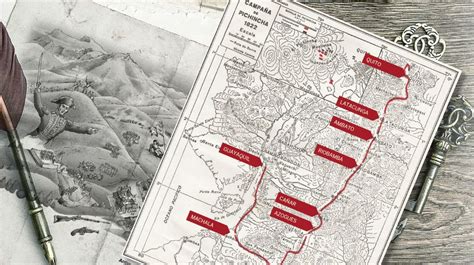
After Pichincha (1822), the big question wasn’t only “Spain is leaving.” It was: What replaces the empire? For the Quito highlands, the answer became Gran Colombia—a giant, fast-built republic meant to keep the independence project alive, pay for armies, and prevent the region from fragmenting into weak mini-states.

Series: Short History of Independence · Part 9

Read explainer →
History & Culture

Part 8 — Spain’s Point of View (Royalists, officials, and loyalist locals)

Introduction To understand why royalism lasted, it helps to drop the “movie version” where one side is purely heroic and the other is purely villain. For many people in the Audiencia of Quito (and across Spanish America), staying loyal to the Spanish monarchy felt like the safest path to order, jobs, religion, and basic predictability—especially when the alternative looked like uncertainty, civil conflict, or social…

Series: Short History of Independence · Part 8

Read explainer →
History & Culture

Part 7 — Military Angle III: Pichincha 1822 and What It Changed

If Guayaquil 1820 was the revolution that started a new phase, Pichincha (24 May 1822) is the moment that made the new reality hard to reverse. It wasn’t just “a battle on a volcano.” It was the key move that let the independence coalition take Quito, end the last strong royalist hold in the region, and lock in a new political map—especially the link to Gran Colombia.

Series: Short History of Independence · Part 7

Read explainer →
History & Culture

Part 6 — Military Angle I + II: Roads, Terrain, and Real Logistics

Independence-era war in Ecuador isn’t best understood as “armies clash, someone wins.” It’s better understood as: Can you move people, food, animals, and gunpowder across extreme geography without your force collapsing? The Coast is humidity, rivers, and corridors. The Sierra is altitude, cold nights, narrow passes, and trails that can vanish in rain.

Series: Short History of Independence · Part 6

Read explainer →
History & Culture

Part 5 — Guayaquil 1820–1822: Three doors, one city

After 9 October 1820, Guayaquil didn’t just gain a new flag—it gained a new daily question: What are we now? A city that lives by tides, customs stamps, and credit suddenly had to choose a future while still paying soldiers, keeping the port running, and not scaring families into panic. And the hardest part?

Series: Short History of Independence · Part 5

Read explainer →
History & Culture

Part 4 — Guayaquil 1820 — The Revolution That Stuck

If Quito’s revolution years felt like living inside uncertainty, Guayaquil in October 1820 feels like the opposite: a plan that actually lands. Not because everyone suddenly agreed—but because Guayaquil had three ingredients that matter in real-world revolutions: money (a port economy), organization (networks + timing), and control of the garrison before the city could be locked down.

Series: Short History of Independence · Part 4

Read explainer →

Quito’s 1765–1766 Tax Revolt — Revolución de los Estancos / “Rebellion of the Barrios”

What this is A friendly, in-depth guide to why Quito’s protest didn’t stay a one-night riot—it stretched from May 1765 into September 1766, created a period of local control, forced major policy concessions, and left a long political memory that shaped how Quito (and later Ecuador) talked about authority, fairness, and who gets a voice.

Series: History of Ecuador · Part 3

Read explainer →

Jesuits + Education in colonial Ecuador — and the 1767 expulsion

What this explainer is A friendly, detailed look at how the Jesuits became education powerhouses in the Audiencia of Quito, what happened when King Charles III expelled them in 1767, and why you can still feel that story in Quito today. The big idea For much of the colonial period, the Society of Jesus (Jesuits) ran some of the most influential schools and university-level teaching in Quito—especially in philosophy,…

Series: History of Ecuador · Part 4

Read explainer →

Explainer: The Bourbon Reforms — Spain’s 1700s “reboot” of its empire (and why Quito cared)

If you imagine the Spanish Empire as a huge, expensive machine, the Bourbon Reforms were Spain saying: “This thing is leaking money, running on old wiring, and our rivals are catching up. We’re going to redesign it—fast.” Across Spanish America, the reforms aimed to centralize control, raise revenue, and make colonial government more efficient (and more directly loyal to the Crown). (Encyclopedia Britannica) In the…

Read explainer →
History & Culture

Sierra cities in the colonial era: Cuenca + Loja (and how they connected to Quito, the Coast, and the wider empire)

English When you zoom out from Quito, colonial Ecuador starts to look like a network: highland cities that managed land and labor, connected by roads to a coastal port that moved goods in and out. And in the south, Cuenca and Loja were key “nodes” in that network—smaller than Quito, but strategically placed. A simple clue: the 1563 royal decree that set up the Real Audiencia of Quito explicitly lists Loja, Cuenca, a…

Read explainer →
History & Culture

Quito (Colonial Era) — a walking version you can feel

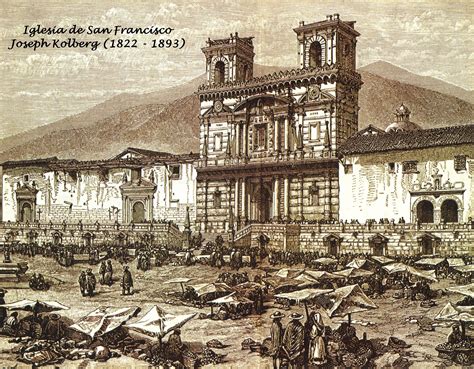
let’s do a time-travel walking tour. Imagine it’s a clear morning and you’re walking Quito when it’s still a Spanish colonial capital: bells, vendors, officials in dark capes, and everyone reading the city’s rules in who stands where. Quito (Colonial Era) — a walking version you can feel Stop 1 — Plaza Grande (Plaza de la Independencia) EN: This is the city’s “front room.” In Spanish Quito, the plaza is where power…

Read explainer →
History & Culture

Quito under Spanish rule: how the city worked (and what daily life felt like)

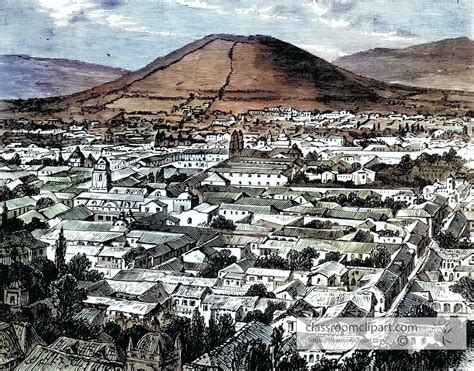
English 1) A city “built on purpose”After the Spanish founded Quito in 1534 (on the ruins of an Inca city), they shaped it as a compact Andean capital—steep streets, big plazas, and church complexes that doubled as spiritual and social anchors. UNESCO notes the old city’s plan as checkerboard-patterned streets with squares, and houses “1 or 2 floors with one or several patios.” (UNESCO World Heritage Centre) Think o…

Read explainer →
History & Culture

Esmeraldas + the slave trade — how people were brought, how people resisted, and what life looked like

ENGLISH (friendly explainer) When people talk about Esmeraldas in colonial Ecuador, they’re often talking about a “frontier” zone: thick forests, big rivers, and coastal routes that were important to the empire—but never easy for the empire to fully control. Historians literally frame Esmeraldas as a borderland that was “integrated” only unevenly into the colonial (and later national) space. (ojs.fhce.edu.uy) And th…

Read explainer →
History & Culture

Ecuador under Spanish rule — “how the machine worked,” and how people lived inside it

Let’s zoom in on the structure (who had power, who answered to whom) and then what that meant for real people’s daily lives: Spaniards, criollos/mestizos, Indigenous communities, and Afro-Ecuadorians. ENGLISH The basic power triangle: Crown / State, Church, Land (hacienda) A helpful way to picture colonial Ecuador is as three overlapping systems: State (the Crown’s administration) = laws, taxes, courts, officials Ch…

Read explainer →
History & Culture

Explainer: Christmas traditions in Ecuador

Christmas Eve, nativity displays, coast vs. sierra vs. amazon, and parades Ecuador’s Christmas season blends family, faith, and public celebration—and in many places the “main night” is Christmas Eve (Nochebuena) rather than Dec 25. The details vary by region, but you’ll see the same big pillars everywhere: Novena gatherings, pesebres/nacimientos (nativity scenes), and festive processions like the Pase del Niño. (Pr…

Read explainer →