Ecuador reference library

Explainers

Background guides to Ecuador’s politics, economy, history, environment and everyday life.

← All resources

Evergreen context for understanding the people, institutions and issues behind the news.

Clear

Infrastructure & Energy

Browse explainers

13 articles

Explainer: What Palantir is

Palantir Technologies is a U.S. software company that builds platforms for data integration, analysis, AI-assisted decision-making, and operational coordination. Its best-known government platform is Gotham, used in defense, intelligence, policing, and public-sector operations. Its broader enterprise platform, Foundry, is used to connect data across organizations, and its newer AIP — Artificial Intelligence Platform…

Read explainer →

Coca Codo Sinclair (CCS)April 2026

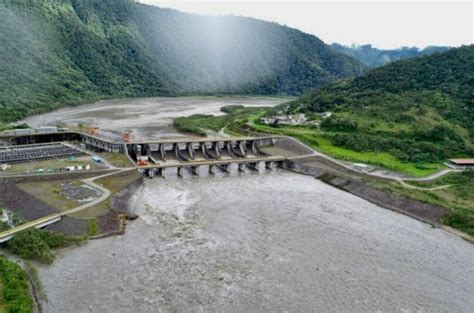
The Coca Codo Sinclair (CCS) hydroelectric plant, built by the Chinese firm Sinohydro, is Ecuador's largest infrastructure project and arguably its most controversial. As of April 2026, the project has reached a critical legal and technical crossroads. 🏗️ The Infrastructure at a Glance Located between the Napo and Sucumbíos provinces, the dam was designed to generate 1,500 MW, theoretically covering 30% of Ecuador's…

Read explainer →

Explainer Garbage fee and changes Jan 07 2026

Here’s the situation, in a way that matches what you’re seeing on the ground: it wasn’t just “a billing tweak.” Ecuador is basically unwinding a long-running convenience system (garbage fee piggy-backing on the electric bill) and forcing municipalities (GADs) to use separate, legally cleaner collection methods. 1) What the old system was For years, many municipalities collected the garbage/solid-waste fee (often cal…

Read explainer →
Economy & Business

Explainer - Ecuador’s hydropower system (how it works, where it is, and why rain matters fast)

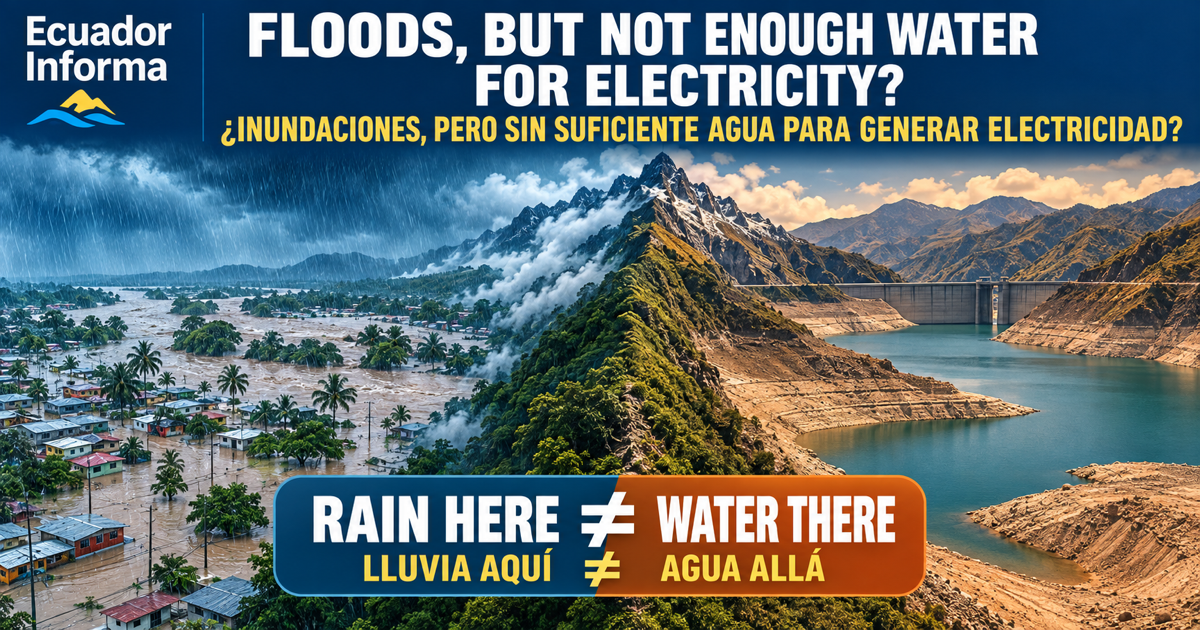
Ecuador’s Sistema Nacional Interconectado (SNI) leans heavily on hydroelectricity—at times covering around 90% of national demand (per CENACE figures cited by Lupa). (LupaMedia) Where the big hydropower plants are (high-level “map”) Think of Ecuador’s hydropower as clusters along major river basins: Amazon/Andes (north-east): Coca Codo Sinclair (the country’s largest) is located between Napo and Sucumbíos and has 1,…

Read explainer →

Explainer- Ecuador’s health system (Public MSP/RPIS vs IESS vs Private) for immigrants:

Ecuador’s health care is best understood as a mixed, segmented system: you have a public network led by the Ministry of Public Health (MSP), a social-security system (IESS) tied to contributions, and a private market (out-of-pocket, insurance, and medicina prepagada). The Constitution frames health as a right guaranteed by the State, and Ecuador organizes much of its public care through the Red Pública Integral de S…

Read explainer →

Explainer - Portoviejo's Urban Lab

Here’s your explainer, with a short bilingual wrap-up at the end.(And as requested on earlier pieces: this article was created by ChatGPT.) Portoviejo’s Urban Lab: how Ecuadorian cities are trying to change for their citizens 1. What is an “Urban Lab”? An urban lab is basically a city-sized workshop: a place where local government, universities, citizens and sometimes NGOs test ideas using real data from the city. I…

Read explainer →

Explainer plus-Use of large rocks (riprap) to control coastal erosion

Uso de piedras grandes (riprap) para controlar la erosión costera Use of large rocks (riprap) to control coastal erosion 1. ¿Qué es el riprap? / What is riprap? ES:El riprap (o escollera) es una capa inclinada de piedras grandes y angulares colocadas en la orilla, frente a un malecón, carretera o edificio. La idea es que las rocas rompan la energía de las olas antes de que golpeen directamente la tierra o el hormigó…

Read explainer →

Explainer- Coastal erosion and sea-level rise on Ecuador’s coast

(with examples from San Jacinto & San Clemente) 1. What is coastal erosion? English Coastal erosion is the gradual loss of beach and land caused by waves, tides, currents and storms. Little by little, the shoreline moves inland: the beach gets narrower, dunes disappear, and sometimes roads, houses or seawalls collapse. On Ecuador’s Pacific coast, erosion is not new. Studies show that the central Manabí coastline has…

Read explainer →

Explainer- Electrical system Nov 2025

1. Big picture: why Ecuador’s electric system feels “fragile” Ecuador’s electricity is officially a public service run mainly by the State, with a grid that covers almost the whole country. Most power still comes from large hydroelectric dams, backed up by diesel and gas plants, plus a small but growing amount of solar and wind. (Trade.gov) That model worked fairly well in wet years. But in 2023–2024, a combination…

Read explainer →