Ecuador reference library

Explainers

Background guides to Ecuador’s politics, economy, history, environment and everyday life.

← All resources

Evergreen context for understanding the people, institutions and issues behind the news.

Clear

Living in Ecuador

Browse explainers

24 articles

Living in Ecuador

Modern Piracy on the Ecuador coast

Modern piracy on Ecuador’s Pacific coast has little in common with the pirates of popular culture. It usually involves armed men in fast fibreglass boats attacking artisanal fishermen to steal their motors, fuel, equipment, catch—or the entire boat.

Series: Piracy On the Ecuadorian coast · Part 4

Read explainer →
History & Culture

The Virgen de EL Cisne

The Virgen de El Cisne is a centuries-old Marian image kept in a rural sanctuary near Loja. Every August, devotees carry her approximately 70–75 kilometres to the city, where she remains until around November 1. The pilgrimage began as a rural religious devotion, was linked by Simón Bolívar’s 1829 decree to the Feria de Loja, and today serves simultaneously as an act of faith, a major economic and civic event, a connection to Loja’s rural heritage and a symbol of home for Lojanos living around the world.

Read explainer →
Primary Political Forces in Ecuador (2026)

To understand Ecuador's political landscape in 2026, it’s helpful to view it as a battle between established traditional movements and a new, dominant "Noboa-ist" center-right. The following table breaks down the key players currently shaping the National Assembly and the executive branch. Primary Political Forces in Ecuador (2026) Party / MovementKey LeaderPolitical SpectrumPower & PopularityAcción Democrática Naci…

Read explainer →
Economy & Business

Explainer: Why Ecuadorian Co-ops are Restricting Foreign ATMs

The recent difficulty in using foreign bank cards (US, European, etc.) at Cooperative ATMs (like JEP, Pilahuin Tío, or Alianza del Valle) is not a random technical glitch. It is the result of a significant regulatory overhaul that reached a critical implementation phase on March 1, 2026. 1. The "Tax Wall": SRI Resolution No. NAC-DGERCGC26-00000009 The most immediate cause is a new tax directive from the Internal Rev…

Read explainer →

"El Niño Costero": An Explainer

Understanding "El Niño Costero": An Explainer While the world often speaks of the "Global El Niño," Ecuador and Peru frequently deal with a more localized and often more intense phenomenon known as El Niño Costero (Coastal El Niño). Understanding this distinction is vital for residents of the Litoral and the Galápagos.

Series: Weather in Ecuador · Part 1

Read explainer →

Ecuador Carnival... what to expect as a newcomer

Welcome to one of the most vibrant times of the year! If you’re heading into Carnival in Ecuador, you aren't just going to a party; you’re entering a nationwide water fight mixed with deep cultural traditions. The most important thing to know is that in Ecuador, Carnival is a contact sport. Whether you are in a sleek city high-rise or a dusty mountain village, the "playing" (playing with water, foam, and flour) is u…

Read explainer →

Explainer: The Madden-Julian Oscillation (MJO)

If El Niño is the "marathon" of weather (lasting months or years), the Madden-Julian Oscillation (MJO) is the "sprint." It is a massive, fast-moving pulse of clouds and rain that circles the globe every 30 to 60 days. For people in Ecuador, the MJO is often the "hidden hand" behind a sudden week of torrential rain or a strangely dry "break" in the middle of the rainy season. 1. What is the MJO? The MJO is an eastwar…

Read explainer →

The Humboldt Current vs. El Niño: Understanding the Battle for Ecuador’s Coastline

In the tug-of-war for Ecuador’s coastline, the Humboldt Current and El Niño are the lead players. But as we start 2026, a third character—La Niña—is currently holding the rope. Here is the breakdown of why this battle matters for your wallet and your weekend plans, along with the latest forecast for the year ahead.

Series: Weather in Ecuador · Part 1

Read explainer →
History & Culture

The “Limpia” and Traditional Healing in Ecuador

If you’ve spent any time wandering through an Ecuadorian market—from the historic stalls of Quito to the humid plazas of Portoviejo—you’ve likely encountered a specific, pungent aroma: a mix of crushed green herbs, floral cologne, and woodsmoke. You’ve stumbled upon the world of the Limpia (the "cleansing"). Far from being a hidden ritual, traditional healing is a visible, daily part of life here. It is a bridge bet…

Series: Traditional Ecuador · Part 1

Read explainer →

Explainer Garbage fee and changes Jan 07 2026

Here’s the situation, in a way that matches what you’re seeing on the ground: it wasn’t just “a billing tweak.” Ecuador is basically unwinding a long-running convenience system (garbage fee piggy-backing on the electric bill) and forcing municipalities (GADs) to use separate, legally cleaner collection methods. 1) What the old system was For years, many municipalities collected the garbage/solid-waste fee (often cal…

Read explainer →

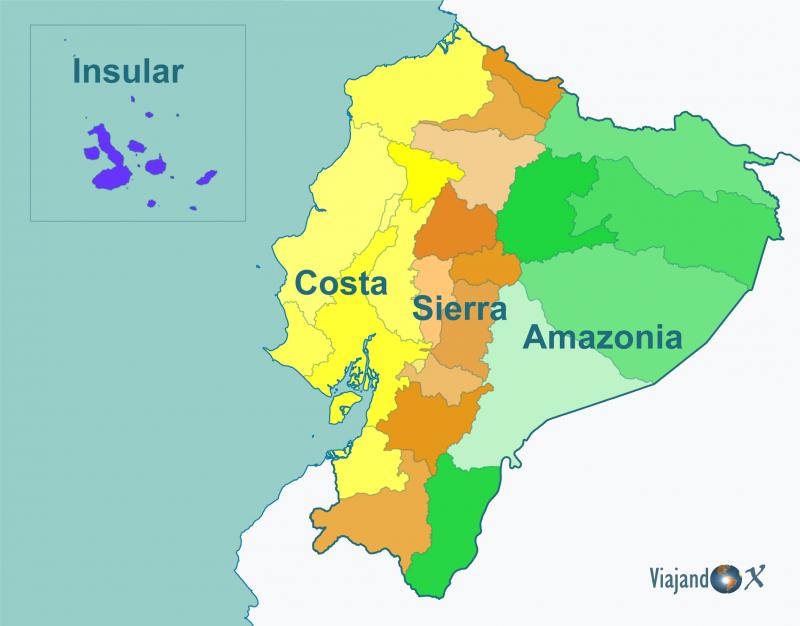
The “Three Ecuadors” (Costa, Sierra, Amazonía) — one country, three daily realities

People in Ecuador often talk like there are three countries inside one: the Coast (Costa), the Highlands (Sierra), and the Amazon (Oriente/Amazonía). That shorthand is real and useful—because the Andes act like a giant spine that shapes climate, travel, jobs, food, and even political priorities. Britannica describes Ecuador’s mainland as divided into these three main physical regions: Costa, Sierra, Oriente. (Encycl…

Read explainer →

January admin + tax checklist

Absolutely — here’s an expat-friendly “January admin + tax checklist” expanded from that El Diario roundup, with links to the official references where possible. Disclaimer : We are not tax experts or lawyers. This is a practical checklist based on what we’ve found in reputable Ecuador news and official institutional pages. Rules can vary by municipality and by your tax status. For anything important, verify with SR…

Read explainer →

National Ecuador Holidays

Below is a single 2026 holiday list where each entry is denoted as: [🇪🇨 National] = applies countrywide [🟩 Manabí] = province-wide or key Manabí civic day [🟦 Cuenca] = local holiday for Cantón Cuenca [🟧 Loja] = province-wide or key Loja civic day I’m listing the day off as observed when a date is typically moved by Ecuador’s holiday-transfer rules (Tue→Mon, Wed/Thu→Fri, Sun→Mon; applies to local holidays too). (Asam…

Read explainer →
History & Culture

Explainer: Christmas traditions in Ecuador

Christmas Eve, nativity displays, coast vs. sierra vs. amazon, and parades Ecuador’s Christmas season blends family, faith, and public celebration—and in many places the “main night” is Christmas Eve (Nochebuena) rather than Dec 25. The details vary by region, but you’ll see the same big pillars everywhere: Novena gatherings, pesebres/nacimientos (nativity scenes), and festive processions like the Pase del Niño. (Pr…

Read explainer →

Why sea temperature can “run the weather” on Ecuador’s coast

“Ecuador’s coastal weather is strongly influenced by sea surface temperature. Small shifts in ocean warmth change humidity, cloud formation, and the odds of storms—especially during ENSO phases like La Niña.” (CPC) If you live on the Costa (especially places like Manabí, Santa Elena, Guayas, Esmeraldas), you’ve probably noticed this pattern: Some weeks feel sticky and stormy (even if it’s “not supposed to”). Other w…

Series: Weather in Ecuador · Part 5

Read explainer →
Living in Ecuador

Explainer - Eggs, refrigerate or not

In Ecuador you’ll often see eggs sitting on the counter at the store (and at home), and it’s not because people are careless—it’s because most eggs here are usually sold unwashed, which changes how they should be stored. Why they’re often not kept in a fridge Eggs naturally have a thin protective coating on the shell called the cuticle (or “bloom”). It helps block bacteria and slows moisture loss. In Ecuador (and ma…

Read explainer →
Economy & Business

Explainer - Ecuador’s hydropower system (how it works, where it is, and why rain matters fast)

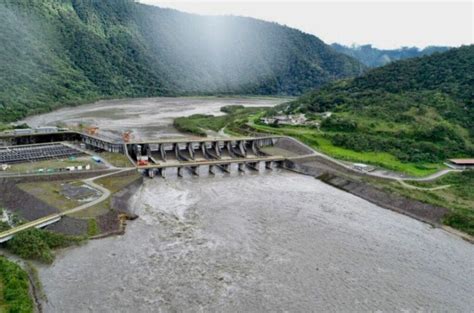
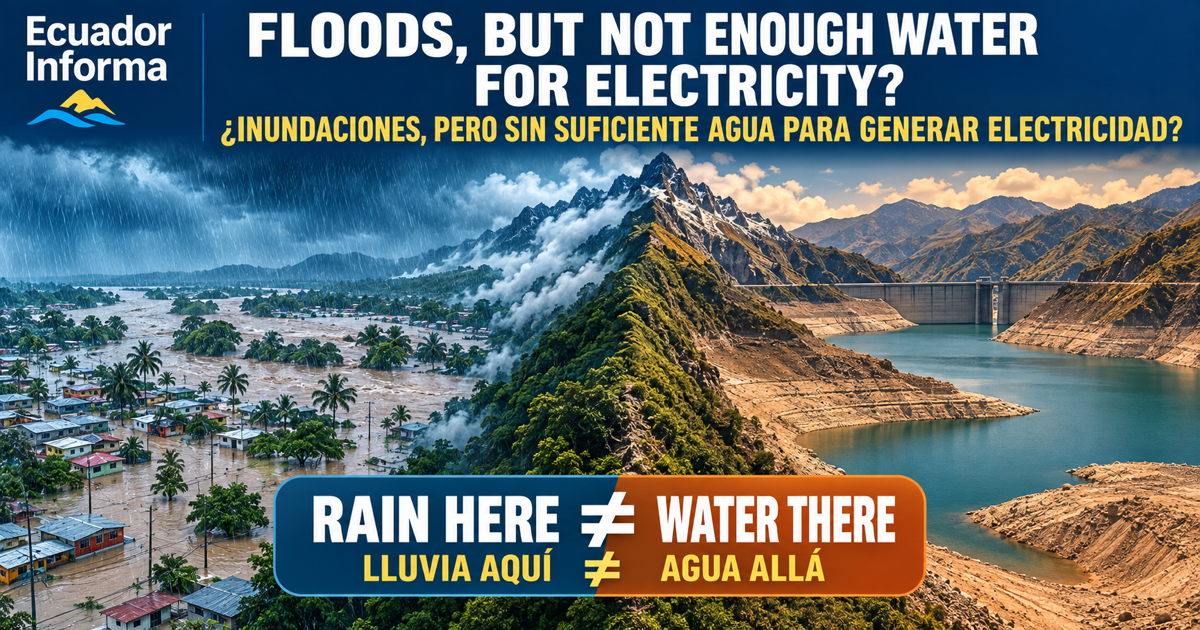
Ecuador’s Sistema Nacional Interconectado (SNI) leans heavily on hydroelectricity—at times covering around 90% of national demand (per CENACE figures cited by Lupa). (LupaMedia) Where the big hydropower plants are (high-level “map”) Think of Ecuador’s hydropower as clusters along major river basins: Amazon/Andes (north-east): Coca Codo Sinclair (the country’s largest) is located between Napo and Sucumbíos and has 1,…

Read explainer →

Explainer- Ecuador’s health system (Public MSP/RPIS vs IESS vs Private) for immigrants:

Ecuador’s health care is best understood as a mixed, segmented system: you have a public network led by the Ministry of Public Health (MSP), a social-security system (IESS) tied to contributions, and a private market (out-of-pocket, insurance, and medicina prepagada). The Constitution frames health as a right guaranteed by the State, and Ecuador organizes much of its public care through the Red Pública Integral de S…

Read explainer →

Explainer- Electrical system Nov 2025

1. Big picture: why Ecuador’s electric system feels “fragile” Ecuador’s electricity is officially a public service run mainly by the State, with a grid that covers almost the whole country. Most power still comes from large hydroelectric dams, backed up by diesel and gas plants, plus a small but growing amount of solar and wind. (Trade.gov) That model worked fairly well in wet years. But in 2023–2024, a combination…

Read explainer →

Explainer – How the Illegal Drug Trade Is Affecting Ecuador’s Economy

Explainer – How the Illegal Drug Trade Is Affecting Ecuador’s Economy Over the last decade, Ecuador has gone from being a quiet neighbor between Colombia and Peru to being described as a key hub of the global cocaine trade. Weak institutions, a dollarized economy, modern ports, and a free-trade link with Europe have made it attractive for foreign cartels and local gangs. (Crisis Group) The economic impact is two-sid…

Read explainer →