Ecuador reference library

Explainers

Background guides to Ecuador’s politics, economy, history, environment and everyday life.

← All resources

Evergreen context for understanding the people, institutions and issues behind the news.

Library

Browse explainers

101 articles

Economy & Business

Explainer: Why Ecuadorian Co-ops are Restricting Foreign ATMs

The recent difficulty in using foreign bank cards (US, European, etc.) at Cooperative ATMs (like JEP, Pilahuin Tío, or Alianza del Valle) is not a random technical glitch. It is the result of a significant regulatory overhaul that reached a critical implementation phase on March 1, 2026. 1. The "Tax Wall": SRI Resolution No. NAC-DGERCGC26-00000009 The most immediate cause is a new tax directive from the Internal Rev…

Read explainer →
"El Niño Costero": An Explainer

Understanding "El Niño Costero": An Explainer While the world often speaks of the "Global El Niño," Ecuador and Peru frequently deal with a more localized and often more intense phenomenon known as El Niño Costero (Coastal El Niño). Understanding this distinction is vital for residents of the Litoral and the Galápagos.

Series: Weather in Ecuador · Part 1

Read explainer →

US and Ecuador Trade agreement

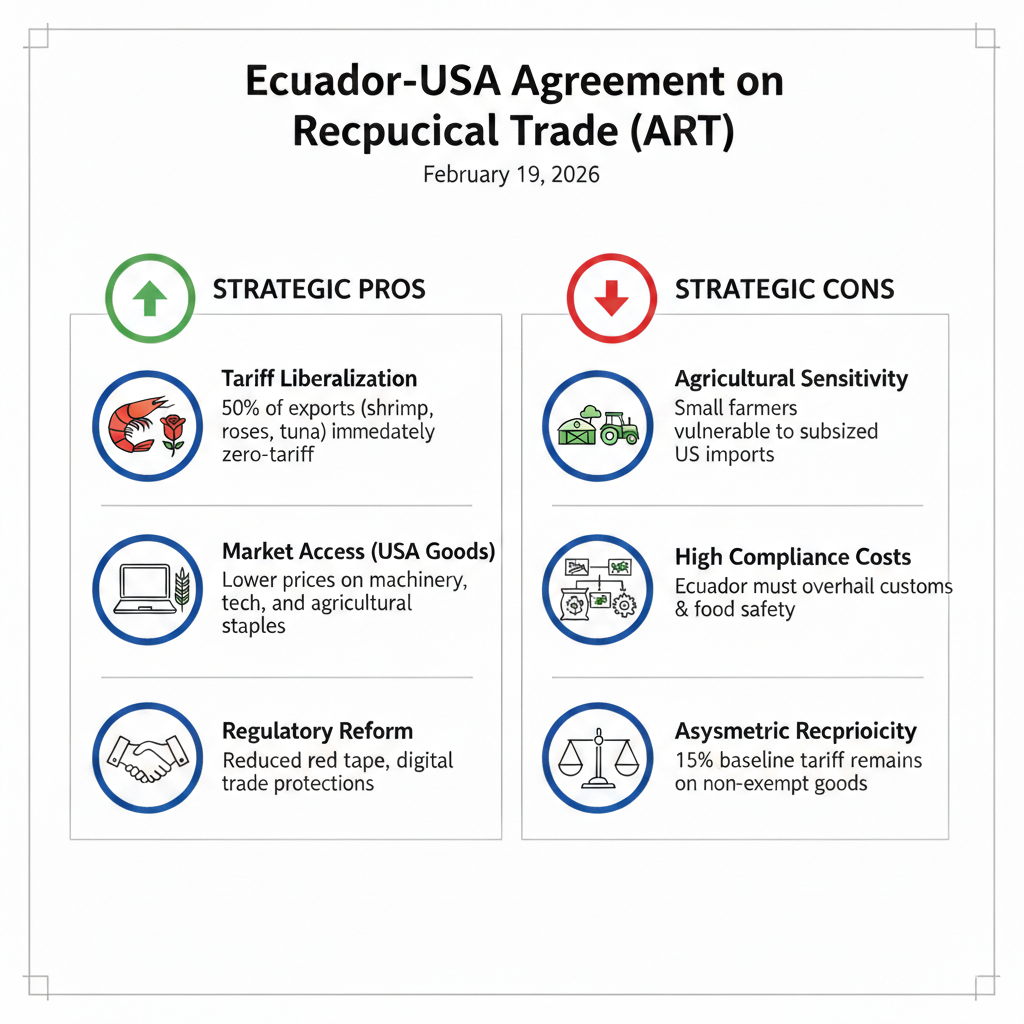
As of February 19, 2026, the United States and Ecuador have substantially concluded negotiations for the Agreement on Reciprocal Trade (ART). This bilateral pact marks a transition from unilateral trade preferences to a formalized, two-way market access framework. The following is an informative summary of the agreement's primary provisions and the associated economic trade-offs. 📈 Strategic Pros (Benefits) 1. Tarif…

Read explainer →

Guayaquil Fires February 16

It’s a intense situation in Guayaquil right now. To help you get a clear picture of what’s happening, here is a breakdown of the recent fires and the national government’s intervention. The "Who, What, Where, When, How, and Why" What happened? A series of major fires has struck Guayaquil, the most devastating being a massive blaze at the Multicomercio building in the city center. The fire was so intense that it caus…

Read explainer →

Why was Portoviejo Founded?

Portoviejo holds a prestigious spot in history as one of the oldest Spanish-founded cities in present-day Ecuador. Founded on March 12, 1535, it wasn't just a random settlement—it was a calculated move by the Spanish Empire to secure the coast. Why was Portoviejo Founded? The founding of San Gregorio de Portoviejo by Captain Francisco Pacheco was driven by three main goals: Strategic Control: The Spanish needed a ba…

Read explainer →

Ecuador Carnival... what to expect as a newcomer

Welcome to one of the most vibrant times of the year! If you’re heading into Carnival in Ecuador, you aren't just going to a party; you’re entering a nationwide water fight mixed with deep cultural traditions. The most important thing to know is that in Ecuador, Carnival is a contact sport. Whether you are in a sleek city high-rise or a dusty mountain village, the "playing" (playing with water, foam, and flour) is u…

Read explainer →

The Shrimp Industry — Ecuador’s "Pink Gold"

If oil is the traditional engine of the Ecuadorian economy, shrimp is its modern heartbeat. As of 2026, Ecuador has solidified its position as the world’s largest shrimp exporter, outperforming massive competitors like India and Vietnam. For the average resident or investor, the shrimp industry isn't just about what's on the dinner plate—it is a $9 billion-a-year juggernaut that dictates everything from national sec…

Read explainer →

Explainer: The Madden-Julian Oscillation (MJO)

If El Niño is the "marathon" of weather (lasting months or years), the Madden-Julian Oscillation (MJO) is the "sprint." It is a massive, fast-moving pulse of clouds and rain that circles the globe every 30 to 60 days. For people in Ecuador, the MJO is often the "hidden hand" behind a sudden week of torrential rain or a strangely dry "break" in the middle of the rainy season. 1. What is the MJO? The MJO is an eastwar…

Read explainer →

Gustavo Petro President Colombia and differences with Naboa

To understand the trade war currently unfolding between Ecuador and Colombia, you have to understand the man on the other side of the border. Gustavo Petro is not just Colombia’s president; he is the most significant ideological shift in Colombian history. Here is an exploration of who Petro is, his "guerrilla to president" history, and why his friction with Daniel Noboa was almost inevitable. 1. The Background: Fro…

Read explainer →
Economy & Business

Explainer: The 2026 Ecuador-Colombia Trade & Energy War Jan 24

If you’ve noticed the headlines this week, the relationship between Ecuador and its northern neighbor, Colombia, has suddenly hit a freezing point. What started as a dispute over border security has rapidly escalated into a full-blown "tit-for-tat" trade war involving 30% tariffs, energy blackouts, and oil threats. Here is the deep dive into why this is happening, where the "battle lines" are drawn today, and what t…

Read explainer →

The Humboldt Current vs. El Niño: Understanding the Battle for Ecuador’s Coastline

In the tug-of-war for Ecuador’s coastline, the Humboldt Current and El Niño are the lead players. But as we start 2026, a third character—La Niña—is currently holding the rope. Here is the breakdown of why this battle matters for your wallet and your weekend plans, along with the latest forecast for the year ahead.

Series: Weather in Ecuador · Part 1

Read explainer →
History & Culture

The “Limpia” and Traditional Healing in Ecuador

If you’ve spent any time wandering through an Ecuadorian market—from the historic stalls of Quito to the humid plazas of Portoviejo—you’ve likely encountered a specific, pungent aroma: a mix of crushed green herbs, floral cologne, and woodsmoke. You’ve stumbled upon the world of the Limpia (the "cleansing"). Far from being a hidden ritual, traditional healing is a visible, daily part of life here. It is a bridge bet…

Series: Traditional Ecuador · Part 1

Read explainer →
History & Culture

Part 9 — Gran Colombia → Ecuador (1822–1830)

After Pichincha (1822), the big question wasn’t only “Spain is leaving.” It was: What replaces the empire? For the Quito highlands, the answer became Gran Colombia—a giant, fast-built republic meant to keep the independence project alive, pay for armies, and prevent the region from fragmenting into weak mini-states.

Series: Short History of Independence · Part 9

Read explainer →
History & Culture

Part 8 — Spain’s Point of View (Royalists, officials, and loyalist locals)

Introduction To understand why royalism lasted, it helps to drop the “movie version” where one side is purely heroic and the other is purely villain. For many people in the Audiencia of Quito (and across Spanish America), staying loyal to the Spanish monarchy felt like the safest path to order, jobs, religion, and basic predictability—especially when the alternative looked like uncertainty, civil conflict, or social…

Series: Short History of Independence · Part 8

Read explainer →
History & Culture

Part 7 — Military Angle III: Pichincha 1822 and What It Changed

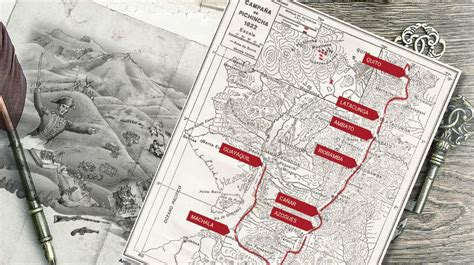
If Guayaquil 1820 was the revolution that started a new phase, Pichincha (24 May 1822) is the moment that made the new reality hard to reverse. It wasn’t just “a battle on a volcano.” It was the key move that let the independence coalition take Quito, end the last strong royalist hold in the region, and lock in a new political map—especially the link to Gran Colombia.

Series: Short History of Independence · Part 7

Read explainer →
History & Culture

Part 6 — Military Angle I + II: Roads, Terrain, and Real Logistics

Independence-era war in Ecuador isn’t best understood as “armies clash, someone wins.” It’s better understood as: Can you move people, food, animals, and gunpowder across extreme geography without your force collapsing? The Coast is humidity, rivers, and corridors. The Sierra is altitude, cold nights, narrow passes, and trails that can vanish in rain.

Series: Short History of Independence · Part 6

Read explainer →
History & Culture

Part 5 — Guayaquil 1820–1822: Three doors, one city

After 9 October 1820, Guayaquil didn’t just gain a new flag—it gained a new daily question: What are we now? A city that lives by tides, customs stamps, and credit suddenly had to choose a future while still paying soldiers, keeping the port running, and not scaring families into panic. And the hardest part?

Series: Short History of Independence · Part 5

Read explainer →
History & Culture

Part 4 — Guayaquil 1820 — The Revolution That Stuck

If Quito’s revolution years felt like living inside uncertainty, Guayaquil in October 1820 feels like the opposite: a plan that actually lands. Not because everyone suddenly agreed—but because Guayaquil had three ingredients that matter in real-world revolutions: money (a port economy), organization (networks + timing), and control of the garrison before the city could be locked down.

Series: Short History of Independence · Part 4

Read explainer →

Explainer Garbage fee and changes Jan 07 2026

Here’s the situation, in a way that matches what you’re seeing on the ground: it wasn’t just “a billing tweak.” Ecuador is basically unwinding a long-running convenience system (garbage fee piggy-backing on the electric bill) and forcing municipalities (GADs) to use separate, legally cleaner collection methods. 1) What the old system was For years, many municipalities collected the garbage/solid-waste fee (often cal…

Read explainer →

Quito’s 1765–1766 Tax Revolt — Revolución de los Estancos / “Rebellion of the Barrios”

What this is A friendly, in-depth guide to why Quito’s protest didn’t stay a one-night riot—it stretched from May 1765 into September 1766, created a period of local control, forced major policy concessions, and left a long political memory that shaped how Quito (and later Ecuador) talked about authority, fairness, and who gets a voice.

Series: History of Ecuador · Part 3

Read explainer →