Ecuador World · Security
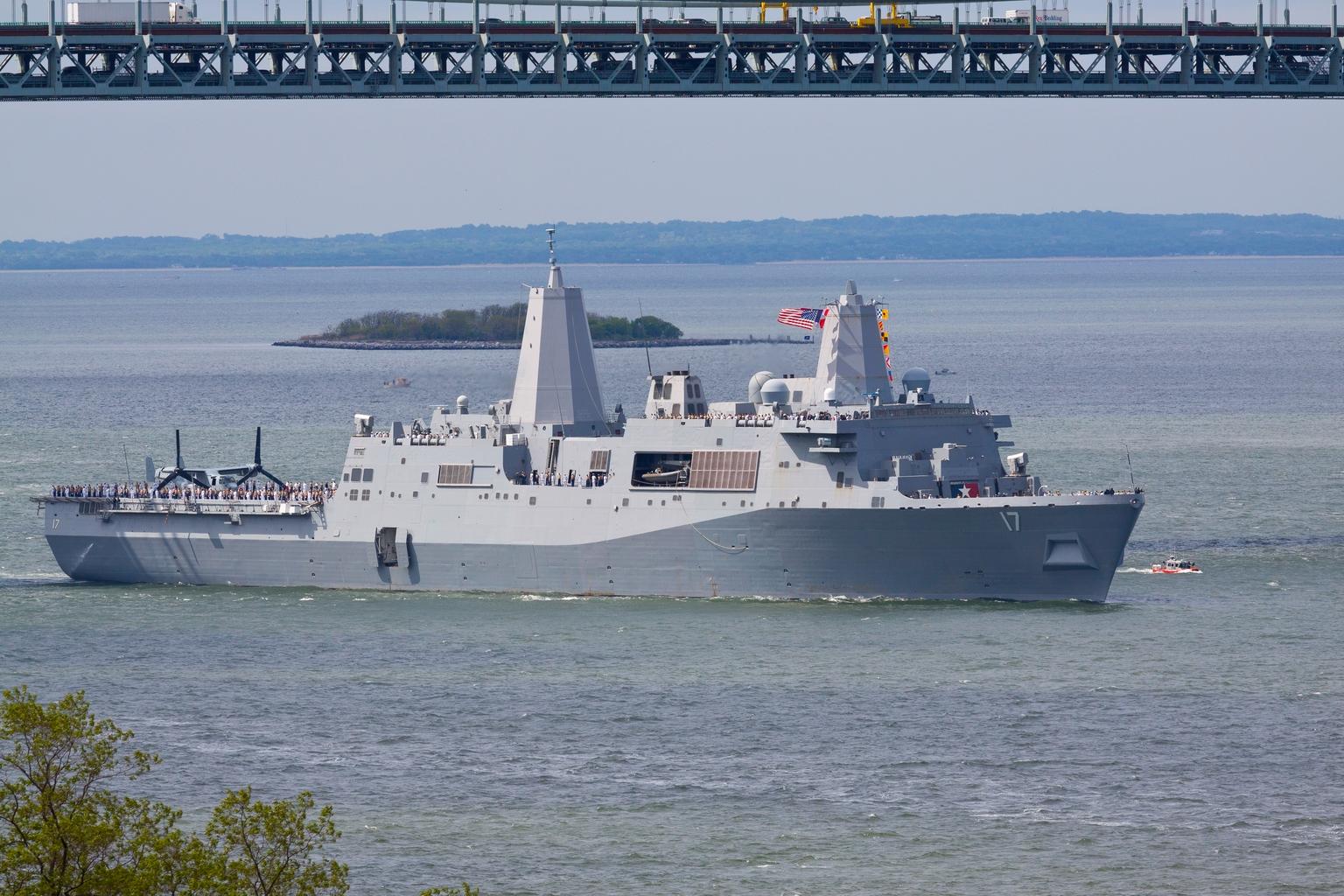
USS San Antonio in Manta: Aug 25
The arrival of the USS San Antonio at the Port of Manta has attracted attention across Ecuador, particularly because it coincides with an updated United States travel advisory urging Americans to reconsider travel to Manabí.
Publicado Actualizado
USS San Antonio in Manta: What the Warship and U.S. Travel Warning Mean for Ecuador’s Coast
The arrival of the USS San Antonio at the Port of Manta has attracted attention across Ecuador, particularly because it coincides with an updated United States travel advisory urging Americans to reconsider travel to Manabí.
Together, these developments reflect the growing importance of Ecuador’s coast in the regional campaign against maritime drug trafficking. However, they do not necessarily indicate that a new military operation is about to begin in Manta—or that expatriates living on the coast are being instructed to leave.
What is the USS San Antonio?
The USS San Antonio (LPD-17) arrived in Manta on the morning of August 24, 2026. It is an amphibious transport dock operated by the United States Navy.
Unlike a destroyer, which is primarily designed to engage aircraft, missiles, submarines and other warships, the San Antonio serves as a mobile military base. Its principal purpose is to transport Marines, aircraft, landing craft, vehicles and supplies into coastal operating areas.
The ship is approximately 208 metres long and displaces about 25,300 tonnes when fully loaded. Its normal complement includes roughly 383 sailors, while it can carry approximately 699 Marines and accommodate as many as 800 under surge conditions.
Its flight deck can operate aircraft including:
- MV-22 Osprey tilt-rotor aircraft
- CH-53E Super Stallion heavy-lift helicopters
- AH-1Z attack helicopters
- UH-1Y utility helicopters
- MH-60 naval helicopters
The ship also contains a large internal well deck that can be flooded, allowing landing craft, hovercraft and amphibious vehicles to enter or leave through the stern. It can carry two Landing Craft Air Cushion hovercraft or one conventional landing craft, along with as many as 14 amphibious assault vehicles.
This gives the ship the ability to move personnel, vehicles and supplies ashore without requiring access to an established port or military base.
Is it heavily armed?
The USS San Antonio is a warship and carries defensive weapons, including two 30-mm cannons, two Rolling Airframe Missile launchers and several .50-calibre machine guns.
However, it is not normally equipped with the long-range Tomahawk cruise missiles associated with American destroyers and submarines. Its principal military value comes from the forces and equipment it carries rather than from its own offensive weapons.
The ship can support amphibious operations, special operations, evacuations, maritime security missions, humanitarian relief and responses to regional emergencies. Its onboard communications, aviation facilities, medical capability and command systems also allow it to coordinate complex operations from offshore.
Why did it come to Manta?
The immediate explanation reported in Ecuador is relatively routine: the ship entered port to replenish food and other supplies.
Ecuadorian authorities had not initially announced how long it would remain in Manta or whether it would participate in additional activities during its stay. The publicly available information described the visit as logistical and related to resupply.
Nevertheless, the broader context is important.
Earlier in August, the USS San Antonio crossed the Panama Canal carrying elements of the 24th Marine Expeditionary Unit. The U.S. Navy described that deployment as demonstrating its ability to move forces rapidly, operate from the sea and respond to crises throughout the region covered by U.S. Southern Command.
Ecuador’s defence minister also recently announced that two American warships and three Black Hawk helicopters would support operations in maritime areas and coastal cities.
This cooperation comes as both governments intensify efforts against the criminal networks that use Ecuadorian ports, fishing vessels and Pacific maritime routes to move cocaine north toward Mexico and the United States.
The U.S. travel warning for Manabí
On August 18, the U.S. State Department issued an updated travel advisory for Ecuador.
Ecuador remains at Level 2: Exercise Increased Caution, but Manabí is among several provinces placed at Level 3: Reconsider Travel because of crime and terrorism concerns.
The advisory says violent crime connected to drug trafficking—including murder, assault, kidnapping, extortion and armed robbery—is common in areas where transnational criminal organizations operate. It also notes that American citizens and U.S. permanent residents have been victims of kidnapping and extortion.
Importantly, this is not a new evacuation order. Manabí had already been classified at Level 3 in the State Department’s October 2025 advisory.
The latest advisory continues that warning; it does not instruct Americans already living in Manabí to leave. Nor does it say that the warning was issued because the USS San Antonio was coming to Manta.
“Reconsider Travel” is serious, but it is different from the State Department’s highest category, Level 4: Do Not Travel.
Are the warship and the warning connected?
There is no publicly available evidence of a direct operational connection between the travel advisory and the ship’s arrival.
The advisory does not mention the USS San Antonio, military activities in Manta or a specific threat against American citizens resulting from the ship’s visit.
The two developments are better understood as different parts of the same broader American assessment: Washington considers Manabí an important centre of maritime drug trafficking and believes criminal organizations operating there present a significant security risk.
The Manabí coast includes major commercial and fishing ports, extensive fishing fleets and access to Pacific trafficking routes. Criminal organizations value local boats, fuel supplies, maritime knowledge and the ability to transfer cargo between fishing vessels and high-speed boats far offshore.
The United States is therefore addressing two related realities:
- On land, criminal organizations create risks of homicide, kidnapping, extortion and armed violence.
- At sea, American and Ecuadorian authorities are increasing surveillance, interdiction and operational capacity against suspected trafficking vessels.
The travel advisory addresses the first problem. The warship contributes capabilities relevant to the second.
Does the ship’s presence mean Marines will operate in Manabí?
Not necessarily.
An amphibious ship is useful because it can carry personnel, aircraft and equipment while remaining largely self-contained. It can support operations from offshore without requiring a permanent base on land.
The USS San Antonio gives the United States several options, including maritime surveillance support, helicopter operations, logistics, command and communications, medical assistance, evacuation capability and the transportation of Marines.
Having those capabilities nearby does not mean all of them will be used. There has been no public announcement that Marines carried by the ship will conduct operations on the streets of Manta or elsewhere in Manabí.
If a substantial operation were planned on Ecuadorian territory, it would raise legal, diplomatic and political questions that go considerably beyond a port visit for resupply.
Could the American presence increase local danger?
It is possible that stronger enforcement could create pressure on criminal organizations. In some circumstances, such pressure can lead to retaliation, intimidation or competition between groups attempting to protect trafficking routes.
Potential targets could include police officers, military personnel, port facilities, public officials or businesses accused of cooperating with authorities.
However, neither the Ecuadorian nor American government has publicly identified a specific retaliatory threat connected to the USS San Antonio’s presence.
If the United States possessed information about an immediate threat to its citizens, it would normally issue a more specific embassy security alert. Such an alert might identify particular locations, restrict the movements of embassy personnel, recommend avoiding a port or military installation, or provide instructions for citizens already in the area.
The current advisory is much broader. It covers the entire province and addresses the continuing risks created by organized crime rather than a particular imminent event.
What does this mean for expatriates living on Ecuador’s coast?
Foreign residents should take the advisory seriously, but it should be understood as guidance for managing risk—not as a prediction that every community in Manabí is equally dangerous.
The security situation varies greatly between cities, neighbourhoods and rural or coastal communities. Violence connected to organized crime is often targeted, but kidnappings, armed robberies and extortion can also affect people who have no connection to criminal activity.
Expatriates may appear comparatively wealthy even when living modestly. Their routines, homes, vehicles and perceived access to money can make them attractive targets for opportunistic crime or extortion.
Residents should remain aware of their surroundings, especially when:
- Using banks or withdrawing cash
- Driving at night or on isolated roads
- Visiting unfamiliar nightlife districts
- Using informal transportation
- Discussing finances or travel plans publicly
- Posting their location or daily routine on social media
- Approaching ports, military facilities or active security operations
- Travelling alone to remote beaches or rural areas
Being aware does not require living in constant fear. It means noticing unusual activity, avoiding predictable risks and trusting one’s instincts when a situation feels wrong.
Foreign residents should also maintain reliable communication with friends or neighbours, keep emergency contacts available and make sure someone knows when they are undertaking a longer journey. Passports and residency documents should be current, with digital copies stored securely.
It is also sensible to monitor local news, official Ecuadorian emergency announcements and alerts from one’s own embassy. Americans can enrol in the State Department’s Smart Traveler Enrollment Program, while Canadians can register through the Government of Canada’s Registration of Canadians Abroad service.
A changing security environment
The arrival of the USS San Antonio should not be interpreted as evidence that conventional warfare is coming to Manta. Nor should the State Department advisory be treated as an order for foreign residents to abandon Ecuador’s coast.
What both developments demonstrate is that the Manabí coastline has become strategically important in the expanding struggle over Pacific drug-trafficking routes.
For Washington, the USS San Antonio provides a flexible offshore platform capable of moving troops, aircraft, vehicles and supplies. For residents, the travel advisory is a reminder that criminal organizations operating along those routes also create serious risks on land.
The most reasonable response is neither panic nor complacency. It is to recognize that the security environment is changing, remain informed and take practical precautions appropriate to life in a coastal province affected by organized crime.
Sources: U.S. State Department Ecuador Travel Advisory, U.S. Navy San Antonio-class specifications, El Universo report on the ship’s arrival, U.S. Navy report on the ship’s Panama Canal transit.