Standard
Paraguay's Banking Collapse: Frozen Savings and a Fallen President
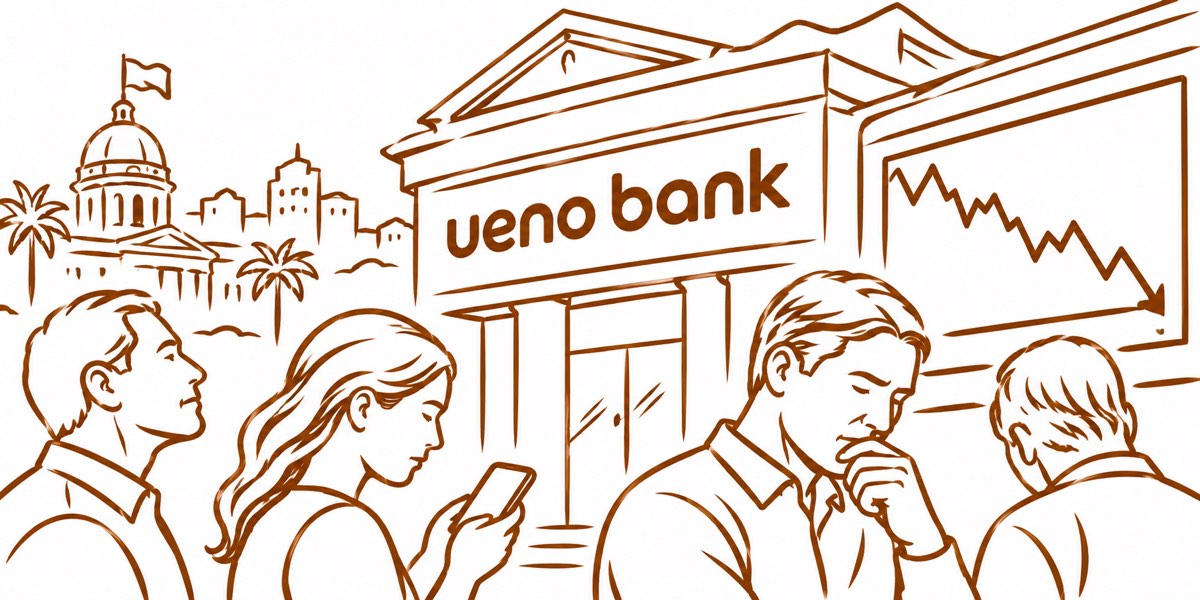
When Paraguay's Ueno Bank collapsed, customers suddenly found themselves unable to access their savings. Among those demanding answers was Jessica Aquino, 32, who joined protesters outside Congress as lawmakers debated the future of President Santiago Peña. She wanted accountability—and her money returned.
Within days, a banking failure affecting nearly three million customers had become a political crisis, ending with the removal of Paraguay's president.
What happened to Ueno Bank?
On November 2, 2026, the Banco Central del Paraguay began a formal resolution process after discovering that Ueno's solvency ratio had fallen below half the legal minimum. The decision was announced the following day.
The fast-growing digital bank had attracted millions of customers, including ordinary savers, while public institutions had deposited substantial funds with it.
Regulators identified problems involving loans to companies connected to the bank's controlling business group, weaknesses in financial documentation and concerns about the quality of its assets. The bank's collapse left customers unable to use their accounts and raised questions about financial supervision.
Source: Banco Central del Paraguay
Will customers recover their money?
Paraguay's deposit guarantee protects eligible deposits up to 228.3 million guaraníes per depositor, approximately US$38,000 at the time of the intervention.
Repayments began on November 5, initially prioritizing qualifying customers with deposits of up to 10 million guaraníes. By Saturday, November 7, approximately 1.2 million customers had received partial or full reimbursement, according to Associated Press.
Customers with larger balances, including public institutions holding pension and health funds, face greater uncertainty over the recovery of their money.
Sources: Banco Central del Paraguay | Associated Press
Why did the president lose his job?
Santiago Peña had previously owned shares in the business group associated with Ueno. He said he sold his interest in March 2025 and denied wrongdoing.
Opposition lawmakers accused him of conflicts of interest and questioned whether political connections had influenced the placement of public funds and banking supervision.
On November 6, Congress removed Peña from office, and Vice President Pedro Alliana became president. Peña appeared before prosecutors on November 7 while under house arrest. The allegations remain under investigation.
What does this mean for Ecuador?
There is no confirmed evidence that Ueno's collapse has disrupted Ecuadorian banks or depositors.
Ecuador operates its own banking supervision and deposit-insurance system through its financial regulators and the Corporación del Seguro de Depósitos, Fondo de Liquidez y Fondo de Seguros Privados (COSEDE).
The Paraguayan crisis illustrates why supervision of lending, protection of savings and oversight of public money matter. For affected depositors, however, the most urgent concern remains much simpler: recovering the money they need for everyday life.