Weekly edition · 2026-11-08

Ecuador Informa — Sunday Magazine — November 8, 2026

This edition follows Loja as it becomes a stage, Ecuadorians sustaining families across borders, and memories transformed into films. It also examines women's changing influence, an international referee's journey, Paraguay's banking crisis, ground instability in western Loja and Calceta's Afro-Montuvio traditions.

Editorial line illustration for “When Loja Becomes a Stage.”
Editorial illustration for “When Loja Becomes a Stage.”Original editorial illustration created for Ecuador Informa with OpenAI image generation.
Editorial line illustration for “When Loja Becomes a Stage.”
Editorial illustration for “When Loja Becomes a Stage.”Original editorial illustration created for Ecuador Informa with OpenAI image generation.

01

When Loja Becomes a Stage

From paintings brought to life in the streets to performers finding their place on stage, Ecuador's International Living Arts Festival transforms Loja for eleven days.

Open this article separately →

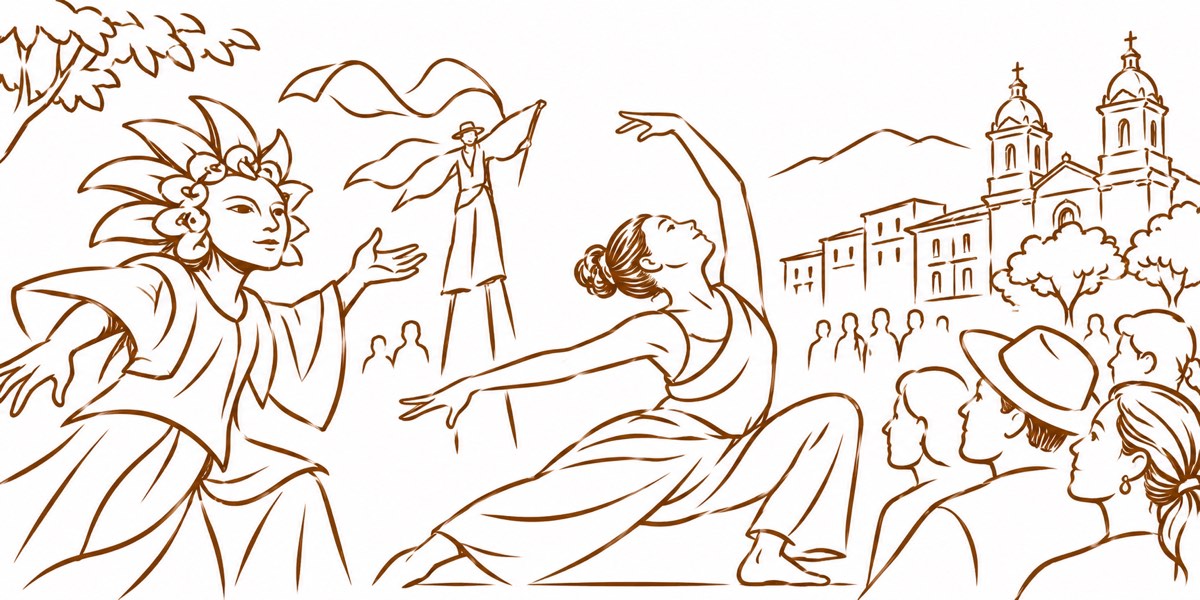
For eleven days in November, Loja will become a city of performers. Its streets and plazas will fill with dancers, musicians, actors and circus artists, while theatres welcome productions from Ecuador and abroad.

The 11th International Living Arts Festival of Loja, November 12–22, promises more than 400 cultural and educational activities, with Germany as guest country of honour.

Among those preparing to participate are thirty performers from Loja's Day Centre for the Comprehensive Development of People with Disabilities. Their production, Corazón de Escancel, is one example of how the festival brings the performing arts beyond established theatre companies and into the wider community.

The event, founded in 2016, reflects Loja's longstanding association with music and the arts. This year's theme, Artes Vivas para Habitar el Futuro \(Living Arts to Inhabit the Future\), places particular emphasis on children, young people and community participation.

When paintings take to the streets

On November 12, paintings will leave their frames and take to the streets of Loja. Approximately 3,000 participants are expected to transform Calle Bolívar into a moving gallery of costumes, music and dance as the festival opens with Pinceladas en Movimiento \(Brushstrokes in Motion\).

The parade begins at 6 p.m. near the Cabo Minacho military installation and continues along Calle Bolívar to Plaza San Francisco. Around 40 delegations, including groups from eleven other Ecuadorian cities and provinces, are expected to interpret works of visual art through performance.

The preparations have involved more than professional artists. Children have decorated kites with drawings and messages about their dreams, while young people have participated in mask-making workshops. Their creations will form part of the festival's public displays.

The activities reflect the festival's approach to artes vivas—living arts—which encompasses theatre, dance, music, puppetry, circus and other performances that bring artists and audiences together, often outside conventional venues.

Diario Crónica reports on the community preparations, while the Municipality of Loja describes the opening parade and its route\.

A festival without boundaries

The international programme includes theatre, circus, music and experimental performance. Among the announced artists are German performer Mascha Louana with Semillas de fuego, Italian artist Valentina Quargentan with a hair-suspension act, Argentine puppeteers and Costa Rican clown performers.

Music will also occupy public spaces, including Plaza San Sebastián, where Don Medardo Sinfónico and Pueblo Nuevo are among the announced performers. Local artists will share the programme with visiting companies, giving Loja's performers a place in a major national cultural event.

HORA32's festival preview outlines the international and local programme.

For the thirty performers preparing Corazón de Escancel, the festival offers another opportunity to bring their work before a public audience.

The 40-minute production explores intangible cultural heritage, pregnancy loss and the support communities provide during grief, drawing on popular traditions and devotion.

It will be the group's second consecutive appearance at the festival. In 2025, they presented a production inspired by the Diablada de Píllaro. This year, families and centre staff have helped with rehearsals and scenery.

The group will also participate in the opening parade with a presentation inspired by Ora Pro Nobis, a work by Loja artist Bayardo Cuenca referring to twelve mountain virgins.

According to the Ministry of Human Development's November 4 report, Corazón de Escancel is scheduled for November 17, with performances at 3:30 p.m. and 5 p.m. The production is supported by the Municipality of Loja and the Mamá Sombrilla collective.

Eleven days in Loja

From November 12 to 22, performances, workshops and exhibitions will take place in theatres, cultural centres, streets, plazas and parks throughout the city.

The opening parade begins Thursday, November 12, at 6 p.m., following Calle Bolívar toward Plaza San Francisco. Other activities will have individual schedules, venues and admission requirements.

Visitors can consult the official festival website for programme details and the Municipality of Loja's festival announcement for an overview of planned activities.

For eleven days, Loja's stages will extend beyond its theatres. They will include public squares, neighbourhood streets and spaces where children, visiting artists and local performers can share their work with the city.


Back to contents ↑
Editorial line illustration for “Working Abroad, Connected to Home — The Ecuadorians Behind the Remittances.”
Editorial illustration for “Working Abroad, Connected to Home — The Ecuadorians Behind the Remittances.”Original editorial illustration created for Ecuador Informa with OpenAI image generation.

02

Working Abroad, Connected to Home — The Ecuadorians Behind the Remittances

The Ecuadorians Behind the Remittances

Open this article separately →

In Los Angeles, Ecuadorian entrepreneur Fernando Bueno has built a business around something that migration cannot erase: the desire to remain connected to home.

His company, Geomil Shipping Los Angeles, helps families send packages between the United States and Ecuador. According to Expreso, the business connects approximately 500 families and dispatched 55,500 packages in a year.

Behind each shipment is a relationship that continues across borders.

Money follows many of the same routes. Ecuadorians abroad send billions of dollars home, helping relatives pay bills, raise children and maintain businesses. But the figures reveal little about the people earning that money—or the different paths their lives have taken.

Some have built successful businesses and careers. Others have started over in unfamiliar jobs, endured separation from their families or faced dangerous journeys and uncertain immigration status.

Building something new

Gabriela Espinoza arrived in the United States from Quito looking for work. There she met Washington Espinoza, originally from Cariamanga in Loja province, who had already established himself in business.

Their relationship eventually became both personal and professional.

As El Comercio reported, they developed Mamazzita, a food business, and Baru Entertainment, an entertainment venture serving migrant communities.

Their businesses provide food and entertainment to Ecuadorians and other customers in the United States.

Other migrants maintain businesses in Ecuador itself.

Alberto Sánchez has lived in New Jersey for approximately fifteen years. He paints houses in the United States while maintaining a small bazaar in Quevedo, managed day to day by his brother-in-law.

According to Primicias, Sánchez remains involved in the business and visits Ecuador to review its operations.

For him, working abroad has not meant ending his economic involvement at home.

Starting again, even with qualifications

Success abroad does not always follow a straight path.

Alex, an Ecuadorian former university professor with two master's degrees, arrived in New York expecting to rebuild his professional career. But his qualifications did not immediately open the doors he had hoped for.

Instead, he assembled furniture, carried out household repairs and delivered food while seeking recognition of his academic credentials.

His experience, documented by Primicias, illustrates the gap between professional experience in Ecuador and the opportunities available after migration.

For some Ecuadorians, a higher income abroad comes with a loss of professional status. The decision to remain can involve balancing financial opportunities against the work and identity they left behind.

The dangerous journey

Not every Ecuadorian reaches the United States through a conventional immigration process.

Some pay smugglers, commonly called coyotes, to guide them through Central America and Mexico. These journeys can expose migrants to robbery, extortion, dangerous terrain and debts that remain long after the journey ends.

Marlene, an Ecuadorian mother whose experience was reported by Primicias, left after threats against her family, including her son.

She travelled with her two children after hiring smugglers. At the time of the report, she was awaiting a decision on her asylum application in the United States.

Her story illustrates how migration can be driven by fear and family safety, not only the prospect of higher earnings.

Reaching the United States does not necessarily end the uncertainty.

In August 2026, Ecuadorian mother Grace Calero and her 19-year-old daughter were detained by U.S. immigration authorities following a traffic accident in Florida.

They spent five days in detention before returning to Guayaquil. Calero told El Comercio that she had an approved work permit and that her immigration case was under review.

Her account illustrates the uncertainty that immigration enforcement can create for families, including people with pending legal proceedings.

The families who remain

Migration decisions often affect people on both sides of the journey.

One Ecuadorian mother returned to Spain in 2024 hoping to reunite with her teenage son. She had lived there previously and believed she could establish herself again.

But expensive housing and irregular employment made reunification difficult. She returned to Ecuador in June 2025 and, with assistance from a programme for returning migrants, opened a small laundry business.

Another Ecuadorian, Michelle Paz, worked caring for elderly people in Spain while her young daughter remained in Ecuador. After difficulties regularizing her immigration status, she began preparing to return to Quito and establish a butcher shop.

Both experiences were documented by Primicias.

For families, money sent home can pay for education, housing and everyday needs. But it cannot replace time together.

Returning to Ecuador can mean leaving behind higher potential earnings in exchange for being closer to children, relatives and familiar communities.

The money behind the stories

The scale of these connections is substantial.

According to the Banco Central del Ecuador, Ecuador received approximately $7.73 billion in remittances during 2025, a record annual total.

In the second quarter of 2026, another $2.04 billion arrived, with the United States accounting for 78.5% of transfers and Spain remaining the second-largest source.

For recipient households, those transfers can help cover food, education, housing and small businesses. For the people sending them, the money may represent long working hours, delayed personal plans or continued responsibility for relatives thousands of kilometres away.

Remittances are only one part of the connection. Migrants also send packages, maintain property, invest in businesses and sometimes return with savings or experience to begin new ventures.

Connected across borders

Ecuadorian migration has no single story.

It includes entrepreneurs building companies abroad, professionals accepting unfamiliar work, families separated by distance, and people navigating dangerous journeys or uncertain immigration status.

It also includes those who return home and those who establish permanent lives overseas while continuing to support relatives and communities in Ecuador.

For Fernando Bueno, those connections have become a business linking hundreds of families. For Alberto Sánchez, they include a shop in Quevedo that continues operating while he works in New Jersey. For others, they take the form of a regular transfer to help a parent, partner or child.

The billions arriving in Ecuador are more than an economic statistic. They represent the work of people living far from home, the families who depend on them, and the connections they continue to maintain.

The money crosses borders in seconds. The relationships behind it can last a lifetime.

Back to contents ↑
Editorial line illustration for “The Family Memories That Became Films.”
Editorial illustration for “The Family Memories That Became Films.”Original editorial illustration created for Ecuador Informa with OpenAI image generation.

03

The Family Memories That Became Films

Open this article separately →

Some families preserve their history in photographs. Others keep letters, old videotapes or stories told around the dinner table. For three young Ecuadorians living in Spain, those fragments of family life became the starting point for films about growing up between two countries.

Robin Escobar Bazurto was just three and a half when his family left Guayaquil for Spain. They settled in Lanzarote, in the Canary Islands, but over the years relatives spread across Spain, Switzerland and Ecuador. Old VHS recordings of family celebrations captured moments when everyone was still together.

Now 28 and living in Granada, Robin used those recordings to make Adiós mi bien, adiós mi amor. The film won a short-film competition at Madrid's Línea Imaginaria Ecuadorian film festival, which concluded on October 30. He hopes to expand the project into a longer documentary.

For John Guzmán, 25, the memories centre on his grandparents. He moved to Spain as a baby, then returned to Quito as a teenager and spent six years living with his grandparents while his parents remained in Madrid. His film, Carta para mis abuelos, explores those years of growing up apart from his parents and the repeated experience of saying goodbye. It won the festival's audience award.

Andrea Pilaluisa turned to another family keepsake: letters her mother sent from Spain while Andrea was growing up in Ecuador. Her film, Volemos alto, tells the story of a child and a mother separated by an ocean, maintaining their relationship through written words. It was selected as a finalist.

The three films were among 12 entries in the short-film competition at Línea Imaginaria, a Madrid festival that has showcased Ecuadorian cinema since 2018.

For these filmmakers, the material was already there—in boxes of videotapes, saved letters and memories of grandparents. What changed was the decision to share those private family histories with an audience.

Sources: Primicias — Ecuadorian filmmakers and migration memories, November 4, 2026 · RTVE — Línea Imaginaria Festival

Back to contents ↑
Editorial line illustration for “Ecuador's Women: Progress, Power and the Road Ahead.”
Editorial illustration for “Ecuador's Women: Progress, Power and the Road Ahead.”Original editorial illustration created for Ecuador Informa with OpenAI image generation.

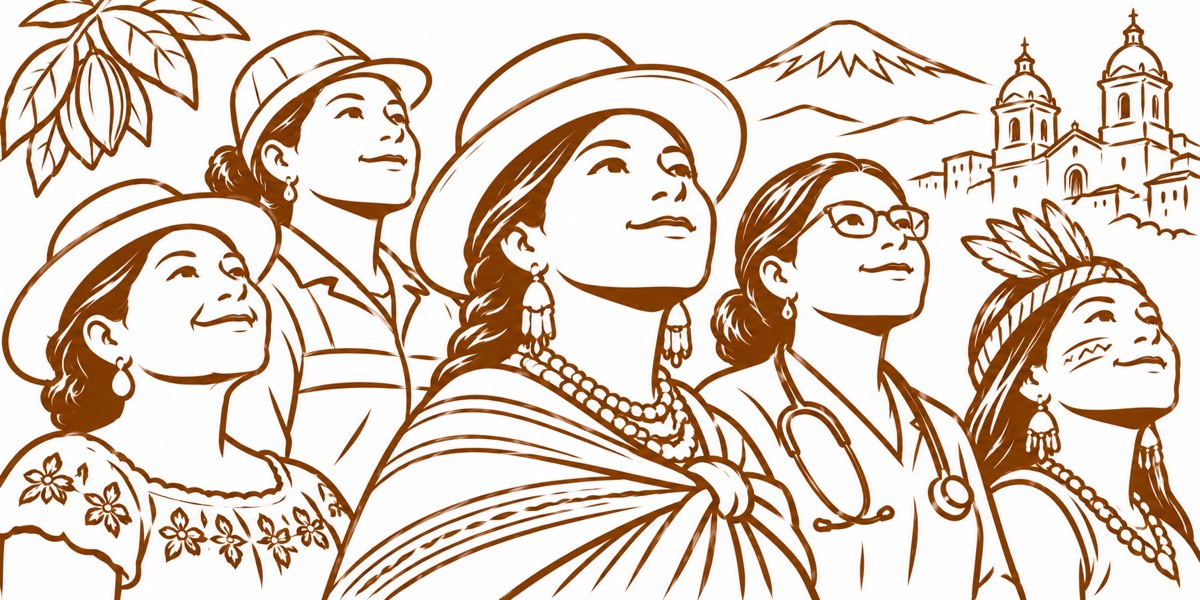
04

Ecuador's Women: Progress, Power and the Road Ahead

From pioneering professionals to business and political leaders, a century of change—and the challenges that remain.

Open this article separately →

Across Ecuador, women are building businesses, leading institutions and taking on responsibilities that earlier generations struggled to access.

In Manta, a chef is developing new markets for traditional Manabí food. In the Amazon, women are turning agricultural knowledge into commercial opportunities. In law offices, hospitals, universities and government, women are exercising growing professional and political influence.

Their achievements reflect more than a century of change. But the progress has been uneven, and significant inequalities remain.

Building businesses and opportunities

For Manta entrepreneur Luciana Alvia, traditional cuisine is both a cultural inheritance and a business opportunity. A chef with marketing training, she operates Cevichería D'Lucy and is developing packaged ceviche products for wider distribution.

As El Diario reported in November 2026, Alvia was selected for an entrepreneurship distinction during Manta's cantonization celebrations.

In nearby Portoviejo, three women have demonstrated another route to business ownership. Belén Rivadeneira, Salma Romero and Alejandra Moreira began selling products through social media before establishing physical businesses. Their experiences, profiled by El Diario, show how digital commerce can help entrepreneurs develop a customer base before investing in premises and employees.

In Orellana, the Sacha Ayllu cooperative brings together 63 members producing and marketing products made from sacha inchi, a traditional Amazonian crop. Its SachaFit brand connects agricultural knowledge with processing and commercial distribution. The Integral REDD+ Programme has documented the cooperative's efforts to reach wider markets.

These enterprises reflect a broader trend. Ecuador's Global Entrepreneurship Monitor 2025 reported that women represented 52.23% of adults engaged in early-stage entrepreneurial activity.

Access to financing remains important. Government figures published in 2026 reported that women received $239 million in entrepreneurship loans through BanEcuador and CONAFIPS between January and September, 7.3% more than during the corresponding period of 2025.

From pioneers to professional leaders

A century ago, Ecuadorian women were still challenging restrictions on education, professional careers and political participation.

Matilde Hidalgo de Procel, born in Loja in 1889, became Ecuador's first woman to earn a medical degree. In 1924, she became the first woman to exercise the vote in Latin America, connecting professional achievement with political rights.

Today, Ecuadorian women work throughout medicine, law, engineering, education, science and corporate management.

Belén Martínez, founder of BEMART, represents a newer generation of technical entrepreneurs. Her company develops medical applications of three-dimensional printing, bringing together engineering and specialized healthcare. Her work was profiled by Vistazo in March 2026.

In the legal profession, women increasingly occupy senior roles, although advancement into leadership remains uneven. Ecuadorian legal professional Ximena Bautista discussed both the progress and continuing obstacles in an interview published by Lemontech.

Women also direct companies and manage large workforces. Yet INEC's 2024 structural business survey found that women accounted for just 33.4% of employment in the medium-sized and large companies surveyed. Average monthly remuneration was $941.50 for women and $966.40 for men, although those figures do not compare identical jobs.

A changing political landscape

Women's political representation has undergone a remarkable transformation since Matilde Hidalgo cast her vote in 1924.

Rosalía Arteaga briefly held Ecuador's presidency in 1997. Nina Pacari became the country's first Indigenous woman foreign minister in 2003. Women have since occupied senior government positions and competed for the presidency.

Electoral reforms have also increased women's participation in legislative candidacies.

Women held approximately 41% of National Assembly seats after the 2023 election, rising to around 45% following the 2025 election.

Local government tells a different story. Women won only 18.6% of mayoralties and 30.4% of provincial prefectures in the 2023 elections.

That contrast is significant. Women are approaching parity in the national legislature but remain substantially underrepresented in local executive offices, where decisions about infrastructure, services and public investment directly affect communities.

Greater representation also does not mean women share the same political views. Ecuador's female politicians represent different parties and constituencies, and their individual records vary.

Progress, inequality and the next generation

The distance travelled since Matilde Hidalgo's time is considerable. Women now own businesses, practise specialized professions, direct institutions and occupy a substantial share of the national legislature.

But opportunity is not evenly distributed.

Many small enterprises operate with limited capital. Women remain underrepresented in some senior positions, while unpaid responsibilities for children and other relatives can restrict opportunities for employment and professional advancement.

Geography, income, education and access to credit also matter. A professional in Quito, a market trader in Manabí and an agricultural producer in the Amazon may face very different circumstances.

The next stage of progress will depend partly on access to financing, technical education, professional advancement and political opportunity. Digital commerce offers new ways to reach customers, while electoral rules may open more doors for women seeking public office. Neither guarantees success.

Ecuador's women have moved from challenging the right to participate to exercising influence across business, professional and political life.

The question for the years ahead is not simply how many women participate, but how many have the resources, opportunities and authority to shape the country's future.

Back to contents ↑
Editorial line illustration for “From Macará to International Football: Marilyn Silverio's Journey.”
Editorial illustration for “From Macará to International Football: Marilyn Silverio's Journey.”Original editorial illustration created for Ecuador Informa with OpenAI image generation.

05

From Macará to International Football: Marilyn Silverio's Journey

Open this article separately →

Marilyn Edith Silverio Gonzaga grew up in Macará, near Ecuador's border with Peru, dreaming of a future in football. She played competitively and was invited to a national team selection process. When opportunities as a player became limited, she found another way to stay on the field: refereeing.

More than a decade later, Silverio has earned her FIFA international referee badge. On November 29, she is scheduled to serve as second assistant referee for a women's international friendly between Peru and the Dominican Republic, alongside fellow Ecuadorian officials María Belén Lupera and Mónica Amboya.

Her refereeing career began with a course in Loja. She progressed through national competitions and, in 2026, officiated at the South American Under-17 Women's Championship in Paraguay. CONMEBOL records confirm her appointment as an assistant referee for the Colombia–Bolivia match in Asunción on April 30.

Alongside her sporting career, Silverio is in her sixth semester studying Physical Activity and Sports Pedagogy at the National University of Loja. She credits her parents and siblings for their support and continues to balance university work, training and weekend matches.

Speaking to Diario Crónica, Silverio described the discipline required to advance in refereeing and encouraged young people in Macará to pursue their goals.

Her next international assignment will take her from the football fields of southern Ecuador to another stage in her growing career.

Sources: Diario Crónica, November 5, 2026 · CONMEBOL referee appointments

Back to contents ↑
Editorial line illustration for “Paraguay's Banking Collapse: Frozen Savings and a Fallen President.”
Editorial illustration for “Paraguay's Banking Collapse: Frozen Savings and a Fallen President.”Original editorial illustration created for Ecuador Informa with OpenAI image generation.

06

Paraguay's Banking Collapse: Frozen Savings and a Fallen President

Open this article separately →

When Paraguay's Ueno Bank collapsed, customers suddenly found themselves unable to access their savings. Among those demanding answers was Jessica Aquino, 32, who joined protesters outside Congress as lawmakers debated the future of President Santiago Peña. She wanted accountability—and her money returned.

Within days, a banking failure affecting nearly three million customers had become a political crisis, ending with the removal of Paraguay's president.

What happened to Ueno Bank?

On November 2, 2026, the Banco Central del Paraguay began a formal resolution process after discovering that Ueno's solvency ratio had fallen below half the legal minimum. The decision was announced the following day.

The fast-growing digital bank had attracted millions of customers, including ordinary savers, while public institutions had deposited substantial funds with it.

Regulators identified problems involving loans to companies connected to the bank's controlling business group, weaknesses in financial documentation and concerns about the quality of its assets. The bank's collapse left customers unable to use their accounts and raised questions about financial supervision.

Source: Banco Central del Paraguay

Will customers recover their money?

Paraguay's deposit guarantee protects eligible deposits up to 228.3 million guaraníes per depositor, approximately US$38,000 at the time of the intervention.

Repayments began on November 5, initially prioritizing qualifying customers with deposits of up to 10 million guaraníes. By Saturday, November 7, approximately 1.2 million customers had received partial or full reimbursement, according to Associated Press.

Customers with larger balances, including public institutions holding pension and health funds, face greater uncertainty over the recovery of their money.

Sources: Banco Central del Paraguay | Associated Press

Why did the president lose his job?

Santiago Peña had previously owned shares in the business group associated with Ueno. He said he sold his interest in March 2025 and denied wrongdoing.

Opposition lawmakers accused him of conflicts of interest and questioned whether political connections had influenced the placement of public funds and banking supervision.

On November 6, Congress removed Peña from office, and Vice President Pedro Alliana became president. Peña appeared before prosecutors on November 7 while under house arrest. The allegations remain under investigation.

Sources: Reuters | AFP

What does this mean for Ecuador?

There is no confirmed evidence that Ueno's collapse has disrupted Ecuadorian banks or depositors.

Ecuador operates its own banking supervision and deposit-insurance system through its financial regulators and the Corporación del Seguro de Depósitos, Fondo de Liquidez y Fondo de Seguros Privados (COSEDE).

The Paraguayan crisis illustrates why supervision of lending, protection of savings and oversight of public money matter. For affected depositors, however, the most urgent concern remains much simpler: recovering the money they need for everyday life.

Back to contents ↑
Editorial line illustration for “When the Ground Moves: Homes and Roads at Risk in Western Loja.”
Editorial illustration for “When the Ground Moves: Homes and Roads at Risk in Western Loja.”Original editorial illustration created for Ecuador Informa with OpenAI image generation.

07

When the Ground Moves: Homes and Roads at Risk in Western Loja

Open this article separately →

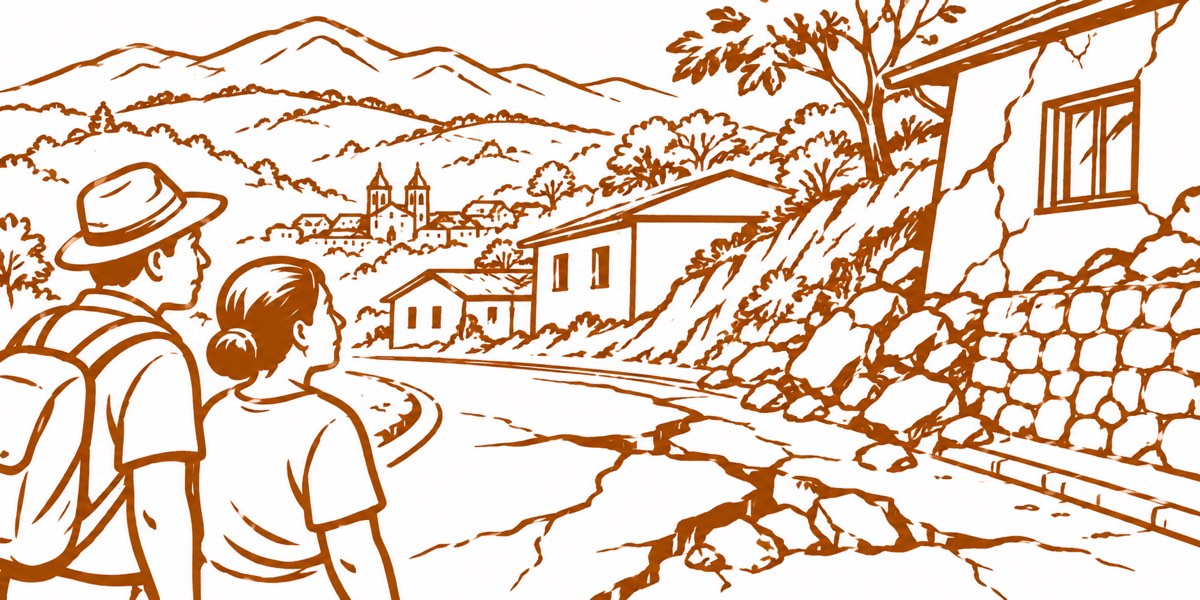
On the western side of Loja, the provincial capital in Ecuador's southern Andes, a hillside is slowly moving beneath homes and roads. The worst visible damage is in El Plateado, a neighbourhood near the city's western bypass, where cracked ground and a distorted roadway have raised fears about the safety of nearby houses.

A geological study by Ecuador's Instituto de Investigación Geológico y Energético (IIGE), described by Loja councillor Yuri Yaguana Jaramillo, identifies a potentially affected area of 91.7 hectares covering El Plateado and parts of several neighbouring communities.

At monitored locations in El Plateado, measurements taken over approximately one month recorded 1.63 metres of subsidence, cracks around 53 centimetres wide and ground displacement averaging about 1.33 centimetres per day. These figures apply to specific monitoring points, not the entire affected area.

The movement has damaged sections of the Vía de Integración Barrial, Loja's western bypass, disrupting access and increasing concerns for nearby residents.

Doris Guamán, a local shopkeeper, told La Hora in October that the road was deteriorating daily and asked authorities to help families relocate to safer ground.

The Ministry of Infrastructure and Transport has outlined temporary road repairs, further geological and engineering studies, and plans to relocate families in high-risk areas. Permanent stabilization work will depend on the findings of those assessments.

Loja's mountainous terrain and seasonal rainfall make slope instability a recurring concern. For families in El Plateado, the immediate questions are whether their homes remain safe and when assistance will arrive.

Sources: Diario Crónica — Geological study, November 5, 2026 · La Hora — Road works and relocation, October 6, 2026

Back to contents ↑
Editorial line illustration for “Where the Marimba Meets the Amorfino: Calceta's Afro-Montuvio Festival.”
Editorial illustration for “Where the Marimba Meets the Amorfino: Calceta's Afro-Montuvio Festival.”Original editorial illustration created for Ecuador Informa with OpenAI image generation.

08

Where the Marimba Meets the Amorfino: Calceta's Afro-Montuvio Festival

Open this article separately →

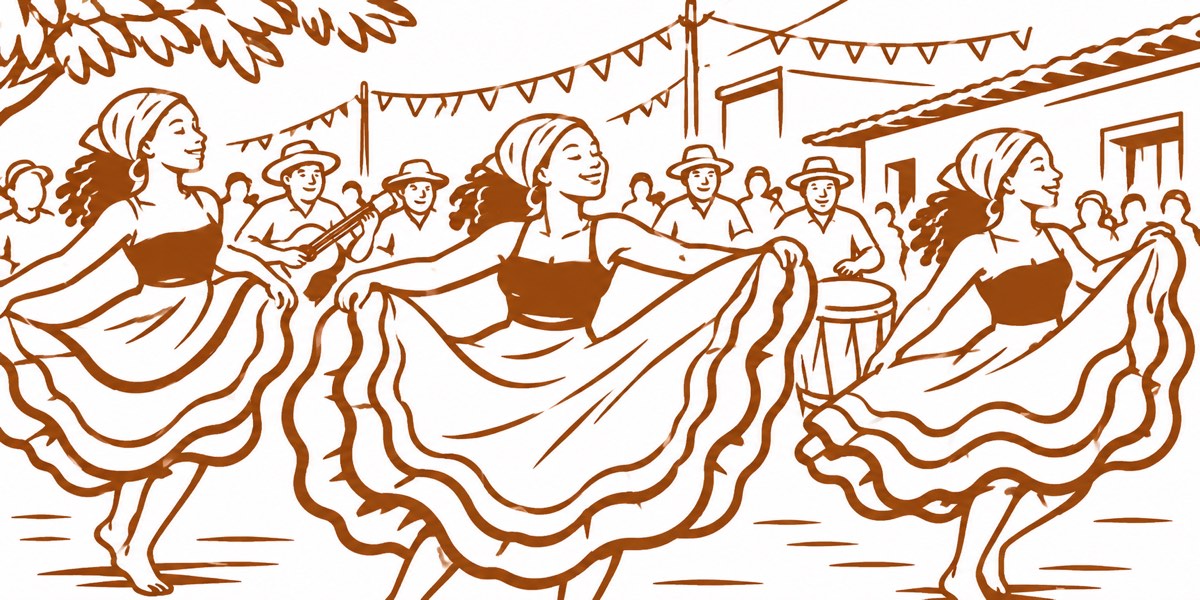
On the banks of the Río Mosca in Calceta, Manabí, two coastal traditions came together in 2017: the rhythms of the Afro-Ecuadorian marimba and the playful, improvised verses of the Montuvio amorfino. What began as a gathering of musicians, poets and friends has grown into a three-day festival celebrating its tenth edition this November.

From November 13 to 15, the Casa Cultural Experimental Montuvia will host the X Festival Afro-Montuvio under the theme Memoria en Resistencia (Memory in Resistance).

The festival was born from an encounter organized by cultural promoters including Alexandra Cusme and Linver Nazareno. Their idea was to bring together Afro-Ecuadorian and Montuvio artists whose traditions have developed alongside one another on Ecuador's coast, but are not always celebrated together.

Visitors will hear marimba music, traditional singing and poetry, including amorfinos—short verses that can be romantic, teasing or humorous, often performed as an exchange between speakers. Décimas, storytelling and dance are also part of the programme, with workshops and discussions offering opportunities to learn about the traditions behind the performances.

Food is another part of the experience. Traditional Manabí dishes will be prepared in wood-fired ovens, while a camping area will accommodate visitors who want to stay overnight. The festival's daytime activities will give way to music and performances in the afternoons and evenings.

Organizers are also asking visitors to help protect the nearby Río Mosca watershed by bringing reusable plates, cups and containers. Disposable plastics will not be permitted.

Supported by local cultural groups, the Casa de la Cultura de Manabí and ESPAM university, the festival has remained rooted in the community where it began.

For visitors to Calceta, the attraction is not only watching performances but experiencing two of coastal Ecuador's living cultural traditions in the same place.

Sources: El Diario — X Festival Afro-Montuvio, October 1, 2026 · Festival Afro-Montuvio — Organizers

Back to contents ↑