Weekly edition · 2026-11-15

Ecuador Informa — Sunday Magazine — November 15, 2026

This edition travels across Ecuador and beyond: from national parks, gold mining and vehicle assembly to student innovation, particle physics, artificial intelligence in classrooms and Pope Leo XIV’s return to Chiclayo.

Editorial line illustration for “Ecuador's National Parks: Four Worlds in One Small Country.”
Editorial illustration for “Ecuador's National Parks: Four Worlds in One Small Country.”Original editorial illustration created for Ecuador Informa with OpenAI image generation.
Editorial line illustration for “Ecuador's National Parks: Four Worlds in One Small Country.”
Editorial illustration for “Ecuador's National Parks: Four Worlds in One Small Country.”Original editorial illustration created for Ecuador Informa with OpenAI image generation.

01

Ecuador's National Parks: Four Worlds in One Small Country

Beyond the famous Galápagos Islands, Ecuador protects an extraordinary collection of landscapes: misty Andean lakes, active volcanoes, tropical dry forests and Amazonian rainforest. These parks reveal a country whose natural diversity is matched by the challenges of protecting it.

Open this article separately →

Beyond the Galápagos

Ecuador is famous for the Galápagos Islands, but some of its most remarkable natural landscapes are hidden in plain sight on the mainland. Above Cuenca, hundreds of lakes lie scattered across the cold Andean páramo. In Manabí, humpback whales gather offshore while dry forests cover the coastal hills. Farther east, active volcanoes rise above cloud forests, and Amazonian rivers wind through some of the most biologically diverse habitats on Earth.

These landscapes are part of Ecuador's network of 14 national parks, which stretches from the Pacific islands to the Amazon basin. While Galápagos attracts international attention, the mainland parks reveal another side of the country. The parks featured here offer a journey through eight distinctive protected landscapes, including places that remain unfamiliar to many visitors and residents.

Some have established visitor facilities; others are remote wilderness areas where scientific exploration continues. Together, they protect wildlife, cultural heritage and ecosystems important to communities far beyond their boundaries.

Machalilla: Where Forest Meets the Pacific
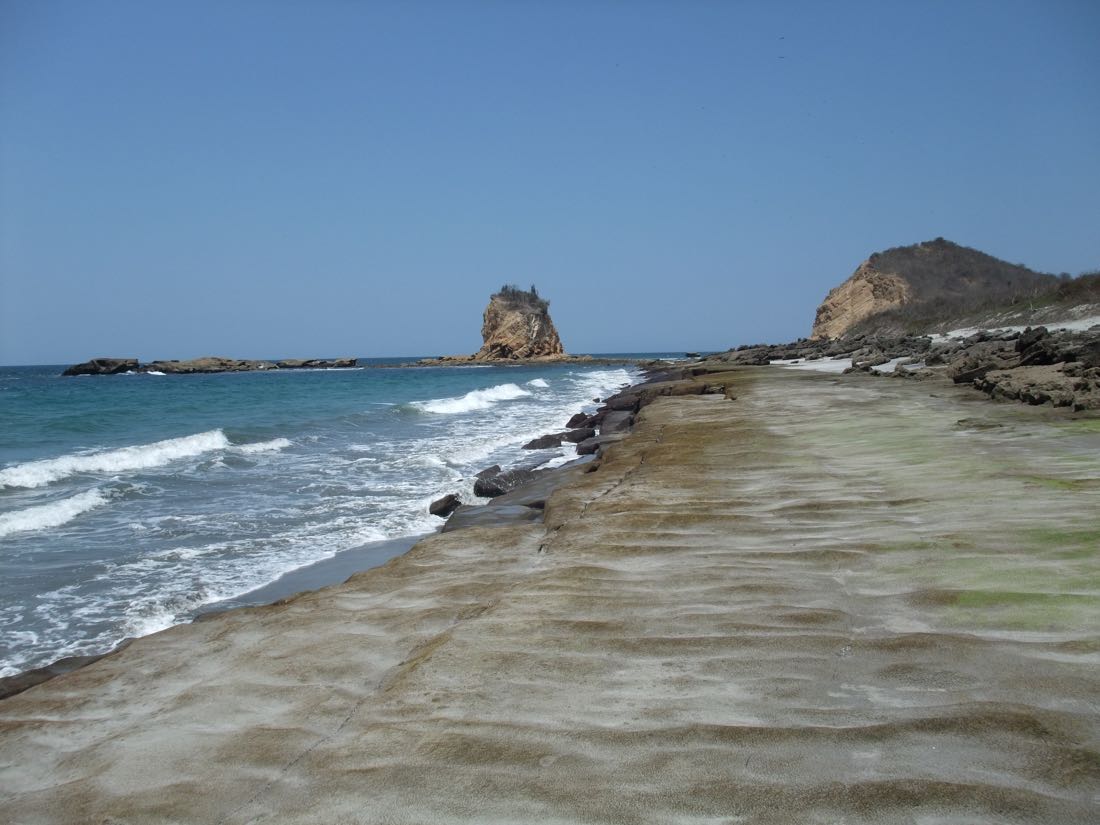
Rocky coastline and Pacific waters in Machalilla National Park, Manabí.
Rocky coastline and Pacific waters in Machalilla National Park, Manabí.Photograph: Kulfman / Wikimedia Commons / CC BY-SA 3.0

On Manabí's coast, Machalilla National Park protects approximately 585 square kilometres of coastal and marine landscapes. Its hills are covered with tropical dry forest, where trees shed their leaves during the dry season, giving parts of the landscape an almost desert-like appearance.

The park includes Los Frailes, one of Ecuador's best-known natural beaches, and Isla de la Plata, where visitors can encounter seabirds, including blue-footed boobies. Between roughly June and September, humpback whales migrate through the waters off Manabí to breed and give birth, supporting a seasonal whale-watching industry centred on Puerto López.

Machalilla also preserves evidence of ancient coastal cultures. The Agua Blanca community maintains an archaeological museum and offers guided visits connecting the landscape with the region's Indigenous history. The park brings together wildlife, coastal scenery and thousands of years of human settlement.

Cajas: Hundreds of Lakes Above Cuenca
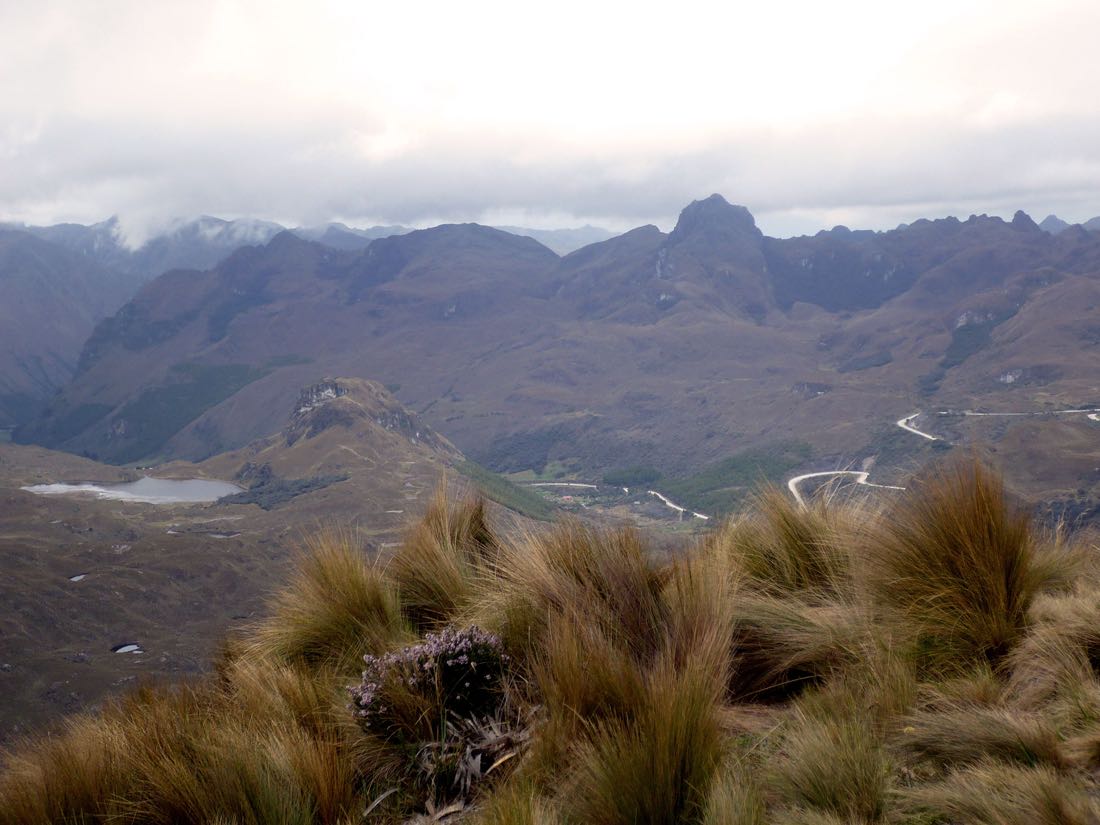
Andean lakes and páramo landscape in Cajas National Park, west of Cuenca.
Andean lakes and páramo landscape in Cajas National Park, west of Cuenca.Photograph: Sabrina Setaro / Wikimedia Commons / CC BY 2.0

West of Cuenca, Cajas National Park covers approximately 294 square kilometres, yet contains hundreds of lakes scattered across rolling mountains and rocky valleys. The park protects high-altitude páramo, where cold winds, mist and rain shape an environment unlike anything on Ecuador's coast.

The lakes, wetlands and water-retaining soils help regulate the rivers supplying Cuenca and surrounding communities. Much of the city's drinking water originates in these mountain watersheds, making Cajas important to residents who may never visit the park.

Among its distinctive habitats are patches of Polylepis forest, whose twisted trees survive in sheltered mountain valleys. Visitors can walk among lakes and grasslands, although elevations above 3,000 metres and rapidly changing weather can make even short hikes demanding.

Cotopaxi and Antisana: Life Beneath the Volcanoes
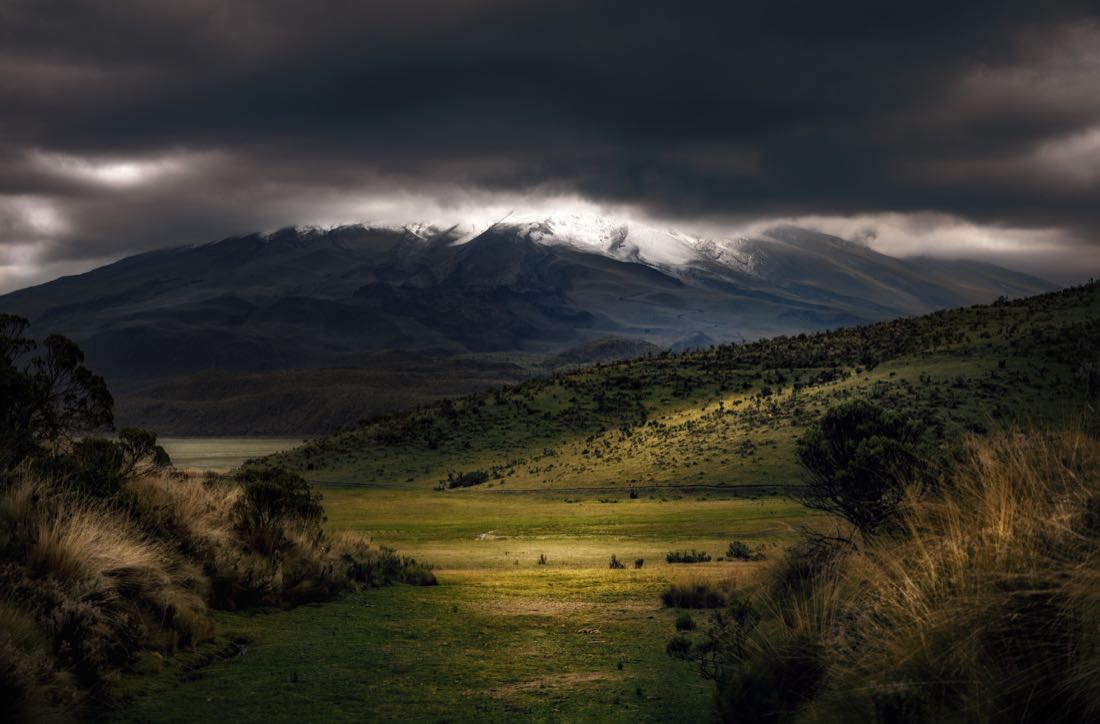
Cotopaxi rises above the páramo of Cotopaxi National Park.
Cotopaxi rises above the páramo of Cotopaxi National Park.Photograph: Simon Matzinger / Wikimedia Commons / CC BY 4.0

South of Quito, Cotopaxi rises 5,897 metres above sea level, dominating a national park covering approximately 323 square kilometres of open grasslands, wetlands and mountain scenery. Wild horses roam parts of the landscape, while Limpiopungo Lagoon offers views of the snow-covered volcano.

Cotopaxi is also active. Past eruptions have produced ashfall and destructive volcanic mudflows known as lahars, making monitoring and emergency planning important for nearby communities.
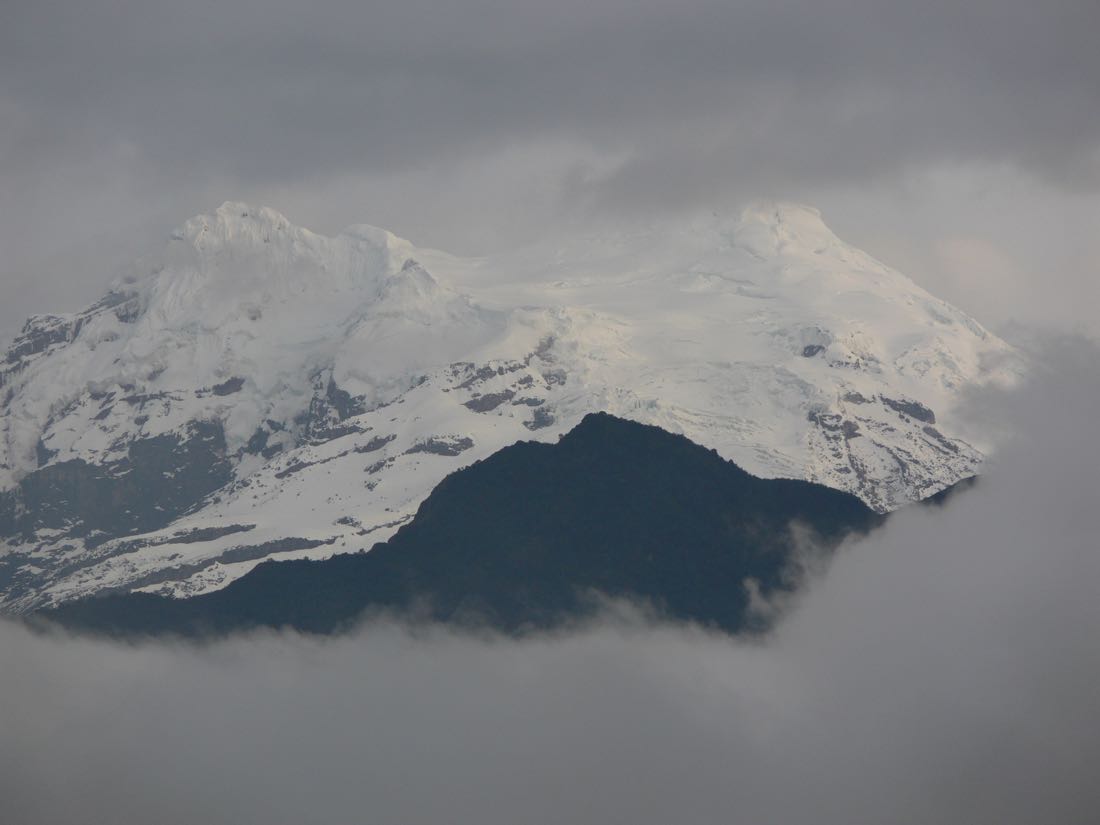
Antisana seen from the Papallacta area in Ecuador's northern Andes.
Antisana seen from the Papallacta area in Ecuador's northern Andes.Photograph: Stefan Weigel / Wikimedia Commons / CC BY 3.0

Antisana National Park, covering approximately 1,206 square kilometres, protects another remarkable volcanic landscape southeast of Quito. Its glaciers, wetlands and páramo provide habitat for Andean condors and other high-altitude wildlife. Water originating in the Antisana region contributes to Quito's drinking-water system through reservoirs and associated infrastructure.

These neighbouring mountain environments show two sides of Ecuador's volcanoes: dramatic natural hazards and landscapes that help sustain the country's capital.

Llanganates: The Mountains of Mystery

East of the central Andes lies one of Ecuador's least accessible national parks. Llanganates protects approximately 2,199 square kilometres of mist-covered mountains, wetlands, steep valleys and dense vegetation. Much of its interior is difficult to reach, and changing weather adds to the challenge.

The mountains are associated with the legend of Atahualpa's hidden treasure. According to tradition, a vast quantity of Inca gold was concealed in the Llanganates rather than surrendered to the Spanish conquerors. The legendary treasure has never been conclusively located.

The park's less mysterious riches are its extensive páramo and cloud forests, which shelter wildlife and remain comparatively little explored. Its difficult terrain has helped preserve large areas of habitat while making research and conservation work challenging.

Sangay: From Glaciers to Tropical Forest

Sangay National Park spans approximately 4,866 square kilometres across Ecuador's central and eastern Andes. Snow-covered mountains and active volcanoes rise above páramo and cloud forests that descend toward the Amazon basin.

The park includes Sangay and Tungurahua, volcanoes with histories of significant eruptions. Sangay's continuing activity has produced ash emissions affecting communities beyond the protected area.

Recognized as a UNESCO World Heritage Site, Sangay protects habitats for spectacled bears, mountain tapirs and Andean condors. Its dramatic changes in altitude allow very different ecosystems to exist within a single national park.

Much of the interior remains difficult to access, preserving extensive mountain forests and wildlife habitats.

Yasuní: The Amazon's Extraordinary Diversity
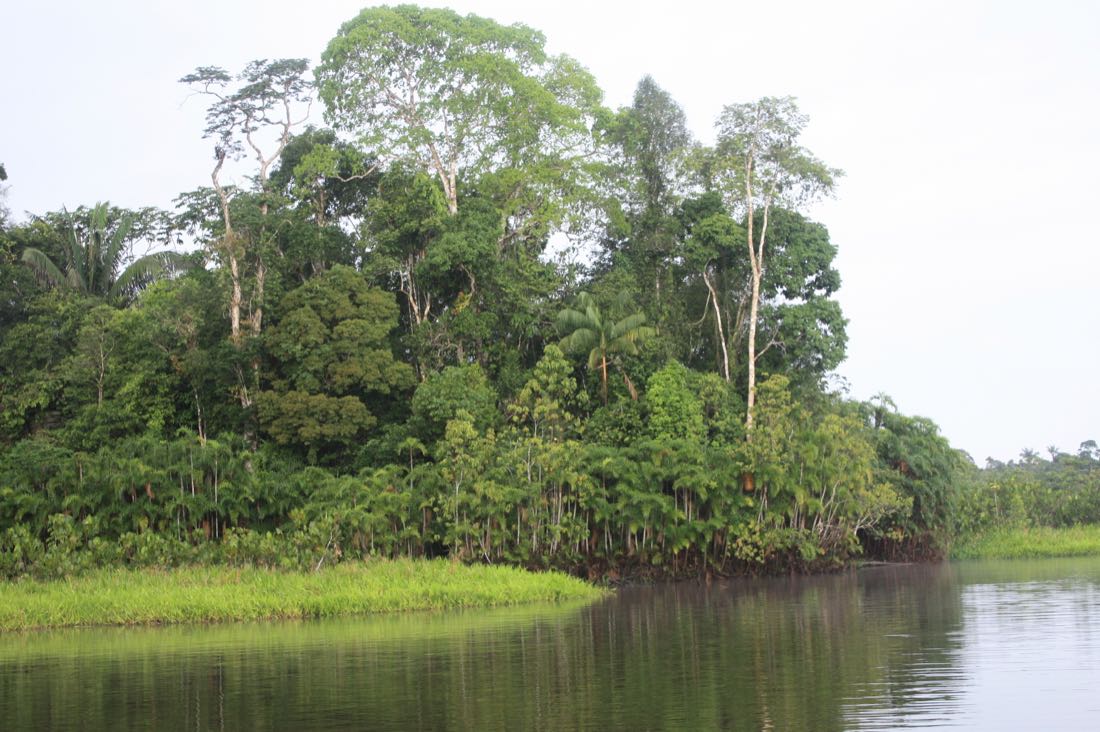
Amazon rainforest in Yasuní National Park.
Amazon rainforest in Yasuní National Park.Photograph: ALAI — Agencia Latinoamericana de Información / Wikimedia Commons / CC BY-SA 4.0

In eastern Ecuador, Yasuní National Park protects more than 10,000 square kilometres of Amazonian rainforest where rivers wind beneath a nearly continuous canopy of trees. Its remarkable biodiversity includes monkeys, colourful birds, amphibians, insects and thousands of plant species.

The region is home to Waorani communities and contains territories associated with the Tagaeri and Taromenane, Indigenous peoples living in voluntary isolation. Their territorial rights are central to debates over the park's protection.

Yasuní has also become a national symbol of the conflict between conservation and petroleum development. In an August 2023 referendum, Ecuadorian voters supported ending oil production in Block 43, known as ITT, within the park. Implementing that decision has involved disputes over deadlines, economic consequences and the dismantling of oil infrastructure.

The park protects extraordinary natural diversity while confronting questions about Indigenous rights, national revenue and the future of oil extraction in the Amazon.

Podocarpus: Where the Andes Meet the Amazon
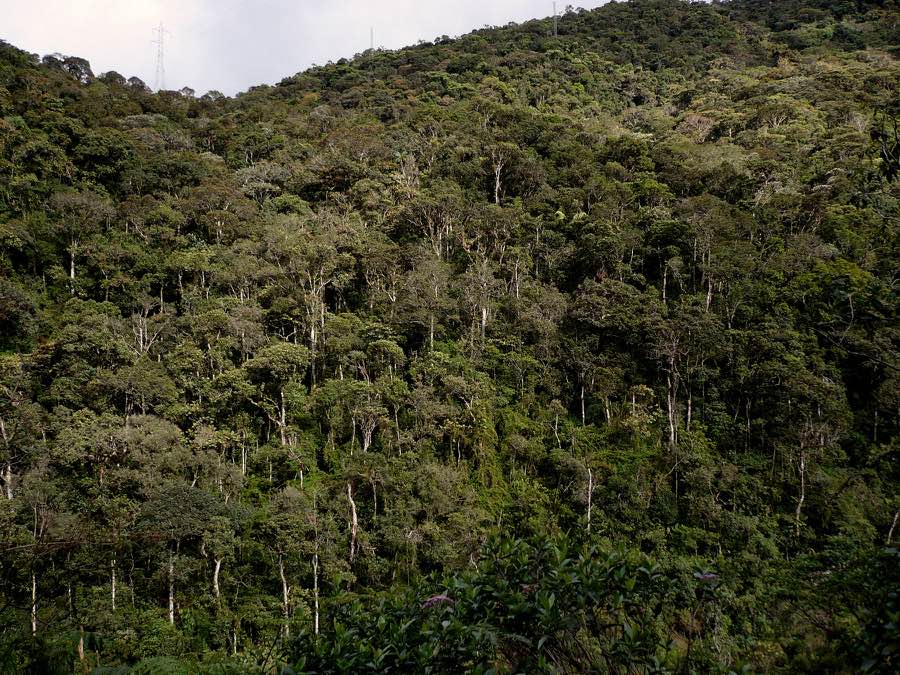
Southern Andean forest in Podocarpus National Park.
Southern Andean forest in Podocarpus National Park.Photograph: Sabrina Setaro / Wikimedia Commons / CC BY 2.0

In southern Ecuador, Podocarpus National Park occupies the mountains between Loja and Zamora Chinchipe, where Andean landscapes meet the Amazonian foothills. Its forests are filled with mosses, orchids, ferns and remarkable birdlife, while higher elevations contain páramo grasslands and shrublands.

One of the park's most remarkable geographical features is its position across the continental watershed. Water originating on its western side enters the Catamayo-Chira river system and ultimately reaches the Pacific Ocean. Water flowing east joins the Zamora and Mayo river systems, eventually reaching the Amazon and the Atlantic Ocean. The park therefore protects headwaters connected to two oceans, as well as water supplies important to communities in Loja and Zamora Chinchipe.

Podocarpus takes its name from a genus of native conifer trees found in the region. Its varied elevations and habitats have made it particularly important for biodiversity research.

On November 11, Ecuador's Ministry of Environment and Energy announced the park's expansion by 15,108 hectares, bringing its total area to approximately 1,536 square kilometres. The newly protected territories include Abra de Zamora, where 14 amphibian species new to science have been recorded, and the Numbala River valley, which contains important remnants of native Podocarpus forest. Source: Ministry of Environment and Energy.

The park also faces threats from illegal gold mining, which has damaged protected forests and prompted enforcement operations against unauthorized tunnels, camps and processing facilities. The expansion provides additional legal protection to important habitats, while the mining activity demonstrates the difficulties of enforcing conservation rules in remote mountain terrain.

More Than Beautiful Places

From the whale-filled waters of Machalilla to the remote forests of Podocarpus, Ecuador's national parks reveal a country of extraordinary contrasts. Some are accessible by paved roads and marked trails; others remain difficult to explore. Their value extends beyond wildlife and scenery to the drinking water, cultural heritage and natural resources on which communities depend.

The Galápagos may have introduced Ecuador's natural wonders to the world. Its mainland national parks offer many more reasons to discover the country—and to understand the importance of protecting its remarkable landscapes.

Back to contents ↑
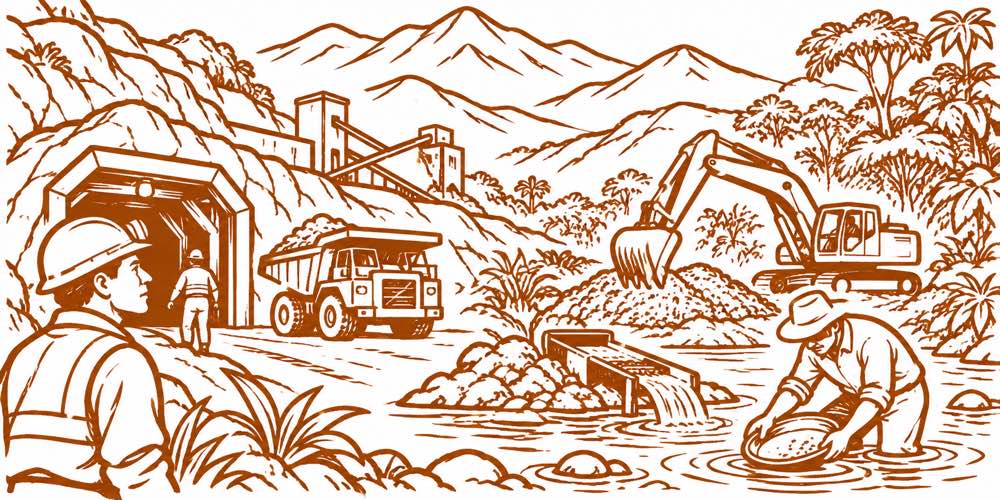
Editorial line illustration for “Ecuador's Gold: Who Gets the Wealth, and Who Pays the Price?.”
Editorial illustration for “Ecuador's Gold: Who Gets the Wealth, and Who Pays the Price?.”Original editorial illustration created for Ecuador Informa with OpenAI image generation.

02

Ecuador's Gold: Who Gets the Wealth, and Who Pays the Price?

From Canadian-operated mines in the Amazon to protests over Cuenca's drinking water, Ecuador's gold industry promises investment, jobs and export earnings. But it also raises questions about environmental protection, foreign ownership and the growing involvement of organized crime.

Open this article separately →

A New Gold Rush

In September 2025, tens of thousands of people marched through Cuenca to oppose a proposed gold mine near the city's water sources. Three weeks later, Ecuador revoked the project's environmental licence. Yet elsewhere in the country, gold mining was booming.

Gold mining is nothing new in Ecuador. The southern towns of Zaruma and Portovelo have depended on it for generations, and small-scale mining continues to support families and businesses. What has changed is the scale of modern extraction and the growing international interest in Ecuador's mineral deposits.

In Zamora Chinchipe, Canadian-owned Lundin Gold operates Fruta del Norte, one of the country's largest gold mines. In 2025, it produced 498,315 troy ounces—approximately 15.5 tonnes—of gold. The company reported annual revenue of around $1.78 billion. Source: Lundin Gold.

Gold is usually embedded in rock rather than found in nuggets. At Fruta del Norte, miners drill and blast underground, bring the ore to the surface, crush it and process it to recover the metal. The mine handled approximately 1.83 million tonnes of ore in 2025.

Other deposits are worked through open-pit mining, which removes rock from the surface in enormous excavations. Both methods require machinery, waste management and water controls. Underground mines have smaller surface excavations, but neither method is free of environmental risks.

The Other Gold Rush: Livelihoods and Criminal Profits

In the gold-producing districts of Zaruma, Portovelo and Camilo Ponce Enríquez, mining is not simply a business for multinational corporations. Small operators and family enterprises extract gold from underground veins, sometimes using relatively modest equipment and selling their ore to processing plants. The industry supports miners, truck drivers, mechanics and local businesses.

Ecuador recognizes both artisanal mining and small-scale mining as legal activities when properly authorized. Artisanal miners can work individually, as families or in associations under a permit system. Small-scale mining operates under a separate regime that allows larger production volumes. Both are subject to environmental requirements and official controls.

Alongside these legitimate operations, unauthorized mining has expanded into remote forests and river valleys. Some miners work without permits or outside approved areas, while criminal organizations have increasingly entered the industry, controlling territory, demanding payments and profiting from extraction and trade. Small-scale mining is not synonymous with illegal mining, and not every unauthorized operation is controlled by a criminal gang.

Unlike cocaine, gold is a legitimate international commodity. Once illegally extracted gold passes through buyers and processing facilities, its origins can be difficult to establish. Investigations by the Global Initiative Against Transnational Organized Crime have documented how criminal networks exploit weaknesses in Ecuador's mining and commercial oversight.

The environmental consequences are visible from space. Satellite monitoring in Napo has documented mining-related deforestation and disturbed river systems. Excavation removes vegetation, alters waterways and leaves sediment and processing waste that can affect surrounding ecosystems.

Gold Inside a National Park

In March 2026, Ecuadorian authorities launched a major operation inside Podocarpus National Park, which extends across Loja and Zamora Chinchipe.

They reported destroying 94 illegal mine entrances, 129 camps and 56 crushing machines. The operation exposed an extensive network of underground workings and processing facilities inside an area where mining is prohibited. Source: Ministry of Environment and Energy.

Satellite researchers had already documented mining damage along the Loyola River inside the park, including changes to the river's course.

The situation illustrates the growing overlap between Ecuador's environmental and security problems. Illegal mining can damage forests and waterways while providing income to criminal networks. Removing machinery and closing tunnels addresses immediate operations, but lasting control also requires action against those financing and purchasing illegally extracted gold.

Foreign Money, Ecuadorian Resources

Canadian companies have become prominent in Ecuador's gold sector, while Chinese investors have made major commitments to mining, particularly copper. The Chinese-controlled Mirador project, also in Zamora Chinchipe, is primarily an open-pit copper mine, while Chinese-backed Río Blanco in Azuay became embroiled in legal disputes over consultation with local communities.

Ecuador is part of a much larger South American mining industry. Peru is a major producer of both gold and copper, while Colombia has long struggled with illegal gold extraction and its links to armed groups. Ecuador's industrial sector is comparatively young, and the country faces conflicts over environmental protection and illegal extraction already familiar elsewhere in the region.

Foreign investment brings capital, technology, employment and export earnings. Mining companies pay taxes and royalties, purchase goods and services, and employ Ecuadorian workers. The unresolved issue is how those benefits are distributed, particularly among communities closest to the mines.

Cuenca's Battle Over Water

The Loma Larga project illustrates why legal mining can be controversial. Canadian company DPM Metals proposed a $419 million underground gold mine near Quimsacocha, a high-altitude wetland ecosystem that helps supply water to Cuenca. The company maintained that the mine could operate safely, but opponents feared contamination and disruption of drinking water and irrigation supplies.

Following the September 2025 protests, Ecuador revoked the project's environmental licence in October, citing technical concerns raised by local authorities. The dispute brought into focus a question facing mining communities across Ecuador: how much economic benefit justifies the potential risk to an essential water supply?

Who Benefits—and Who Pays?

For Ecuador, the benefits of gold are substantial: export earnings, employment, investment and government revenue. Mining supports livelihoods from industrial workers in Zamora Chinchipe to small operators in El Oro.

But the costs can fall on different people. Communities near industrial projects may face concerns over water and land use. Residents near illegal operations can experience damaged rivers, deforestation and criminal intimidation. And when gold enters international markets through poorly documented supply chains, the profits may travel far beyond the communities where it was extracted.

The experience of Cuenca, the production at Fruta del Norte and the illegal mines inside Podocarpus reveal three sides of the same industry: valuable resources, competing interests and difficult choices about environmental protection.

Ecuador has gold beneath its mountains and forests. The question is how much of that wealth will benefit the country—and what Ecuador will lose in extracting it.

Back to contents ↑
Editorial line illustration for “Made in Ecuador: The Cars and Pickups You Didn't Know Were Built Here.”
Editorial illustration for “Made in Ecuador: The Cars and Pickups You Didn't Know Were Built Here.”Original editorial illustration created for Ecuador Informa with OpenAI image generation.

03

Made in Ecuador: The Cars and Pickups You Didn't Know Were Built Here

Ecuador has been assembling vehicles for more than half a century. A new Kia pickup rolling off a production line in Quito is bringing fresh attention to an industry that employs skilled workers, supports local suppliers and faces growing competition from imported cars.

Open this article separately →

A New Pickup, Made in Quito

A Kia Tasman pickup rolling off an assembly line in Quito might surprise drivers who assume that nearly every new vehicle sold in Ecuador arrives fully built from overseas. In November 2026, Ecuador became the first country outside South Korea to assemble the Tasman, following an investment of more than $20 million in plant improvements, equipment and worker training.

The vehicle is being assembled at Aymesa, one of Ecuador's two principal automotive assembly companies. The project gives the country's manufacturing sector a new model at a time when locally assembled vehicles account for only about one in ten new-vehicle sales.

But Ecuador's automotive industry is not new. Its history stretches back more than five decades, and at its peak, locally assembled vehicles dominated the domestic market.

From Imported Parts to Finished Vehicles

Vehicle assembly in Ecuador began in the 1970s. Over subsequent decades, factories in Quito and elsewhere produced vehicles carrying familiar international badges, including Chevrolet and Kia. Ecuador developed an industry built around importing components, assembling finished vehicles and supplying parts manufactured locally.

Most Ecuadorian assembly operations use what the industry calls completely knocked down (CKD) kits. Major components arrive from abroad, while local workers assemble the body, install mechanical and electrical systems, fit interior components and complete inspections and testing.

A vehicle assembled in Ecuador is not necessarily manufactured entirely from Ecuadorian parts. Engines, transmissions and many electronic components are generally imported. Local suppliers may provide seats, glass, tyres, batteries, wiring or other components, depending on the model and its production arrangements.

Even so, assembly creates jobs beyond the factory floor. Transport companies move components and finished vehicles, local suppliers produce parts, and technicians maintain the machinery needed to keep production running. Assembly plants also require workers trained in quality control, electrical systems and modern manufacturing processes.

Two Factories Carry the Industry Forward

For years, one of Ecuador's best-known locally assembled vehicles was the Chevrolet D-Max pickup, produced at the Ómnibus BB plant in Quito. That ended in September 2024 when General Motors closed its Ecuadorian assembly operations, a major setback for the industry and its suppliers.

Today, Aymesa in Quito and Ciauto in Ambato are the country's two principal vehicle assemblers. Aymesa produces vehicles under international brands, including Kia, while Ciauto has assembled models associated with Chinese manufacturers such as Great Wall.

The factories represent different parts of Ecuador's industrial geography. Quito has a long automotive manufacturing history, while Ambato has developed a network of metalworking, vehicle-related and other manufacturing businesses.

The arrival of the Kia Tasman demonstrates that international manufacturers still see a role for Ecuadorian assembly. The project also requires investment in production equipment and training to meet the specifications of a newly introduced vehicle.

Why Are Imported Vehicles Winning?

In 2014, approximately half the new vehicles sold in Ecuador were assembled domestically. By 2025, the share had fallen below 12%. According to the Ecuadorian Automotive Industry Chamber (CINAE), 14,895 locally assembled vehicles were sold between January and October 2026, an increase of 29.2% over the same period in 2025. Their share of total new-vehicle sales was approximately 10.6%, as imported vehicles continued to dominate the market.

Imports have gained ground as trade agreements, changing consumer preferences and competition from overseas manufacturers have reshaped the market. Chinese brands have become particularly prominent, offering a growing selection of petrol, hybrid and electric vehicles at competitive prices.

For Ecuadorian assemblers, the challenge is producing vehicles at costs that allow them to compete with fully imported models. Ecuador's relatively small domestic market limits economies of scale, while imported components, manufacturing equipment and production requirements add costs.

Can Ecuador Build Beyond Its Own Market?

Pickups remain an important opportunity for local manufacturers. Between January and October 2026, Ecuadorian-assembled pickups accounted for approximately 27% of sales in that category, considerably higher than the industry's share of the overall vehicle market.

Manufacturers are also exploring exports, particularly to Colombia. Selling beyond Ecuador would give assembly plants access to a larger market and potentially help them spread production costs across more vehicles. Exports would depend on competitive prices, trade conditions and agreements with international manufacturers.

For workers in Quito and Ambato, the industry's future concerns manufacturing jobs, technical training and the businesses supplying components and services. The investment behind the Kia Tasman brings new equipment and production requirements to Aymesa, adding to the technical capabilities of its workforce.

The new pickup represents an investment in Ecuadorian manufacturing at a time when imports dominate the domestic market. Whether it marks the beginning of a sustained recovery will depend on how successfully the country's factories compete at home and develop opportunities abroad.

Back to contents ↑
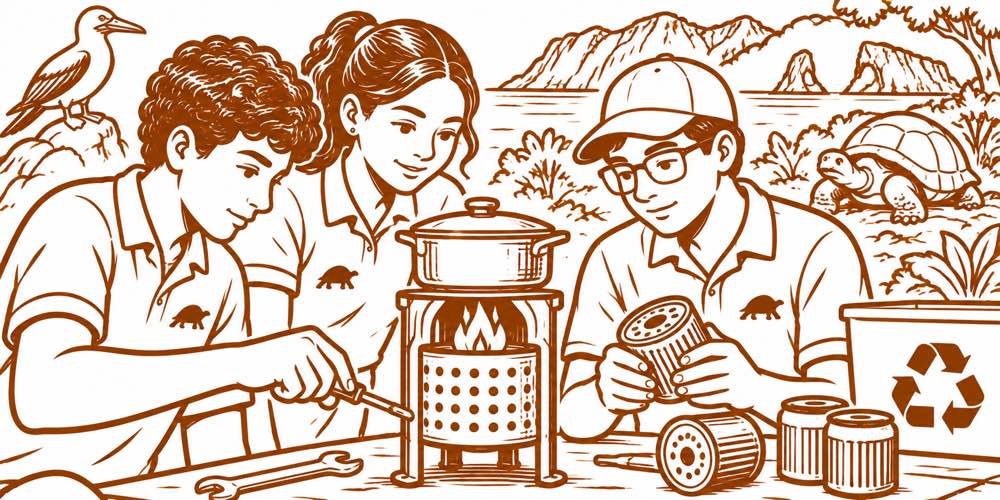
Editorial line illustration for “From Used Oil Filters to an International Science Prize: Galápagos Students Turn Waste into Innovation.”
Editorial illustration for “From Used Oil Filters to an International Science Prize: Galápagos Students Turn Waste into Innovation.”Original editorial illustration created for Ecuador Informa with OpenAI image generation.

04

From Used Oil Filters to an International Science Prize: Galápagos Students Turn Waste into Innovation

Three teenagers from Santa Cruz have transformed discarded automotive parts into an experimental cooking stove, winning international recognition in Brazil and opening the door to further scientific competitions.

Open this article separately →

An Invention Born in the Galápagos

On Santa Cruz Island, three secondary-school students noticed a problem familiar to local mechanics: used automotive oil filters accumulating as waste. With limited facilities for processing these materials on the islands, the students began exploring whether the discarded parts could be given another purpose.

The young inventors are Emilia Brito, Sebastián Villavicencio and Robert Cruz, as identified in a November 11 report by El Comercio. All three attend the Unidad Educativa Tomás de Berlanga. Emilia and Sebastián are 16, while Robert is 15.

Their answer was an experimental stove built from ten used oil filters, supported by a small fan, solar panel and portable battery. The project earned third place in the international category of FeNaDANTE 2026, a science and technology fair in São Paulo, Brazil.

Working under the guidance of physics and mathematics teacher Javier Zöller, the students spent approximately two years developing the project. Much of their experimental work took place at Robert's home rather than in a fully equipped laboratory.

A $60 Prototype That Works

The stove uses discarded oil filters to form its combustion chamber. A small electrically powered fan pushes air into the flame, while a solar panel and portable battery supply electricity to the fan.

Each student contributed different skills. Emilia organized materials and maintained the experimental records, Robert handled mechanical construction using tools available at his home, and Sebastián worked on the electrical system.

In their best reported test, the students heated 650 millilitres of water from 29°C to 98°C in 11 minutes, using a mixture of filtered waste oil and industrial alcohol. They conducted 28 experiments examining heating performance, fuel consumption, battery life and flame stability.

The prototype cost approximately $60 to construct, largely because the team reused available materials. Some components, including a specialized fan, had to be ordered from outside the islands.

The stove remains experimental. It has not yet been tested for cooking meals, and further work is needed to measure emissions, evaluate safety and compare its efficiency with conventional cooking equipment.

From Santa Cruz to the World

The project also illustrates the difficulties of conducting scientific research in the Galápagos. Laboratory equipment and electronic components are often unavailable locally, requiring schools to obtain supplies from mainland Ecuador.

Reaching the competition in Brazil was considerably more expensive than building the stove. According to the school, travel and participation cost approximately $3,500 per student, financed through contributions from families, the school and private supporters.

Their success in São Paulo earned the team invitations to two further international science events planned for 2027, one in Indonesia and another in Brazil. Their teacher also received a special award recognizing his contribution to student research.

The students now hope to improve the design, investigate its environmental performance and explore its potential as an outdoor cooking stove. Their achievement follows other international science-fair successes by students from their school, which has developed a research programme encouraging young people to investigate problems in their own communities.

Sources: El Comercio — November 11, 2026 · El Universo — November 4, 2026

Back to contents ↑
Editorial line illustration for “From Quito to CERN: Two Ecuadorian Students Help Upgrade the World's Largest Particle Collider.”
Editorial illustration for “From Quito to CERN: Two Ecuadorian Students Help Upgrade the World's Largest Particle Collider.”Original editorial illustration created for Ecuador Informa with OpenAI image generation.

05

From Quito to CERN: Two Ecuadorian Students Help Upgrade the World's Largest Particle Collider

At just 21, two university students from Ecuador are developing software for one of the world's most ambitious scientific projects, working alongside international researchers before completing their undergraduate degrees.

Open this article separately →

From Childhood Curiosity to CERN

Ariel Dax Navarrete began learning Linux when he was just six years old. Fifteen years later, those early computer skills have helped take him from a university classroom in Quito to CERN, the European particle physics laboratory near Geneva, Switzerland.

Navarrete, 21, studies Computer Science at Ecuador's Escuela Politécnica Nacional (EPN). Together with fellow student Emilio Camino, also 21 and studying Software Engineering, he is contributing to a project connected to the Large Hadron Collider, the world's largest and most powerful particle accelerator.

Both students are still in their sixth semester of university. Yet in October 2026, they travelled to Switzerland to present their work to an international team of physicists and engineers. Their involvement began much earlier, in May 2025, under the guidance of EPN professor Diana Martínez Mosquera.

Helping Scientists Handle a Flood of Data

The Large Hadron Collider accelerates particles to nearly the speed of light and brings them into collision. Scientists examine the results to understand the fundamental building blocks of matter. Research at CERN led to the discovery of the Higgs boson in 2012.

Those experiments generate enormous amounts of information, and managing that data is an essential part of modern particle physics. Navarrete and Camino are working with the CMS experiment, one of the collider's major particle detectors, on software associated with its BRIL system, which monitors beam conditions and radiation.

Their task is to help move information from the detector's online systems into offline infrastructure, where it can be organized, stored and analysed. The software must handle data efficiently and reliably so researchers can use the information produced during experiments.

During their October visit, CERN specialists reviewed the students' work and requested improvements. According to Navarrete, subsequent testing showed performance four times better than the initial benchmarks.

Learning Alongside International Researchers

Working at CERN presented challenges beyond writing software. Camino recalled feeling intimidated during the first meetings, surrounded by experienced scientists with doctorates and years of research experience. The discussions also took place entirely in English.

With experience, both students became more comfortable contributing directly to the international team. Their professor described how they progressed from relying on her support during meetings to communicating and working independently with CERN researchers.

Navarrete's early interest in Linux also proved valuable. Open-source software is widely used in scientific computing, and his familiarity with it helped prepare him for the technical environment at CERN.

The collaboration has given both students experience developing software for a scientific project in which accuracy, reliability and performance are essential.

A Contribution from Ecuador

The Large Hadron Collider is being upgraded to allow scientists to study more particle collisions, increasing the demands on its detectors and computing systems. The work being carried out by Navarrete and Camino contributes to the software infrastructure supporting that research.

On November 11, EPN highlighted their participation in the CMS experiment, describing their contribution to systems that organize, transfer, transform and store scientific data.

For the two students, the experience has brought an opportunity to work on advanced international research before completing their university degrees. For EPN, it demonstrates how collaboration with institutions abroad can give Ecuadorian students a role in scientific projects that depend on expertise from around the world.

Sources: Primicias — student interviews · Escuela Politécnica Nacional · CERN

Back to contents ↑
Editorial line illustration for “Artificial Intelligence Enters Ecuador's Classrooms — But Can Every Student Benefit?.”
Editorial illustration for “Artificial Intelligence Enters Ecuador's Classrooms — But Can Every Student Benefit?.”Original editorial illustration created for Ecuador Informa with OpenAI image generation.

06

Artificial Intelligence Enters Ecuador's Classrooms — But Can Every Student Benefit?

Ecuador is introducing artificial intelligence into public education through an ambitious digital learning programme. The technology promises new opportunities for teachers and students, but unequal access to computers and reliable internet could leave some communities behind.

Open this article separately →

A New Chapter for Ecuador's Classrooms

A student in Quito may soon be able to use artificial intelligence to work through a difficult mathematics problem, while a student in a rural community could struggle to access the same technology. That contrast is at the centre of Ecuador's latest effort to modernize public education.

The government's Aula Digital programme aims to bring digital learning resources to 2.8 million students and 165,000 teachers. Developed with Google for Education and the National Telecommunications Corporation (CNT), the initiative will introduce familiar applications such as Google Classroom alongside AI tools including Gemini and NotebookLM.

The programme forms part of a national digital education plan extending to 2029, with an announced government investment of $50 million. Its first phase focuses on secondary-school students and public higher technical institutes, with broader access planned as implementation progresses.

A New Tool for Teaching and Learning

For teachers, AI could help prepare lessons, adapt exercises to different learning levels and reduce time spent on routine administrative tasks. Students could use it to explore unfamiliar subjects, receive additional explanations and practise skills outside the classroom.

The technology also raises questions about how students learn. AI-generated answers are not always accurate, and relying on them without understanding the underlying material can undermine the skills education is intended to develop.

At an education conference in Quito in October, specialists discussed the need for teacher training, clear institutional guidance and safeguards for students. Daniela Trucco, a social affairs officer with the United Nations Economic Commission for Latin America and the Caribbean (ECLAC), cautioned that evidence about the effects of generative AI on learning outcomes remains limited.

The Challenge Beyond the Screen

Ecuador has made considerable progress in connecting households to the internet, but access remains uneven. According to the National Institute of Statistics and Census (INEC), 76.6% of urban households had internet access in 2025, compared with 58.7% in rural areas.

Having an internet connection does not necessarily mean having a suitable computer. Only about one-third of Ecuadorian households had a desktop computer, laptop or tablet, with ownership considerably lower in rural communities. For students expected to complete assignments and use digital learning platforms, the available equipment can make a substantial difference.

The government is addressing some of these gaps through a separate rural technology and connectivity programme supported by $39.58 million in financing from the Development Bank of Latin America and the Caribbean (CAF). The programme includes computers, classroom equipment and expanded satellite internet connections, with CNT and Starlink involved in reaching remote schools.

In 2025, the Education Ministry reported providing technology kits to rural institutions and satellite connectivity to 1,000 schools. Further equipment distribution and connectivity expansion are part of the 2026 programme.

Preparing Teachers for the Change

Equipment and connectivity are only part of the challenge. Teachers will need to understand how to use AI effectively, recognize its limitations and help students distinguish reliable information from convincing but incorrect answers.

Ecuador's Ministry of Education has already published guidance on responsible AI use. The wider rollout of Aula Digital will test how well those principles can be incorporated into everyday teaching, particularly in schools with fewer technological resources.

The programme could bring new educational opportunities to students across Ecuador. Its success will depend not only on the technology available, but also on whether teachers and students in rural and lower-income communities can use it as effectively as those in better-connected schools.

Sources: - El Universo — Aula Digital programme - Primicias — programme rollout and rural connectivity - Revista Gestión — AI and Ecuador's digital divide - INEC — official 2025 technology statistics

Back to contents ↑
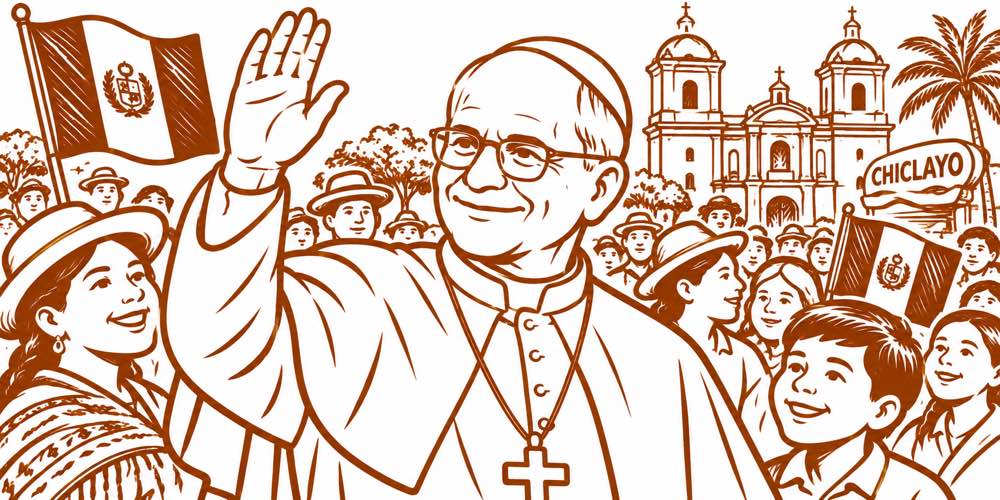
Editorial line illustration for ““The Pope Is Chiclayano!” — Pope Leo Returns to His Peruvian Home.”
Editorial illustration for ““The Pope Is Chiclayano!” — Pope Leo Returns to His Peruvian Home.”Original editorial illustration created for Ecuador Informa with OpenAI image generation.

07

“The Pope Is Chiclayano!” — Pope Leo Returns to His Peruvian Home

Born in Chicago but shaped by nearly two decades of missionary and pastoral work in Peru, Pope Leo XIV has returned to the city where he served as bishop. For the people of Chiclayo, the visit is a reunion with the man many still call Padre Roberto.

Open this article separately →

A Homecoming Like No Other

Yellow-and-white Vatican flags filled the streets of Chiclayo on Friday, November 13, as Pope Leo XIV returned to the northern Peruvian city where he had served as bishop for eight years. Crowds cheered, waved banners and shouted that the Pope belonged to Chiclayo as his motorcade travelled towards the Pampas de Pimentel, an open desert area outside the city.

Local authorities estimated that around one million people lined the streets, while approximately 500,000 attended the outdoor Mass. Some had travelled overnight or walked several kilometres under the coastal sun to reach the gathering. For many, the occasion was less about seeing a visiting world leader than welcoming back someone they had known personally.

Leo, formerly Robert Francis Prevost, opened his homily by expressing his happiness at returning to Chiclayo. He also thanked the community for supporting him during his recent recovery from lung cancer surgery, which he underwent in October. The visit came exactly one month after the operation.

The American Who Became Peruvian

Born in Chicago, Prevost first went to Peru as an Augustinian missionary in 1985. He spent many years working in the country before returning in 2014 to lead the Diocese of Chiclayo, becoming its bishop in 2015. That same year, he acquired Peruvian citizenship.

His work took him well beyond church ceremonies. During the COVID-19 pandemic, he helped organize assistance for vulnerable families and supported efforts to obtain oxygen for hospitals. He also worked with communities affected by severe flooding and supported Venezuelan migrants arriving in northern Peru.

Residents remember a bishop who walked through neighbourhoods, listened to people's problems and remained accessible outside formal church settings. In interviews during the homecoming, former parishioners described encounters with a man they knew simply as Padre Roberto.

One of those memories came from American teacher Mikel Fuller, who worked with Prevost at a local school. Fuller attended Friday's Mass carrying an American flag, reflecting the Pope's connection to both countries. He recalled a bishop who listened carefully to people and tried to help them with their difficulties.

Returning to Familiar Places

The visit included a stop at the San Óscar Romero Chapel in one of Chiclayo's poorer neighbourhoods, a building Leo had helped rebuild during his years in the diocese. He also met local clergy and the university community, returning to institutions and people associated with his earlier work.

His message extended beyond religious observance. Speaking at the Catholic University of Santo Toribio de Mogrovejo, Leo questioned technological progress that benefits the wealthy while leaving poorer communities behind. He argued that scientific achievements should serve human dignity rather than deepen inequality.

The reunion was also personal for the Pope. During his first address after being elected in May 2025, he had specifically greeted his former diocese in Chiclayo. His return this November fulfilled a connection he had publicly maintained since becoming head of the Catholic Church.

A Journey Across South America

Chiclayo is the emotional centre of a 12-day papal journey through Uruguay, Argentina and Peru, which began on November 6. In Peru, Leo has also met political and religious leaders, young people and university students.

His itinerary continues on Sunday, November 15, with visits to Cusco and Pucallpa, including a meeting with representatives of Amazonian Indigenous communities. He is scheduled to return to Rome on November 16, arriving the following day.

For Chiclayo, however, the defining moment has already taken place. A man who once served its parishes and neighbourhoods has returned as Pope, greeted by a community that still regards him as one of its own.

Sources: Vatican — November 13 Mass and attendance; Reuters — Chiclayo homecoming; AFP — local memories and visit; Vatican — Pope Leo XIV biography; Vatican — official travel itinerary.

Back to contents ↑