Featured
Made in Ecuador: The Cars and Pickups You Didn't Know Were Built Here
Ecuador has been assembling vehicles for more than half a century. A new Kia pickup rolling off a production line in Quito is bringing fresh attention to an industry that employs skilled workers, supports local suppliers and faces growing competition from imported cars.
A New Pickup, Made in Quito
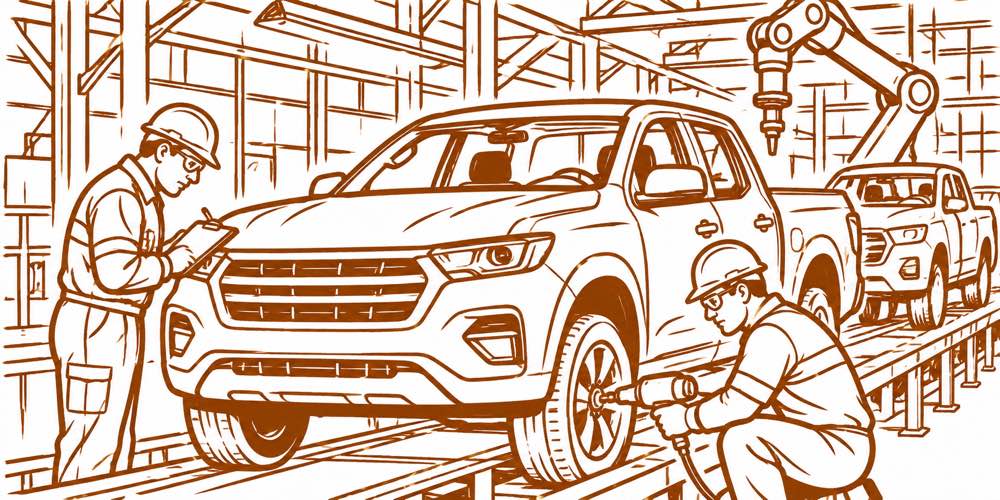
A Kia Tasman pickup rolling off an assembly line in Quito might surprise drivers who assume that nearly every new vehicle sold in Ecuador arrives fully built from overseas. In November 2026, Ecuador became the first country outside South Korea to assemble the Tasman, following an investment of more than $20 million in plant improvements, equipment and worker training.
The vehicle is being assembled at Aymesa, one of Ecuador's two principal automotive assembly companies. The project gives the country's manufacturing sector a new model at a time when locally assembled vehicles account for only about one in ten new-vehicle sales.
But Ecuador's automotive industry is not new. Its history stretches back more than five decades, and at its peak, locally assembled vehicles dominated the domestic market.
From Imported Parts to Finished Vehicles
Vehicle assembly in Ecuador began in the 1970s. Over subsequent decades, factories in Quito and elsewhere produced vehicles carrying familiar international badges, including Chevrolet and Kia. Ecuador developed an industry built around importing components, assembling finished vehicles and supplying parts manufactured locally.
Most Ecuadorian assembly operations use what the industry calls completely knocked down (CKD) kits. Major components arrive from abroad, while local workers assemble the body, install mechanical and electrical systems, fit interior components and complete inspections and testing.
A vehicle assembled in Ecuador is not necessarily manufactured entirely from Ecuadorian parts. Engines, transmissions and many electronic components are generally imported. Local suppliers may provide seats, glass, tyres, batteries, wiring or other components, depending on the model and its production arrangements.
Even so, assembly creates jobs beyond the factory floor. Transport companies move components and finished vehicles, local suppliers produce parts, and technicians maintain the machinery needed to keep production running. Assembly plants also require workers trained in quality control, electrical systems and modern manufacturing processes.
Two Factories Carry the Industry Forward
For years, one of Ecuador's best-known locally assembled vehicles was the Chevrolet D-Max pickup, produced at the Ómnibus BB plant in Quito. That ended in September 2024 when General Motors closed its Ecuadorian assembly operations, a major setback for the industry and its suppliers.
Today, Aymesa in Quito and Ciauto in Ambato are the country's two principal vehicle assemblers. Aymesa produces vehicles under international brands, including Kia, while Ciauto has assembled models associated with Chinese manufacturers such as Great Wall.
The factories represent different parts of Ecuador's industrial geography. Quito has a long automotive manufacturing history, while Ambato has developed a network of metalworking, vehicle-related and other manufacturing businesses.
The arrival of the Kia Tasman demonstrates that international manufacturers still see a role for Ecuadorian assembly. The project also requires investment in production equipment and training to meet the specifications of a newly introduced vehicle.
Why Are Imported Vehicles Winning?
In 2014, approximately half the new vehicles sold in Ecuador were assembled domestically. By 2025, the share had fallen below 12%. According to the Ecuadorian Automotive Industry Chamber (CINAE), 14,895 locally assembled vehicles were sold between January and October 2026, an increase of 29.2% over the same period in 2025. Their share of total new-vehicle sales was approximately 10.6%, as imported vehicles continued to dominate the market.
Imports have gained ground as trade agreements, changing consumer preferences and competition from overseas manufacturers have reshaped the market. Chinese brands have become particularly prominent, offering a growing selection of petrol, hybrid and electric vehicles at competitive prices.
For Ecuadorian assemblers, the challenge is producing vehicles at costs that allow them to compete with fully imported models. Ecuador's relatively small domestic market limits economies of scale, while imported components, manufacturing equipment and production requirements add costs.
Can Ecuador Build Beyond Its Own Market?
Pickups remain an important opportunity for local manufacturers. Between January and October 2026, Ecuadorian-assembled pickups accounted for approximately 27% of sales in that category, considerably higher than the industry's share of the overall vehicle market.
Manufacturers are also exploring exports, particularly to Colombia. Selling beyond Ecuador would give assembly plants access to a larger market and potentially help them spread production costs across more vehicles. Exports would depend on competitive prices, trade conditions and agreements with international manufacturers.
For workers in Quito and Ambato, the industry's future concerns manufacturing jobs, technical training and the businesses supplying components and services. The investment behind the Kia Tasman brings new equipment and production requirements to Aymesa, adding to the technical capabilities of its workforce.
The new pickup represents an investment in Ecuadorian manufacturing at a time when imports dominate the domestic market. Whether it marks the beginning of a sustained recovery will depend on how successfully the country's factories compete at home and develop opportunities abroad.