Standard
Cuenca's Pocket Forests: Bringing Nature Back to the Yanuncay River
Along the banks of Cuenca's Yanuncay River, residents are helping turn neglected patches of land into miniature forests. Working alongside municipal environmental crews, volunteers are planting native trees and shrubs in compact groups designed to restore riverside habitat and bring more nature into the city.
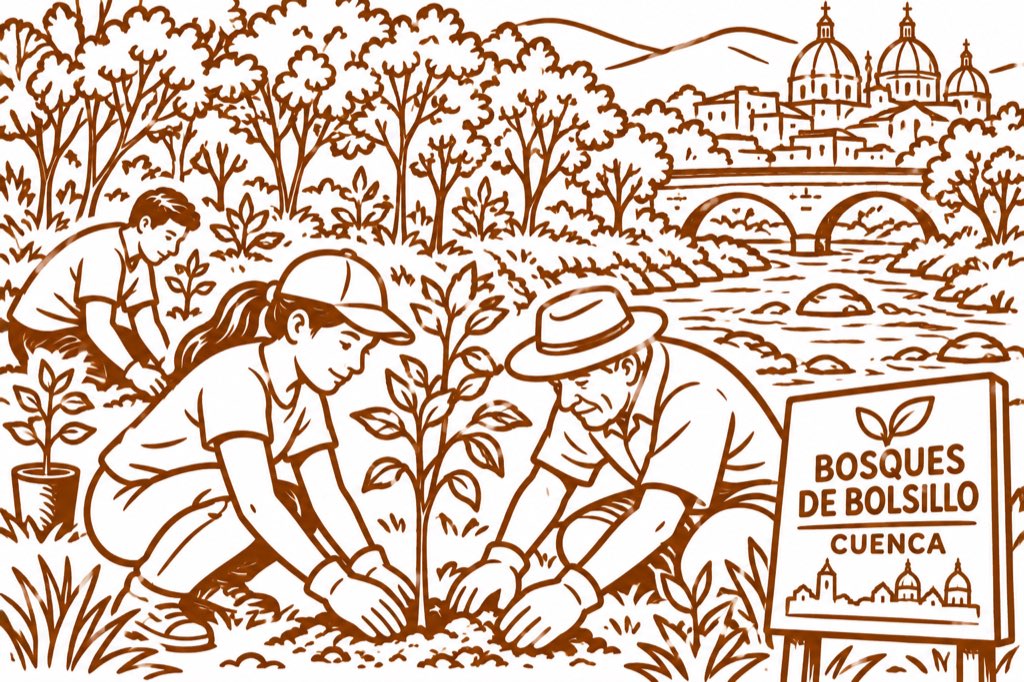
The work is taking place through mingas, Ecuador's traditional community gatherings where neighbours join forces on a shared project. It is a fitting approach for a city that has earned international recognition for its commitment to urban greenery. Cuenca received the Tree City of the World designation for 2025, awarded through a programme associated with the UN Food and Agriculture Organization and the Arbor Day Foundation.
The new initiative, led by Cuenca's municipal environmental services company EMAC EP, began in November 2026 at Parque Lineal Primero de Mayo, between Tres Puentes and Avenida Loja. Nine potential restoration areas have been identified along the Yanuncay, with the goal of recovering damaged riverbanks and creating new habitats for birds, insects and other wildlife.
A Japanese idea takes root in Cuenca
The project uses an approach inspired by the Miyawaki method, developed in Japan to establish dense, diverse plantings that resemble natural forests. Rather than spacing individual trees widely apart, the technique combines native trees, shrubs and smaller plants in relatively small areas, encouraging the vegetation to develop into a closely connected ecosystem.
The young plants are supported by soil enriched with organic material and protective ground cover that helps retain moisture. As the vegetation matures, its roots can help hold the soil together, while the growing canopy provides shade and shelter for wildlife.
The Yanuncay's riverside vegetation has been studied before. Cuenca's Environmental Management Commission identified areas where native plants could be reintroduced after original vegetation had been reduced by pasture and other land uses. Reconnecting these fragmented habitats could help create ecological corridors through the city, giving birds and other animals places to move, feed and shelter.
Restoring a river after the floods
The importance of healthy riverbanks became especially visible in March 2026, when heavy rainfall caused the Yanuncay to overflow. Floodwaters damaged parts of Cuenca's Botanical Garden, depositing mud, uprooting trees and affecting paths and artificial lagoons. Municipal crews subsequently carried out cleanup and repairs.
Pocket forests cannot prevent major flooding, but established riverside vegetation can help reduce localized erosion and improve the condition of riverbanks over time. The municipality identifies bank stability among the project's intended benefits.
The effort also complements conservation work farther upstream. Cuenca's environmental authorities have been expanding agreements with landowners in the Yanuncay and Miguir sub-basins, encouraging measures such as reforestation, erosion control and better waste management.
The pocket forests will take years to mature, and their success will depend on continued care. But with residents participating in the planting and a city already recognised for protecting its trees, Cuenca is giving its riverside landscape something valuable: a chance to recover, one small forest at a time.
Sources
- Municipality of Cuenca — Pocket forests along the Yanuncay, November 17, 2026
- El Mercurio — Restoration begins along the Yanuncay, November 18, 2026
- Cuenca Environmental Management Commission — Riverside forest restoration programme
- El Mercurio — Flood damage at Cuenca's Botanical Garden, March 19, 2026
- Municipality of Cuenca — Repairs following March flooding
- El Mercurio — Conservation agreements in Yanuncay and Miguir, August 20, 2026