Standard
A River Without Borders: What Scientists Are Discovering in the Mayo–Chinchipe
High in southern Ecuador, streams flow through mountain forests, farms and small communities before joining the Mayo–Chinchipe river system and continuing into Peru. The water supports agriculture, wildlife and households on both sides of the border. But researchers studying the watershed have identified a troubling pattern: some areas affected by mining show greater contamination and fewer varieties of aquatic organisms.
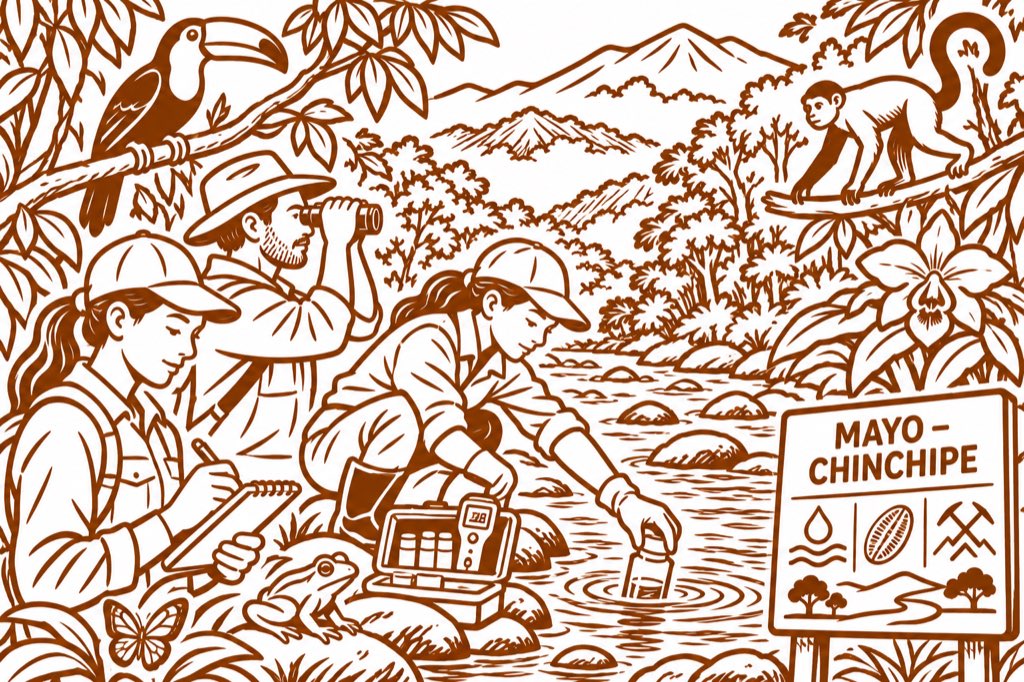
The findings come from research associated with CUIDAR, an international project involving Ecuador's Universidad Nacional de Loja and partners in Peru and Belgium. Running from 2022 to 2026, the initiative combines scientific monitoring with community participation to protect a river system shared by two countries.
What microscopic algae reveal
To understand the condition of the water, researchers have been studying diatoms, microscopic algae found in rivers and streams. Different species respond differently to environmental conditions, making them useful indicators of water quality.
Chemical tests provide information about a river at the moment a sample is collected. Diatoms offer another perspective: changes in their communities can reveal environmental pressures affecting the water over time.
A study published through CUIDAR in 2025 reported higher contamination and lower biological diversity at monitoring locations influenced by mining activities. The project also produced a report combining physical and chemical measurements with diatom analysis to assess pollution levels and the ecological condition of the upper basin.
The findings matter because mining can disturb riverbanks, release sediment and introduce contaminants into waterways. The research helps identify where environmental pressures are greatest and where further monitoring or protective measures may be needed.
The watershed faces other challenges, including deforestation, cattle farming and agricultural activity. These pressures can affect water quality, particularly when vegetation along streams is removed and soil washes into the river.
Protecting water across a border
CUIDAR's work extends beyond scientific sampling. Researchers and local organisations have been developing approaches to watershed management that involve the people who depend on the river.
Community participation is especially important in remote areas, where residents often notice changes in streams long before formal monitoring programmes can respond. The project has developed a community water-quality monitoring protocol, combining practical observation with scientific methods so local organisations can contribute to understanding their waterways.
Research has also examined the condition of water sources supplying communities in Palanda and Chinchipe. Earlier assessments identified challenges involving water-system infrastructure, environmental protection and access to reliable supplies, providing a basis for local planning.
The international dimension adds another complication. Water flowing from Ecuador into Peru connects communities with different authorities, regulations and economic interests. Effective protection requires cooperation upstream and downstream, rather than treating the border as the end of responsibility.
For families living along the Mayo–Chinchipe, these studies concern something much more immediate than scientific measurements: the future of the water they use every day.
The project's findings offer a starting point. By identifying where river health is deteriorating and involving communities in monitoring, researchers are helping turn concern about the watershed into evidence that local authorities can use to guide conservation and water-management decisions.
Sources
- Proyecto CUIDAR — Research library, including the 2025 participatory water-quality study and technical reports
- Universidad Nacional de Loja — CUIDAR water rights and watershed resilience project
- Universidad Nacional de Loja — International Mayo–Chinchipe watershed research
- Universidad Nacional de Loja — Biological water-quality monitoring in the upper basin