Weekly edition · 2026-11-22

Ecuador Informa — Sunday Magazine — November 22, 2026

This edition explores maritime justice, Ecuador’s emerging crops, sectional elections, robotics, genetics, international concerts, urban forests and the Mayo–Chinchipe watershed.

Editorial line illustration for “From Manta to a U.S. Courtroom: Ecuadorian Fishermen Demand Answers.”
Editorial illustration for “From Manta to a U.S. Courtroom: Ecuadorian Fishermen Demand Answers.”Original editorial illustration created for Ecuador Informa with OpenAI image generation.
Editorial line illustration for “From Manta to a U.S. Courtroom: Ecuadorian Fishermen Demand Answers.”
Editorial illustration for “From Manta to a U.S. Courtroom: Ecuadorian Fishermen Demand Answers.”Original editorial illustration created for Ecuador Informa with OpenAI image generation.

01

From Manta to a U.S. Courtroom: Ecuadorian Fishermen Demand Answers

On March 2, 2026, sixteen fishermen sailed from Manta aboard La Negra Francisca Duarte II, expecting to spend about two weeks fishing near the Galápagos Islands. They were heading home on March 17 when, according to the crew, explosive drones struck their vessel and set it ablaze. Two fishermen suffered serious burns, and the men escaped into smaller boats as flames spread through their fishing vessel. Their ordeal, they say, continued when armed personnel detained them, restrained and hooded them, and eventually transferred them to authorities in El Salvador.

Open this article separately →

Eight months later, their experience has reached an unlikely destination: a federal courtroom in Pittsburgh, Pennsylvania. On November 16, the sixteen fishermen and the vessel's owner filed a civil lawsuit against the United States, alleging that American personnel attacked their boat and unlawfully detained and mistreated its crew. The case raises a question that has remained unanswered since March: who attacked the fishermen, and why?

Inspected by Ecuador's Navy — then attacked

One of the most important pieces of evidence comes from Ecuador's own Navy. On November 20, Primicias reported details of an inspection record documenting an encounter between the fishing boat and the Ecuadorian patrol vessel Isla San Cristóbal on March 17, shortly before the reported attack.

According to the report, naval personnel inspected the vessel for approximately two hours and found no illicit cargo or unauthorized fuel. They issued a citation concerning personnel who had not been properly declared, then allowed the fishermen to continue toward Manta. The inspection does not establish what happened afterward, but it independently confirms an important part of the crew's account: Ecuadorian authorities had examined their vessel shortly before it was reportedly attacked.

Later that day, according to the fishermen, drones approached and explosions tore through the boat. Survivors interviewed by Human Rights Watch described flames spreading across the vessel. One recalled seeing a damaged white drone with four propellers on the deck, while another explosion reportedly injured a crew member attempting to release a smaller boat. The fishermen abandoned their burning vessel, but their ordeal was far from over.

They say a large blue-and-white ship approached, carrying armed personnel in military-style uniforms. Some survivors reported American flag insignia, while others recalled hearing English. According to the federal complaint, the men were taken aboard, restrained, hooded and held under armed guard. They allege they received little food or water and were subjected to degrading treatment before being transferred to Salvadoran authorities. Human Rights Watch reported that Salvadoran officials described receiving sixteen shipwreck survivors handed over by U.S. personnel.

The two seriously injured fishermen returned to Ecuador in late March. The remaining crew members arrived home in groups between April 3 and April 10. Their fishing vessel was lost.

What the independent evidence reveals

Human Rights Watch began investigating the incident months before the lawsuit was filed, interviewing survivors and witnesses, examining photographs and medical records, and comparing vessel-tracking information with satellite observations. Its findings provide important corroboration for parts of the fishermen's account.

The fishing boat's last recorded position was transmitted at 12:41 p.m. on March 17. At 1:02 p.m., a NASA satellite detected a thermal anomaly consistent with a fire near that location. Crew members aboard another Ecuadorian fishing vessel, the Solavil, also reported seeing black smoke and a boat burning in the same general area.

Researchers reviewed photographs of the injured fishermen and supporting medical evidence. An independent medical expert found that one crew member's injuries were consistent with his description of contact with a drone propeller. Together, the satellite observations, witness accounts and medical findings provide substantial support for the reported fire, injuries and location of the incident.

What they do not establish is equally important. The independent evidence has not conclusively identified who launched the drones or the personnel who detained the fishermen. Those questions remain central to the lawsuit.

The reported CIA connection

In August, The Washington Post published an investigation reporting that attacks on Ecuadorian fishing vessels were part of a covert CIA programme. The newspaper examined surveillance-aircraft movements and cited information from a person familiar with the operation, pointing toward American intelligence involvement in incidents near the Galápagos.

That reporting is distinct from the Trump administration's publicly acknowledged military strikes against vessels it identifies as involved in drug trafficking. Since September 2025, the administration has described those operations in the Caribbean and eastern Pacific as part of a campaign against designated narcoterrorist organizations. Human rights groups and legal specialists have challenged the legal justification for using lethal military force against suspected traffickers.

The CIA operates under a different framework, and covert intelligence activities are not necessarily publicly acknowledged in the same way as military operations. The Washington Post investigation raised serious questions about American intelligence involvement, but it was neither a public admission of CIA responsibility nor a court finding identifying the attackers.

The U.S. Defense Department and Coast Guard previously denied knowledge of or involvement in the incidents investigated by Human Rights Watch, while the Pentagon declined to comment on the pending lawsuit. The fishermen maintain that they were ordinary fishing workers, not drug traffickers. Their complaint alleges that the United States was responsible for both the attack and their subsequent detention.

Why a courtroom in Pennsylvania?

Pittsburgh might seem an unlikely destination for a dispute involving fishermen from Manta and a vessel lost in the Pacific Ocean. None of the plaintiffs lives in Pennsylvania, and the reported attack happened thousands of kilometres from the United States. Yet their lawyers filed the case in the U.S. District Court for the Western District of Pennsylvania, relying on provisions of American maritime law.

The complaint invokes the Suits in Admiralty Act and the Public Vessels Act, federal statutes that permit certain maritime claims against the United States government. The lawyers argue that because the plaintiffs are foreign nationals without homes or business offices in the United States, the relevant provisions allow them to bring their claims in any federal judicial district. They also point to western Pennsylvania's experience handling maritime disputes involving its navigable rivers and the port of Erie, on Lake Erie.

The plaintiffs are seeking compensation for their injuries, alleged mistreatment and the loss of their vessel. Their lawyers have valued the claim at US$5 million, although the complaint leaves the amount of damages for the court to determine. They also request an order ending U.S. lethal strikes against boats in the Caribbean and Pacific.

The court has not determined whether the United States is responsible. Before reaching that question, it must consider whether the claims can proceed under the laws governing maritime lawsuits against the federal government.

Three vessels, unanswered questions

La Negra Francisca Duarte II was not the only Ecuadorian fishing vessel involved in unexplained incidents near the Galápagos during the first months of 2026. On January 20, the Fiorella disappeared, leaving eight crew members missing. Two fishermen working away from the main vessel reported seeing smoke near its last known position. On March 26, survivors of the Don Maca reported another attack involving explosive drones, injuries, detention by armed personnel and a subsequent transfer to Salvadoran authorities.

Human Rights Watch investigated all three incidents, finding similarities in survivors' accounts but no conclusive identification of the attackers or explanation for the Fiorella's disappearance. The organisation also examined criminal-record certificates for 46 men associated with the vessels. Four had criminal records, but none involved drug trafficking or violent offences. Those records cannot establish what cargo any vessel carried, although they provide context for allegations that the crews were engaged in serious criminal activity.

The incidents have particular significance in Manabí, where fishing supports families and entire coastal communities. Manta, San Mateo and Jaramijó are among the places connected to the affected crews. A fishing boat represents far more than its purchase price: it provides employment at sea and business for those supplying fuel, ice, equipment, repairs and services onshore. When a vessel is lost, the economic consequences extend beyond the people who were aboard.

Captain José Hernán Flores Vilez told Reuters that the fishermen decided to sue because they had lost the boat on which they depended and felt they had received no assistance from Ecuadorian authorities. Their case faces substantial legal obstacles, and the proceedings could be challenged or dismissed without resolving every question. They may also bring new evidence about who operated the drones, who controlled the vessel that detained the crew and why the fishing boat was targeted.

For sixteen men who left Manta expecting an ordinary fishing voyage, the consequences are already substantial: serious injuries, the loss of their boat and months of uncertainty. They went to sea to earn a living. Now they are asking a court thousands of kilometres away to determine who was responsible for what happened to them.

Sources

  1. Federal complaint — *Flores Franco et al. v. United States*, November 16, 2026
  2. Human Rights Watch — *A Dangerous Partnership*, July 21, 2026
  3. Reuters — Ecuadorian fishermen sue Trump administration, November 16, 2026
  4. Associated Press — Fishermen from Ecuador sue Trump administration, November 18, 2026
  5. The Washington Post — Covert CIA programme investigation, August 13, 2026
  6. Primicias — Ecuadorian Navy inspection report, November 20, 2026
  7. ABC News Australia — Ecuadorian fishermen sue U.S. government, November 20, 2026

Back to contents ↑
Editorial line illustration for “What Will Ecuador Grow Next? Inside the Country's New Farming Frontier.”
Editorial illustration for “What Will Ecuador Grow Next? Inside the Country's New Farming Frontier.”Original editorial illustration created for Ecuador Informa with OpenAI image generation.

02

What Will Ecuador Grow Next? Inside the Country's New Farming Frontier

Drive through parts of Ecuador's pitahaya-growing country after dark and you may encounter an extraordinary sight: rows of cactus plants illuminated by electric lights, turning agricultural fields into glowing grids against the night sky. The lights aren't there to help farmers harvest after sunset. They are used to influence the plants' response to daylight, encouraging flowering and helping growers manage when their fruit will be ready for market.

Open this article separately →

It's a striking example of how Ecuadorian agriculture is changing. A country already famous for bananas, cacao and flowers is finding new opportunities in fruits that were once unfamiliar to most consumers, while growers experiment with technologies and techniques that would have seemed unusual on a traditional farm.

From wild cactus to international export

The yellow pitahaya of Palora, in Morona Santiago, has become one of Ecuador's agricultural success stories. Beneath its golden skin is sweet white flesh dotted with tiny black seeds, produced by a climbing cactus whose spectacular flowers open at night. According to Ecuador's Agriculture Ministry, its commercial history in Palora began in 1968, when farmer Félix Miguel Zabala discovered a wild cactus bearing an unfamiliar but delicious fruit.

Over the following decades, local growers developed plantations and established markets far beyond Ecuador. Today, yellow pitahaya from the Amazonian foothills and red varieties cultivated along the Coast are part of an international export industry. Manabí has become an important growing area for red pitahaya, demonstrating how a crop associated with one region can find opportunities in another.

The industry's success has also brought new challenges. An analysis of customs data published in November 2026 found that Ecuador was exporting more pitahaya while receiving a lower average price per kilogram. As production expands, growers must balance the opportunities of a larger market against increasing competition and pressure on prices.

Artificial lighting is one response to the need for greater control over production. Research in Santa Elena and Guayas has explored how supplemental light can influence flowering in red pitahaya, potentially helping farmers schedule harvests rather than depending entirely on natural flowering cycles. The glowing fields are an unusual sight, but the principle is familiar to agriculture everywhere: finding ways to produce the right crop at the right time for the market.

Blueberries, mangosteen and the search for new markets

Blueberries might bring to mind cool Canadian summers or farms in the northern United States, yet Ecuadorian growers are now producing them commercially. The plants can require considerable ingenuity. Rather than growing directly in ordinary farm soil, many are cultivated in containers filled with coconut fibre, with water and nutrients delivered through carefully managed irrigation systems. Protective coverings can help control rainfall and humidity.

Diego Garzón Zaldumbide, president of the Ecuadorian Federation of Blueberry Producers and Exporters, told Forbes Ecuador in August 2026 that the country's combination of altitude, sunlight and temperature can produce berries with attractive size and flavour. An industry that began with three pioneering producers has expanded to more than 35 businesses and growers across ten provinces, including Manabí and Santa Elena.

Neighbouring Peru is already a major force in the international blueberry trade, while Ecuador remains a newcomer. Its growers are experimenting with varieties suited to different local climates, and they have an advantage beyond export possibilities: Ecuadorian supermarkets offer customers much closer to home. For a developing industry, building domestic demand can be as important as finding buyers overseas.

Other growers are looking toward fruits with an entirely different history. Mangosteen, originally from Southeast Asia, is about the size of a small orange, with a thick purple rind enclosing segments of delicate white flesh. Its sweet, slightly tangy flavour has long been appreciated in Asia, but it remains unfamiliar to many Ecuadorian consumers.

In 2025, Ecuador began exporting mangosteen to markets including Canada, France and the United Kingdom. One company involved, Equadragonfruit, began as a pitahaya exporter before expanding into other products. General manager Fernando Lozada told El Comercio in September 2026 that the company was handling twelve different fruits, including mangosteen grown in La Concordia and Los Bancos.

The company has found customers overseas, including Asian communities already familiar with the fruit. That offers an interesting lesson in agricultural marketing: introducing an unfamiliar crop to Ecuador does not necessarily mean finding an unfamiliar customer abroad. Sometimes the market already exists, and the challenge is establishing a reliable source of supply.

The same exporter is helping renew interest in gulupa, a small purple passion fruit with fragrant golden pulp and a sharp, refreshing flavour. Unlike mangosteen, gulupa has deep roots in tropical America. Equadragonfruit sources it from areas including Atahualpa, north of Quito, and exports it to Spain.

Lozada reported that some farmers who had abandoned gulupa cultivation were returning as demand improved. The company has also expressed interest in longer-term purchasing arrangements that could give growers greater confidence about where their harvests will go. In this case, agricultural innovation is less about introducing something new than rediscovering the commercial potential of a familiar regional crop.

Farming without traditional fields

Not every new opportunity involves orchards, plantations or international shipments. In parts of Ecuador, producers are learning to cultivate mushrooms in sheltered spaces filled with shelves or growing bags. Oyster mushrooms emerge from prepared organic material, their broad caps spreading in clusters that look quite unlike anything growing in a conventional field.

Mushrooms can be cultivated in relatively small spaces, using carefully prepared substrates instead of ordinary soil. Growers manage moisture, temperature and ventilation, making the process as much about controlling conditions as tending a traditional crop.

In June 2026, farmers from Cotogchoa, in Rumiñahui canton, and Amaguaña, near Quito, attended a mushroom-growing workshop organised by the Agriculture Ministry and Granja Integral Terranostra. Participants learned to prepare growing materials, introduce fungal cultures and harvest edible mushrooms. One participant, Rosa Quinga, explained that the training provided access to knowledge that would otherwise have been expensive to obtain privately.

The possibilities are different from those offered by pitahaya exports or commercial blueberries. Mushroom cultivation can provide additional income and locally produced food without requiring extensive farmland, although it remains an emerging activity rather than a major Ecuadorian export industry.

Together, these developments reveal something important about Ecuador's agricultural future. Its varied geography, from humid Amazonian lowlands and warm Pacific plains to cool Andean valleys, offers an extraordinary range of growing conditions. But climate alone does not create a successful crop. Farmers need technical knowledge, suitable varieties, investment, dependable buyers and prices that make production worthwhile.

The illuminated pitahaya fields may be the most memorable symbol of this ingenuity: a cactus once found growing wild in the Amazon has become an international export crop whose flowering can now be influenced by artificial light. Elsewhere, blueberries grow in coconut fibre, Asian mangosteen finds new markets, farmers return to gulupa and mushrooms emerge from shelves instead of fields.

Ecuador's next agricultural success may already be growing somewhere unexpected.

Sources

  1. Universidad ECOTEC — Artificial lighting and flowering in red pitahaya, Santa Elena
  2. REDI/CEDIA — Artificial lighting experiment in Guayas
  3. INIAP — Manual del Cultivo de Pitahaya para la Amazonía Ecuatoriana
  4. Ministry of Agriculture — Pitahaya production and history
  5. Forbes Ecuador — El arándano ecuatoriano, el superfood del futuro
  6. El Comercio — Ecuador exports mangosteen and gulupa
  7. Ministry of Production — Ecuador's expanding tropical fruit exports
  8. Ministry of Agriculture — Mushroom cultivation training
Back to contents ↑
Editorial line illustration for “Ecuador Votes November 29: Who Will Run Your Community?.”
Editorial illustration for “Ecuador Votes November 29: Who Will Run Your Community?.”Original editorial illustration created for Ecuador Informa with OpenAI image generation.

03

Ecuador Votes November 29: Who Will Run Your Community?

A pothole that never gets repaired. A neighbourhood waiting for reliable drinking water. A rural road washed out by heavy rain. Who is responsible — the mayor, the prefect or the parish board?

Open this article separately →

On Sunday, November 29, Ecuadorians will elect the local officials who make many of those decisions. They will also choose seven members of a national oversight council. With 13,827,643 people on the electoral register, this is a major election, even though neither the presidency nor the National Assembly is on the ballot.

The vote was originally scheduled for February 14, 2027, but the National Electoral Council (CNE) moved it forward, citing the risk that heavy rains associated with a possible El Niño could disrupt polling. The newly elected local authorities will still take office on May 14, 2027, for the 2027–2031 term.

Who does what in your community?

Mayors and municipal councillors are responsible for many of the services residents encounter every day. Municipal governments manage drinking water, sewerage, rubbish collection, urban roads, public markets, land-use planning and public spaces. The mayor leads the administration, while elected councillors approve ordinances and budgets and oversee municipal decisions.

If a coastal town needs to expand its water network or repair an urban street, the municipality is generally the first authority to approach.

Provincial prefects and vice-prefects focus on responsibilities that extend beyond individual towns, including provincial roads, irrigation, rural economic development and environmental management. In Manabí, a road connecting farming communities to a regional highway may fall under the provincial government, while streets within a town are generally municipal responsibilities.

Flooding and drainage problems can involve several authorities, depending on the waterway, road and type of work. That makes cooperation between municipalities and provincial governments especially important during the rainy season.

Rural parish boards, known as juntas parroquiales rurales, represent smaller communities outside urban centres. They identify local priorities, prepare development plans, undertake projects within their budgets and coordinate with municipal and provincial authorities. Their influence often comes from ensuring that a community's needs are included in larger government plans.

Voters will also elect seven members of the Council for Citizen Participation and Social Control (CPCCS). Unlike local governments, this national institution promotes citizen participation and oversight and has responsibilities in legally defined processes for appointing certain national authorities. Voters choose three women, three men and one representative from a category covering Indigenous peoples, Afro-Ecuadorians, Montubios and Ecuadorians abroad, using three separate ballots.

In total, the election will fill 5,749 principal positions. Galápagos has a special provincial government arrangement and does not elect a prefect in the same way as mainland provinces.

Who can vote?

Voting is compulsory for most Ecuadorian citizens aged 18 to 64. It is optional for those aged 16 or 17, people aged 65 or older, Ecuadorians abroad, people with disabilities, and active-duty military and police personnel.

Foreign nationals aged 16 or older may also vote voluntarily if they have been legally resident in Ecuador for at least five years and have completed the required electoral registration. Simply living in the country for five years does not automatically place someone on the voter roll.

Ecuadorians registered overseas will vote for the CPCCS seats rather than local mayors or prefects. The CNE has announced that voting will not take place at its designated locations in Caracas, Valencia or Havana, making it particularly important for affected voters to check official arrangements.

What happens on election day?

Polling stations are scheduled to open at 7 a.m. and close at 5 p.m. Voters should check their assigned location through the CNE website before travelling, especially if heavy rain affects access. Ecuadorian citizens may use their identity card or passport, including expired documents accepted under CNE rules; eligible foreign voters should confirm their identification requirements.

Ballots use different colours to distinguish the offices, and polling stations will have separate ballot boxes for local authorities and CPCCS votes.

The election campaign ends November 26, followed by electoral silence beginning November 27. Ecuador's election-period alcohol restrictions, known as ley seca, also apply, with official enforcement times published by the authorities.

Once voting ends, election workers count ballots and transmit results to the CNE. Initial figures may change before the results become official, and the winners will not assume office until May 14.

A new mayor may promise better water services, while a prefect may prioritise rural roads or irrigation. Delivering those promises will depend on budgets, existing contracts and cooperation between levels of government.

Knowing who does what is useful long after the ballots have been counted. When a road floods, a water supply fails or a public project stalls, residents can ask a more precise question: which elected authority is responsible for fixing it?

Further reading: How does someone become an election candidate in Ecuador? — Ecuador Informa's guide to candidate selection and registration.

Sources

  1. CNE — Electoral calendar and official resolution
  2. CNE — Electoral register: 13,827,643 voters
  3. CNE — CPCCS ballot categories
  4. CNE — Ballot colours and materials
  5. CNE — Overseas voting arrangements
  6. CNE — Electoral registration rules for foreign residents
  7. CPCCS — Appointment procedures for national authorities
  8. Primicias — Why local elections were moved to November
  9. El Universo — November 2026 voting guide

Español

Back to contents ↑
Editorial line illustration for “Ecuador's Robot Builders: From Humanoids to Helping Hands.”
Editorial illustration for “Ecuador's Robot Builders: From Humanoids to Helping Hands.”Original editorial illustration created for Ecuador Informa with OpenAI image generation.

04

Ecuador's Robot Builders: From Humanoids to Helping Hands

In a university laboratory in Cuenca, a humanoid robot approaches a cardboard box. It identifies the object with its camera, positions its arms, lifts the box and attempts to place it on another table. For a human, the task is almost effortless. For researchers at Universidad Politécnica Salesiana (UPS), it took around 100 trials to teach their robot to perform it, and the first 20 attempts failed.

Open this article separately →

The machine, called DA²RM, is part of a growing collection of robotics projects taking shape in Ecuadorian universities. Some machines resemble people, while others travel between rows of crops, respond to electrical signals from human muscles or monitor equipment for signs of mechanical failure. Their creators are exploring a practical question: how can robotics help solve problems in Ecuador?

Teaching a robot to move

DA²RM stands 1.32 metres tall, weighs 42 kilograms and has arms, legs and sensors to help it understand its surroundings. It is a Unitree G1 EDU, manufactured in China and introduced at UPS in December 2025. The university did not build the humanoid itself. Instead, its researchers are learning to program and adapt the machine, developing movements and exploring how it can interact with objects and people.

Luis Ignacio Chávez, a mechatronics engineer involved in the project, explained to El Comercio that balance is among the greatest challenges. The surface beneath the robot's feet, the friction of its soles and the weight of whatever it carries can affect its stability. Researchers have programmed DA²RM to manipulate objects and follow routes mapped using LiDAR, a laser-based distance sensor. They are also experimenting with teaching it to imitate human movements, although that work has so far been demonstrated only in computer simulations.

For now, the humanoid operates under supervision in controlled laboratory conditions. Its immediate value is as a teaching and research platform, giving students experience with sensors, movement, programming and artificial intelligence. But elsewhere in Ecuador, researchers are building machines that look nothing like humans and may eventually prove just as useful.

At Universidad Estatal Península de Santa Elena (UPSE), students have been developing small wheeled robots designed to move through agricultural fields and identify plants. In one 2026 project, Erick Banner Cañarte Pita built a rover equipped with a camera and Raspberry Pi computer to distinguish weeds from pepper plants. Using 952 field images to train its artificial-intelligence model, the system achieved an overall identification success rate of 81.25% during testing.

The research also exposed the difficulties of taking artificial intelligence outdoors. Changing sunlight, overlapping leaves, movement and unstable wireless connections affected performance. Another UPSE researcher, Kleyner Fabricio Flores Cedeño, developed a rover that uses LiDAR to navigate between crop rows while a camera and artificial intelligence identify plants. It demonstrated autonomous navigation and real-time image processing, although some evaluation used three-dimensional plant replicas because the original specimens were no longer available.

Neither machine is a commercial agricultural product. Both demonstrate how relatively affordable electronics, sensors and software could eventually help farmers monitor crops and identify weeds. The challenge is making the technology dependable in real fields, where rain, dust, uneven ground and changing light are part of everyday conditions.

Helping people and preventing breakdowns

At Escuela Politécnica Nacional (EPN) in Quito, researchers are tackling a more personal challenge: helping people who have lost a hand recover some of its functions. The university's Alan Turing artificial intelligence and computer vision laboratory has developed a robotic hand prosthesis controlled by electrical signals from muscles in the remaining forearm.

When a person attempts to move their hand, sensors detect the muscle signals, and artificial-intelligence software interprets them before sending commands to the mechanical fingers. The system can adapt to different users, whose signals vary and may change over time. Laboratory director Marco Benalcázar told El Comercio that more than 50 people had tested the prototype, with a success rate above 85% in tasks involving opening and closing the hand.

The result is encouraging, although it measures performance on those specific tasks rather than every movement required in daily life. The technology remains experimental and has not completed the approvals needed for routine use. EPN is also applying computer vision to drones, which have been used outside the laboratory to monitor watersheds in collaboration with water-management and electricity-sector organisations. Human pilots control the aircraft while software helps interpret the images they collect.

Not every application of intelligent automation involves a machine that walks, flies or grasps objects. At Universidad UTE, researchers are using sensors and artificial intelligence to predict when industrial equipment might need maintenance. The GISER research group, led by Nelson Gutiérrez, has developed a system that monitors temperature, electrical current, speed and vibration, looking for patterns associated with mechanical wear.

Since January 2025, the system has monitored a bench drill and grinder in the university's electrical machinery laboratory. Researchers reported extending some maintenance intervals from three months to six, while bearings that previously required annual replacement had shown no critical wear after 18 months of monitoring. Longer-term data will be needed to establish how much improvement the system provides, but the potential is clear: for a factory or workshop, avoiding an unexpected breakdown may be more valuable than owning a machine that resembles a person.

From university experiments to everyday technology

Ecuadorian universities are also trying to connect researchers with businesses and one another. On November 14, Yachay Tech University in Urcuquí, Imbabura, hosted the scheduled launch of the first Ecuadorian Applied Robotics Meeting, known as EERA 2026. Organised by the university's IEEE Robotics and Automation Society student chapter, the initiative aims to encourage collaboration through technical presentations, demonstrations and competitions. Its main gathering is scheduled for December 11–13 at Yachay Tech.

Such connections could help overcome one of the biggest obstacles facing Ecuador's robotics researchers: turning promising experiments into technology that businesses and communities can use. Researchers interviewed by El Comercio identified limited funding, lengthy public procurement procedures and insufficient cooperation between universities and industry as significant challenges. Specialized sensors, industrial equipment and powerful computers are expensive, and obtaining research equipment can take months.

There is also a substantial difference between a prototype that works in a controlled demonstration and a product that performs reliably every day. A robotic hand must meet demanding safety requirements, an agricultural rover must navigate unpredictable fields, and an industrial monitoring system needs enough operating data to demonstrate dependable predictions.

Ecuadorian teams may find their greatest opportunities not in manufacturing entire humanoid robots, but in developing software, integrating imported equipment and designing specialized systems for local needs. Agriculture, aquaculture, healthcare, environmental monitoring and industrial maintenance all offer possibilities for technologies adapted to Ecuador's conditions.

Back in Cuenca, DA²RM's struggle with a cardboard box illustrates how much engineering lies behind even a simple movement. Meanwhile, researchers in Santa Elena are teaching small machines to recognize crops, and engineers in Quito are developing a prosthetic hand that responds to muscle signals. These projects remain at different experimental stages, but they are giving Ecuadorian students and researchers practical experience with technologies already changing industries elsewhere.

The country's next useful robot may not walk, talk or resemble a person. It might simply be a small machine moving slowly between rows of crops, doing one job exceptionally well.

Sources

  1. El Comercio — Artificial intelligence and robotics at three Ecuadorian universities, October 2, 2026
  2. Universidad Politécnica Salesiana — Presentation of DA²RM, December 2025
  3. UPSE — Erick Cañarte Pita, agricultural rover for weed detection, September 2026
  4. UPSE — Kleyner Flores Cedeño, autonomous crop-monitoring robot, September 2026
  5. IEEE — Launch of EERA 2026, November 14
  6. IEEE — Main EERA 2026 meeting, December 11–13
Back to contents ↑
Editorial line illustration for “Reading Ecuador's DNA: Why Local Genetics Could Change Medicine.”
Editorial illustration for “Reading Ecuador's DNA: Why Local Genetics Could Change Medicine.”Original editorial illustration created for Ecuador Informa with OpenAI image generation.

05

Reading Ecuador's DNA: Why Local Genetics Could Change Medicine

What if a blood test could reveal important clues about cancer? Or a genetic study in Manta could help researchers understand why some people develop Parkinson's disease while others do not?

Open this article separately →

Scientists in Ecuador are exploring both possibilities as part of a growing movement toward personalized medicine — using information about a patient's genes, alongside conventional medical tests, to improve diagnosis and treatment. But their work addresses a problem that extends far beyond Ecuador: much of what scientists know about human genetics comes from studying populations that do not fully represent the world's diversity.

The missing pieces in the world's genetic picture

For decades, genetic research has disproportionately concentrated on people of European ancestry. As a result, the enormous databases scientists use to investigate inherited diseases, cancer risks and responses to medication do not fully represent the world's population. That matters because genetic variations differ in frequency between populations, and a marker that helps predict disease risk in one group may be less useful in another.

Ecuador offers an important opportunity to help address that imbalance. Its population includes people with Indigenous, Afro-Ecuadorian, European and mixed ancestral backgrounds, including Montubio communities with their own complex histories. By studying genetic variations among Ecuadorians, researchers can begin filling gaps in international databases while developing knowledge that may eventually improve medical care at home.

At Universidad UTE in Quito, the VARIOMA Ecuador project is working to build that knowledge by investigating genetic variants associated with disease. The objective is not to identify a single Ecuadorian genetic profile, but to understand the diversity of genetic variations found among individuals and communities and how those differences may influence health.

Could a blood test reveal cancer?

One promising example comes from thyroid cancer research at Universidad UTE. Doctors investigating a suspicious thyroid nodule commonly use a fine needle to collect cells for examination, but researchers are exploring whether a blood sample could provide additional information without requiring another tissue procedure.

The technique, called liquid biopsy, looks for fragments of DNA released by tumours into the bloodstream. In a study involving 36 Ecuadorian women with thyroid cancer, researchers compared genetic variants detected in blood samples with those found in tumour tissue. They reported that 81.7% of the cancer-associated variants identified were present in both types of samples.

The finding suggests that blood testing may eventually complement established diagnostic procedures, although the study was too small to demonstrate that it could replace them. The 81.7% figure describes agreement between genetic variants found in blood and tumour samples, not the test's accuracy in detecting cancer. For patients, the attraction is clear: obtaining useful medical information through a less invasive procedure.

From Hollywood to Manta

Another investigation connects researchers in Manabí with an international effort to understand Parkinson's disease — and with an actor familiar to millions of moviegoers.

Universidad Laica Eloy Alfaro de Manabí (ULEAM) is participating in genetic research supported through an initiative associated with the Michael J. Fox Foundation. Fox, best known for Back to the Future, was diagnosed with Parkinson's at a young age and has spent decades supporting research into the condition.

Led locally by researcher Faryd Llerena, the ULEAM project is examining genetic variations among Ecuadorian patients to better understand inherited factors associated with Parkinson's. The study was designed to include 300 people diagnosed with the disease, and by March 2026, the university reported that 50 patients had been enrolled through a specialist centre in Quito.

The research is especially valuable because Latin American populations have historically been underrepresented in international Parkinson's genetics studies. By contributing information from Ecuadorian patients, the researchers hope to improve understanding of the disease and eventually support more precise diagnosis and genetic counselling. The project has not produced a new treatment, but it is helping expand the evidence on which future discoveries may depend.

Medicine that reflects Ecuador

Genetics is already influencing medical decisions in some areas. Certain cancer treatments, for example, are selected according to genetic changes found in a patient's tumour, while testing for inherited variants in genes such as BRCA1 and BRCA2 can help doctors assess breast and ovarian cancer risks. These tests are not appropriate for everyone, but they demonstrate how genetic information can become a practical part of healthcare.

Bringing more of these benefits to Ecuador will require trained specialists, reliable laboratories, appropriate clinical evidence and safeguards for sensitive genetic information. Cost and availability also remain challenges, particularly for patients outside major medical centres.

The work underway in Quito and Manta points toward an important shift in how medical knowledge is developed. Instead of assuming that discoveries made elsewhere apply equally to everyone, Ecuadorian scientists are helping build a clearer picture of the people who live here.

The promise of personalized medicine is not that every patient will receive a DNA test. It is that doctors will have better information when genetic differences matter. And for Ecuador, that begins with ensuring its people are represented in the science.

Sources

  1. Universidad UTE — VARIOMA Ecuador genetic research
  2. Universidad UTE — Thyroid cancer liquid biopsy research
  3. International Journal of Molecular Sciences — Original thyroid cancer study, 2025
  4. ULEAM — Genetic study of Parkinson's disease in Ecuador
  5. ULEAM — Parkinson's research expands to Quito, March 2026
  6. Primicias — Parkinson's genetics research in Manabí
  7. National Human Genome Research Institute — Diversity in genomic research

Español

Back to contents ↑
Editorial line illustration for “From Shakira to Sting: Ecuador Finds Its Place on the World Concert Circuit.”
Editorial illustration for “From Shakira to Sting: Ecuador Finds Its Place on the World Concert Circuit.”Original editorial illustration created for Ecuador Informa with OpenAI image generation.

06

From Shakira to Sting: Ecuador Finds Its Place on the World Concert Circuit

When Sting stepped onto the stage at Cuenca's Alejandro Serrano Aguilar Stadium in February 2025, thousands of fans welcomed a musician whose songs had accompanied them for decades. The former frontman of The Police had included Cuenca alongside Rio de Janeiro, Buenos Aires, Lima and Bogotá on his international Sting 3.0 tour. For Ecuadorian music lovers, it was another sign that they no longer always needed to travel abroad to see major international performers.

Open this article separately →

And Sting was far from alone. Shakira brought three concerts to Quito in November 2025, followed in 2026 by Ed Sheeran, Sebastián Yatra, Mon Laferte, Arcángel and others. The country's concert calendar has expanded across genres, from Latin pop and reggaeton to British rock and electronic music, with Rubén Blades and Martin Garrix among November's attractions. American rock band The Strokes is also scheduled to perform in Quito on November 24.

Behind the music is a growing business that brings together international promoters, local organisers, tourism authorities and audiences willing to travel for a memorable night out.

More than a concert ticket

Shakira's three Quito performances provided a striking example of what a major tour can mean for a city. Quito Turismo estimated their economic impact at $55.5 million, including direct and indirect spending, while reporting approximately 136,000 visitors associated with the concerts. Hotels, restaurants, transport providers and small businesses all had opportunities to benefit from the influx of fans.

Ed Sheeran's May 2026 concert offered another measure of demand. Approximately 28,500 people attended his performance at Estadio Olímpico Atahualpa, with Quito Turismo estimating an economic impact of $15 million. Other events have contributed to a busy year, including performances by Mon Laferte and Sebastián Yatra.

These figures are municipal estimates of economic activity rather than profits. Still, they help explain why Quito is actively courting international entertainment. The city has worked with private promoters to coordinate venues, transport and tourism promotion, even introducing special visitor experiences designed to encourage concertgoers to explore the capital.

The attraction is not limited to Quito. Sting's Cuenca appearance demonstrated that a major international tour could include a city outside Ecuador's largest concert markets. In 2025, Colombian singer Camilo also scheduled performances in both Quito and Guayaquil, illustrating how promoters can reach audiences in different parts of the country.

What makes Ecuador worth the stop?

International tours are complicated operations. Artists and promoters must consider ticket demand, suitable venues, technical equipment, security, transportation and the cost of moving an entire production between countries. Ecuador competes with larger regional markets, particularly Colombia and Peru, where established touring circuits can support substantial audiences.

Successful concerts help strengthen Ecuador's case for inclusion. They demonstrate that local organisers can handle demanding productions and that audiences will pay to see internationally recognised performers. The presence of companies working across several Latin American countries also makes it easier to incorporate Ecuador into wider regional tours.

There are challenges. Large productions are expensive, suitable venues are concentrated in a few cities, and security and transport arrangements can influence promoters' decisions. A busy concert calendar does not guarantee that every international tour will find Ecuador commercially attractive.

Nevertheless, the change is visible. From Sting's performance in Cuenca to Shakira's packed Quito concerts, Ecuador is becoming a more familiar destination on international touring schedules. For fans, that means more chances to experience live music close to home. For the cities hosting the shows, the opportunity is to turn a few hours of entertainment into lasting economic and cultural benefits.

Sources

  1. Sting — Official 2025 South and Central American tour announcement
  2. Primicias — Sting's concert in Cuenca, February 2025
  3. Quito Turismo — Major entertainment events and economic impact in 2026
  4. Quito Turismo — Shakira and the city's tourism economy
  5. Quito Turismo — Public-private partnerships for international concerts
  6. Primicias — Ecuador's 2025 international concert calendar
Back to contents ↑
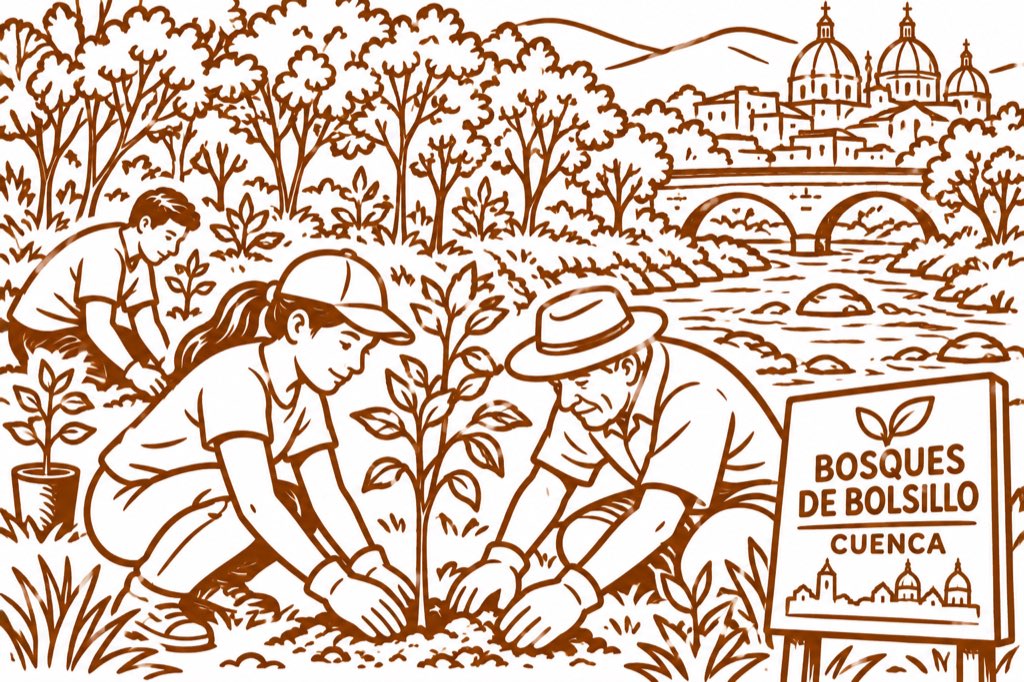
Editorial line illustration for “Cuenca's Pocket Forests: Bringing Nature Back to the Yanuncay River.”
Editorial illustration for “Cuenca's Pocket Forests: Bringing Nature Back to the Yanuncay River.”Original editorial illustration created for Ecuador Informa with OpenAI image generation.

07

Cuenca's Pocket Forests: Bringing Nature Back to the Yanuncay River

Along the banks of Cuenca's Yanuncay River, residents are helping turn neglected patches of land into miniature forests. Working alongside municipal environmental crews, volunteers are planting native trees and shrubs in compact groups designed to restore riverside habitat and bring more nature into the city.

Open this article separately →

The work is taking place through mingas, Ecuador's traditional community gatherings where neighbours join forces on a shared project. It is a fitting approach for a city that has earned international recognition for its commitment to urban greenery. Cuenca received the Tree City of the World designation for 2025, awarded through a programme associated with the UN Food and Agriculture Organization and the Arbor Day Foundation.

The new initiative, led by Cuenca's municipal environmental services company EMAC EP, began in November 2026 at Parque Lineal Primero de Mayo, between Tres Puentes and Avenida Loja. Nine potential restoration areas have been identified along the Yanuncay, with the goal of recovering damaged riverbanks and creating new habitats for birds, insects and other wildlife.

A Japanese idea takes root in Cuenca

The project uses an approach inspired by the Miyawaki method, developed in Japan to establish dense, diverse plantings that resemble natural forests. Rather than spacing individual trees widely apart, the technique combines native trees, shrubs and smaller plants in relatively small areas, encouraging the vegetation to develop into a closely connected ecosystem.

The young plants are supported by soil enriched with organic material and protective ground cover that helps retain moisture. As the vegetation matures, its roots can help hold the soil together, while the growing canopy provides shade and shelter for wildlife.

The Yanuncay's riverside vegetation has been studied before. Cuenca's Environmental Management Commission identified areas where native plants could be reintroduced after original vegetation had been reduced by pasture and other land uses. Reconnecting these fragmented habitats could help create ecological corridors through the city, giving birds and other animals places to move, feed and shelter.

Restoring a river after the floods

The importance of healthy riverbanks became especially visible in March 2026, when heavy rainfall caused the Yanuncay to overflow. Floodwaters damaged parts of Cuenca's Botanical Garden, depositing mud, uprooting trees and affecting paths and artificial lagoons. Municipal crews subsequently carried out cleanup and repairs.

Pocket forests cannot prevent major flooding, but established riverside vegetation can help reduce localized erosion and improve the condition of riverbanks over time. The municipality identifies bank stability among the project's intended benefits.

The effort also complements conservation work farther upstream. Cuenca's environmental authorities have been expanding agreements with landowners in the Yanuncay and Miguir sub-basins, encouraging measures such as reforestation, erosion control and better waste management.

The pocket forests will take years to mature, and their success will depend on continued care. But with residents participating in the planting and a city already recognised for protecting its trees, Cuenca is giving its riverside landscape something valuable: a chance to recover, one small forest at a time.

Sources

  1. Municipality of Cuenca — Pocket forests along the Yanuncay, November 17, 2026
  2. El Mercurio — Restoration begins along the Yanuncay, November 18, 2026
  3. Cuenca Environmental Management Commission — Riverside forest restoration programme
  4. El Mercurio — Flood damage at Cuenca's Botanical Garden, March 19, 2026
  5. Municipality of Cuenca — Repairs following March flooding
  6. El Mercurio — Conservation agreements in Yanuncay and Miguir, August 20, 2026
Back to contents ↑
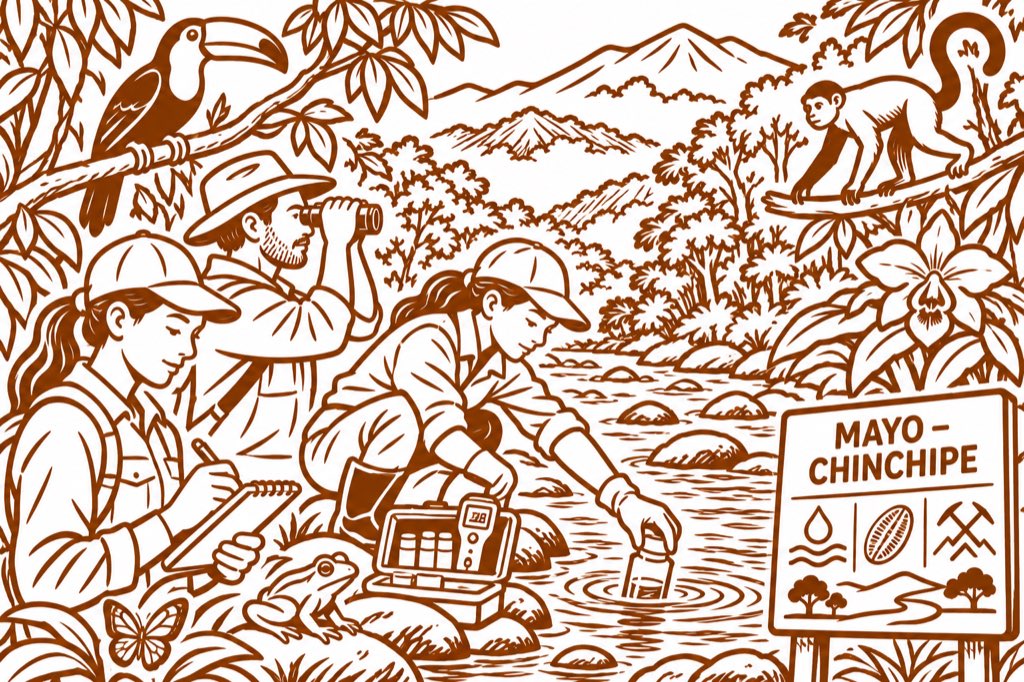
Editorial line illustration for “A River Without Borders: What Scientists Are Discovering in the Mayo–Chinchipe.”
Editorial illustration for “A River Without Borders: What Scientists Are Discovering in the Mayo–Chinchipe.”Original editorial illustration created for Ecuador Informa with OpenAI image generation.

08

A River Without Borders: What Scientists Are Discovering in the Mayo–Chinchipe

High in southern Ecuador, streams flow through mountain forests, farms and small communities before joining the Mayo–Chinchipe river system and continuing into Peru. The water supports agriculture, wildlife and households on both sides of the border. But researchers studying the watershed have identified a troubling pattern: some areas affected by mining show greater contamination and fewer varieties of aquatic organisms.

Open this article separately →

The findings come from research associated with CUIDAR, an international project involving Ecuador's Universidad Nacional de Loja and partners in Peru and Belgium. Running from 2022 to 2026, the initiative combines scientific monitoring with community participation to protect a river system shared by two countries.

What microscopic algae reveal

To understand the condition of the water, researchers have been studying diatoms, microscopic algae found in rivers and streams. Different species respond differently to environmental conditions, making them useful indicators of water quality.

Chemical tests provide information about a river at the moment a sample is collected. Diatoms offer another perspective: changes in their communities can reveal environmental pressures affecting the water over time.

A study published through CUIDAR in 2025 reported higher contamination and lower biological diversity at monitoring locations influenced by mining activities. The project also produced a report combining physical and chemical measurements with diatom analysis to assess pollution levels and the ecological condition of the upper basin.

The findings matter because mining can disturb riverbanks, release sediment and introduce contaminants into waterways. The research helps identify where environmental pressures are greatest and where further monitoring or protective measures may be needed.

The watershed faces other challenges, including deforestation, cattle farming and agricultural activity. These pressures can affect water quality, particularly when vegetation along streams is removed and soil washes into the river.

Protecting water across a border

CUIDAR's work extends beyond scientific sampling. Researchers and local organisations have been developing approaches to watershed management that involve the people who depend on the river.

Community participation is especially important in remote areas, where residents often notice changes in streams long before formal monitoring programmes can respond. The project has developed a community water-quality monitoring protocol, combining practical observation with scientific methods so local organisations can contribute to understanding their waterways.

Research has also examined the condition of water sources supplying communities in Palanda and Chinchipe. Earlier assessments identified challenges involving water-system infrastructure, environmental protection and access to reliable supplies, providing a basis for local planning.

The international dimension adds another complication. Water flowing from Ecuador into Peru connects communities with different authorities, regulations and economic interests. Effective protection requires cooperation upstream and downstream, rather than treating the border as the end of responsibility.

For families living along the Mayo–Chinchipe, these studies concern something much more immediate than scientific measurements: the future of the water they use every day.

The project's findings offer a starting point. By identifying where river health is deteriorating and involving communities in monitoring, researchers are helping turn concern about the watershed into evidence that local authorities can use to guide conservation and water-management decisions.

Sources

  1. Proyecto CUIDAR — Research library, including the 2025 participatory water-quality study and technical reports
  2. Universidad Nacional de Loja — CUIDAR water rights and watershed resilience project
  3. Universidad Nacional de Loja — International Mayo–Chinchipe watershed research
  4. Universidad Nacional de Loja — Biological water-quality monitoring in the upper basin

Español

Back to contents ↑