Weekly edition · 2026-11-29

Ecuador Informa — Sunday Magazine — November 29, 2026

Why do Ecuador’s dry rivers become torrents? This edition explores the geography behind flooding and practical ways to prepare for the coming months of El Niño. We also explore Ecuador’s retail empires, the long history of cacao, Manabí’s Manteño stone chairs and the use of gamma radiation to preserve historical books.

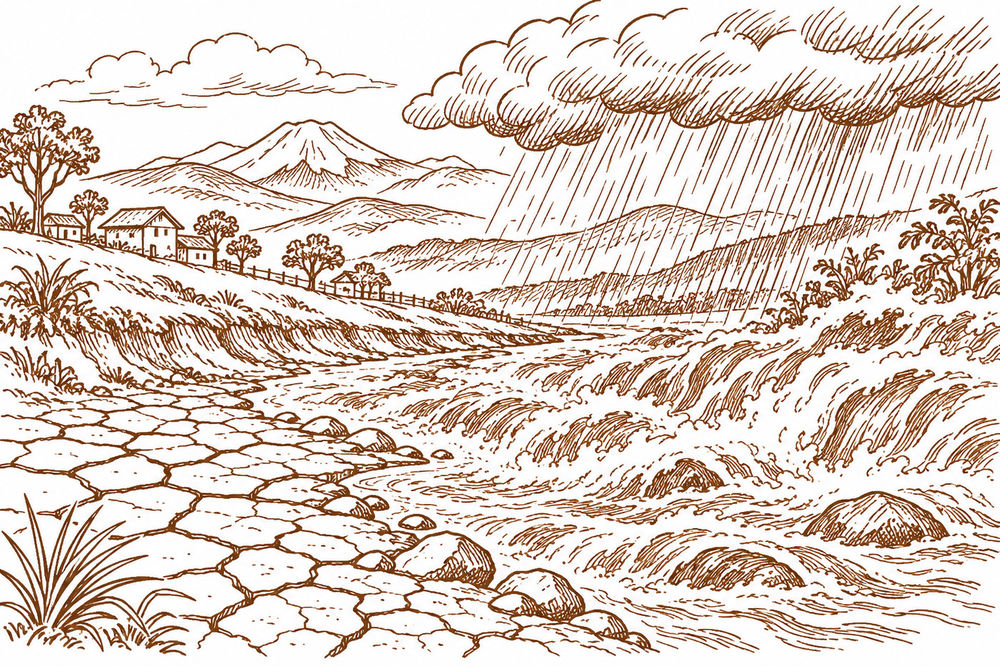
Editorial line illustration for “When Dry Rivers Roar: Why Ecuador Floods.”
Editorial illustration for “When Dry Rivers Roar: Why Ecuador Floods.”Original editorial illustration created for Ecuador Informa with OpenAI image generation.
Editorial line illustration for “When Dry Rivers Roar: Why Ecuador Floods.”
Editorial illustration for “When Dry Rivers Roar: Why Ecuador Floods.”Original editorial illustration created for Ecuador Informa with OpenAI image generation.

01

When Dry Rivers Roar: Why Ecuador Floods

In 2014, during a period of drought in Manabí, residents were using dry riverbeds as football fields and improvised roads. In the coastal community of Las Piñas, fishermen were storing their boats in the dry bed of the Camote River. As El Comercio reported at the time, waterways had virtually disappeared from parts of the landscape.

Open this article separately →

Today, under the influence of El Niño, communities across coastal Ecuador face the opposite problem. Waterways that carried little or no water for months can become powerful torrents, carrying mud, rocks and debris through agricultural land and populated areas.

Managing these two extremes is one of Ecuador's greatest geographical and engineering challenges. The country must conserve water during prolonged dry periods while protecting its communities from an overwhelming abundance of it during exceptionally wet ones.

One country, three different climates

Ecuador's relatively small territory contains remarkably different rainfall patterns. The Pacific Ocean, the Andes and the Amazon rainforest each influence how water moves through the country.

Along much of the central and southern coast, the contrast between seasons is particularly pronounced. A 2025 scientific study in Portoviejo documented average monthly rainfall of 161 millimetres during the rainy season, compared with just 13 millimetres during the dry months. Northern coastal areas, particularly Esmeraldas, generally receive considerably more rainfall.

The current El Niño is demonstrating the scale of these extremes. During the early hours of November 24, Manta received 52 millimetres of rain, causing rivers to overflow into residential neighbourhoods. Compared with the city's historical annual rainfall average of approximately 300 millimetres, that represents around one-sixth of a typical year's rainfall in a matter of hours.

The Sierra experiences a more complicated rainfall pattern. Many inter-Andean valleys have two rainfall peaks each year, while neighbouring mountain slopes can receive very different amounts of precipitation. Moist air rising over the mountains cools and produces rain, leaving some sheltered valleys comparatively dry.

East of the Andes, the Oriente presents almost the opposite situation to central Manabí. Moisture arriving from the Atlantic and recycled through the Amazon rainforest sustains rainfall throughout much of the year. Its rivers are generally permanent, and communities face recurring river flooding and riverbank erosion.

Research into extreme El Niño events in Ecuador shows that the phenomenon does not affect all three regions equally. Parts of the Amazon can experience below-average rainfall while coastal Ecuador struggles with floods.

Santa Cruz Island in the Galápagos offers another dramatic example. Between October 30 and 31, 229 millimetres of rain fell in 24 hours. A second storm on November 20–21 delivered more than 250 millimetres. Infrastructure Minister Roberto Luque cited a typical annual rainfall of between 800 and 1,000 millimetres. Although rainfall varies considerably across the island, the two storms together delivered the equivalent of roughly half that annual amount in just two separate days.

When the mountains move

Travelling through the Ecuadorian Andes, particularly along roads connecting the Sierra with the coast or Amazon, reveals another dimension of the country's vulnerability.

Roadside cuttings frequently expose layers of volcanic ash, weathered rock, clay and accumulated soil. Some of these materials can lose considerable strength when saturated.

Much of the Canadian Rockies, for example, consists of sedimentary formations such as limestone and quartzite, while significant areas of the Ecuadorian Andes contain relatively young volcanic deposits. Both mountain ranges experience landslides, but Ecuador's combination of steep slopes, weathered geological materials and intense tropical rainfall creates particularly challenging conditions.

Research in the Tandayapa Valley, in the northern Ecuadorian Andes, identified accumulations of volcanic material on steep mountain slopes as a contributor to shallow landslides.

As rainwater penetrates a hillside, water pressure can build within the ground, reducing the friction that helps hold soil and rock in place. This mechanism was documented in the 2023 El Florón landslide in Portoviejo, where intense rainfall destabilized accumulated hillside material.

Road construction can compound the problem by cutting into slopes and altering natural drainage. A single landslide can sever a major highway connecting Ecuador's regions, disrupting deliveries of food, fuel and other essential supplies.

Rivers that carry mountains

After months of dry weather, bare ground does not necessarily absorb rainfall efficiently. Intense rain striking exposed soil can break apart its surface structure, creating a thin crust that restricts water penetration.

The United Nations Food and Agriculture Organization identifies this process as a cause of rapid surface runoff in dry and semi-arid regions. Under these conditions, more water flows across the surface, carrying loose soil into streams and rivers.

As rivers reach flatter coastal areas, their currents slow and sediment accumulates. A 2025 study of the Manta River basin identifies erosion upstream and sediment accumulation downstream as contributors to flooding.

These deposits can reduce the capacity of river channels. Excessive vegetation, accumulated rubbish and inadequately sized culverts can further restrict drainage.

This helps explain why dredging is such a recurring activity in coastal Ecuador. Removing accumulated sediment can restore channel capacity, but unless erosion upstream is reduced, new material will arrive with subsequent rains.

For communities downstream, flooding can occur even when there has been relatively little local rainfall. Water falling in distant hills converges through tributaries before reaching coastal settlements.

When the ocean closes the exit

For coastal Ecuador, the ocean presents an additional complication.

Rivers depend partly on the difference in elevation between their water levels and the sea to discharge their contents. During exceptionally high tides, that difference becomes smaller, slowing the movement of water towards the ocean.

El Niño can compound the problem by raising coastal sea levels. Ecuador's November 19 ERFEN assessment reported satellite measurements showing sea-level anomalies of approximately 50 centimetres off mainland Ecuador.

When heavy rainfall coincides with exceptionally high astronomical tides, known locally as aguajes, water can accumulate in river channels, estuaries and low-lying agricultural areas.

Communities around the mouth of the Portoviejo River, the Guayas estuary and other coastal river systems can consequently face pressure from two directions: freshwater arriving from inland and elevated seawater restricting its escape.

Even well-maintained drainage channels can struggle under these conditions.

Engineering for two extremes

Ecuador's infrastructure must accommodate enormous variations in the availability of water.

The Poza Honda reservoir in Manabí stores water for communities and agriculture during dry periods while regulating flows into the Portoviejo River. As regional reporting on Manabí's water management illustrates, retaining sufficient reserves while maintaining capacity to receive exceptional rainfall requires careful management.

In Chone, the Río Grande reservoir was constructed partly to reduce flooding. However, the city also receives water from the Garrapata and Mosquito rivers. Research into flood risks in the Chone basin identifies all three tributaries as sources of flooding. Controlling one river does not eliminate the danger posed by the others.

Similar challenges confront road and bridge engineers. A channel that remains almost dry for six months must still be capable of carrying enormous volumes of water during an exceptional rainy season.

For municipalities with limited budgets, building infrastructure capable of handling extreme events competes with the everyday need for drinking water, sanitation, roads and other public services. Growing communities also place increasing demands on drainage systems originally designed for smaller populations.

Maintaining drainage channels, protecting natural floodplains and reducing erosion upstream can complement expensive engineering projects. Manabí's 2026 Provincial Reforestation Plan, for example, identifies the upper Garrapata and Mosquito watersheds as priorities for reducing the sediment entering the Chone River.

Living between drought and flood

Ecuador's vulnerability to flooding cannot be attributed to rainfall alone. Seasonal extremes, mountain geology, sediment accumulation, coastal tides, settlement patterns and infrastructure all influence where water goes and how much damage it causes.

The football fields and improvised roads that appeared in Manabí's dry riverbeds in 2014 illustrate how easily the landscape's appearance can change our perception of risk.

A riverbed may be dry for months, but it remains a riverbed. Understanding Ecuador's relationship with water means recognizing that the same landscape must accommodate both drought and flood, sometimes within a single year.
Back to contents ↑
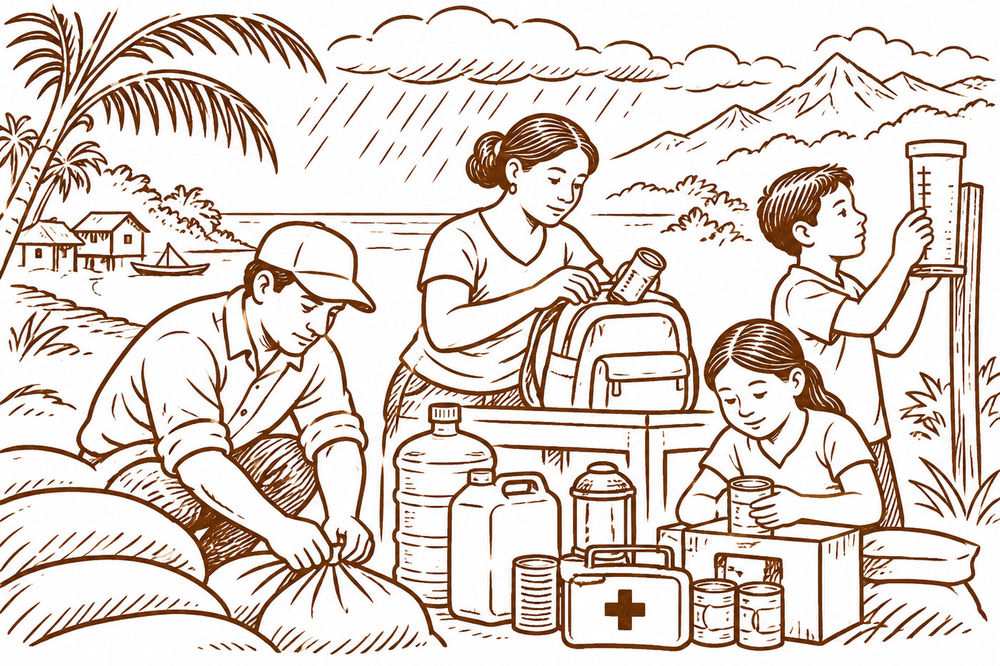
Editorial line illustration for “Living Through El Niño: Preparing for the Long Haul.”
Editorial illustration for “Living Through El Niño: Preparing for the Long Haul.”Original editorial illustration created for Ecuador Informa with OpenAI image generation.

02

Living Through El Niño: Preparing for the Long Haul

El Niño is here. Rivers are overflowing, roads are being damaged and communities across Ecuador are experiencing flooding. Along the coast, unusually high sea levels and exceptionally high tides are adding to the difficulties.

Open this article separately →

Ecuador's November 19 ERFEN assessment identifies further periods of high tides, known locally as aguajes, from December 8–11 and particularly December 23–26. When heavy rainfall coincides with high tides, coastal rivers and drainage systems may struggle to discharge water into the ocean.

With potentially several more months of difficult conditions ahead, managing everyday life requires preparation and some changes to our daily routines.

Make preparedness a daily habit

  • Keep your phone and power banks charged. Recharge them whenever electricity is available.
  • Replenish medications before running low. Road closures and flooding may interrupt deliveries to local pharmacies.
  • Maintain at least three days' supply of drinking water and non-perishable food. Use and replenish these supplies regularly.
  • Keep some cash available. Power and communications outages can disable ATMs and electronic payments.
  • Download offline maps. Know alternative routes to hospitals, pharmacies and essential shops.
  • Keep your vehicle fuelled and flashlights and spare batteries accessible.
  • Have an emergency backpack ready, including medication, copies of important documents, water, clothing and basic first-aid supplies.

Know when not to travel

Never walk, cycle or drive through floodwater, even on familiar roads. Beneath seemingly calm water could be an open manhole, a washed-out road or a strong current.

Check road conditions before travelling. Rainfall inland can cause rivers to overflow downstream even when the weather appears relatively calm where you live.

Coastal residents should also check INOCAR's tide tables and marine warnings. Avoid beaches, exposed seawalls and river mouths during dangerous sea conditions.

When the bugs arrive

Warm, humid conditions and standing water create favourable breeding conditions for mosquitoes. Ecuador's Ministry of Public Health identifies dengue and leptospirosis among the health risks associated with the rainy season.

  • Use mosquito repellent containing DEET or picaridin, following the product instructions.
  • Remember that mosquitoes transmitting dengue also bite during daylight hours.
  • Repair window and door screens and use mosquito nets where needed.
  • Empty and scrub flowerpot saucers, buckets and other water-holding containers at least weekly.
  • Keep water storage tanks tightly covered.
  • Store food and household rubbish in sealed containers to discourage flies, cockroaches and rodents.
  • Avoid contact with floodwater that may contain sewage or urine from infected animals.

Seek medical attention if you develop fever, severe headaches, unusual muscle pain or persistent digestive problems. If dengue is suspected, avoid aspirin and ibuprofen until you have received medical advice.

Living with humidity

Weeks of damp weather can create problems even in homes that escape flooding.

Open windows when outdoor conditions are relatively dry, allow air to circulate behind furniture and inspect cupboards for mould. Avoid leaving wet clothing, towels and footwear piled together.

Keep medicines, electronics, important documents and clothing in dry locations. Inspect walls and ceilings regularly for leaks or spreading dampness.

Clear gutters and drainage channels whenever conditions allow you to do so safely.

Managing interruptions to essential services

During power cuts, keep refrigerator and freezer doors closed. An unopened refrigerator generally keeps food safe for up to four hours without electricity. After that, discard perishable foods unless they have been maintained at a safe temperature. Consult these food safety guidelines if you are uncertain.

Make advance arrangements for refrigerated medications and electrically powered medical equipment.

Operate generators outdoors, at least six metres from doors, windows and ventilation openings. Never use charcoal barbecues inside buildings.

Stay away from fallen electrical cables. If your home is flooding, switch off the electricity only if you can reach the electrical panel safely without entering water.

If the safety of your water supply becomes uncertain, use bottled or properly treated water for drinking, preparing food and brushing your teeth.

Look after each other

Establish regular contact with neighbours, particularly older residents, people living alone and those with limited mobility.

Know where you can go if your home becomes unsafe, and include pets in your evacuation plans. Leave before rising water cuts off your escape route.

Keep these resources handy

| Resource | Information | |---|---| | Alertas Ecuador | Road conditions, river levels and emergency guidance | | INAMHI | Weather forecasts and El Niño monitoring | | INOCAR | Tides and coastal warnings | | Ecuador Informa — Power | Electricity information | | ECU 911 | Emergency assistance |

El Niño is not a single storm that will pass in a few days. Maintaining supplies, protecting your health, monitoring local conditions and helping your neighbours are habits worth developing throughout the coming months.

Stay informed, stay prepared and avoid taking unnecessary chances.

Back to contents ↑
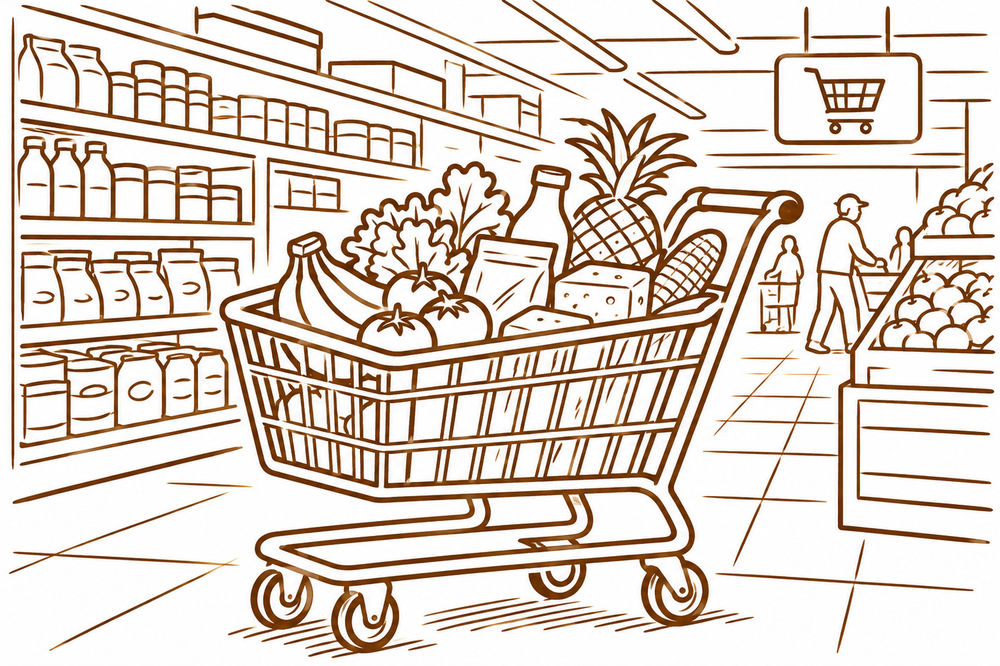
Editorial line illustration for “Who Owns Your Shopping Basket?.”
Editorial illustration for “Who Owns Your Shopping Basket?.”Original editorial illustration created for Ecuador Informa with OpenAI image generation.

03

Who Owns Your Shopping Basket?

The retail empires changing the way Ecuador shopsBuy your groceries at Supermaxi, pick up some tools at Kywi, purchase a book at Mr. Books and visit Juguetón for a child's birthday present. You may have visited four very different stores, but your money has gone to businesses belonging to the same corporate group.

Open this article separately →

Across town, someone shopping at Mi Comisariato, buying paint at Ferrisariato and watching a film at Supercines is supporting another of Ecuador's largest business groups.

Behind the familiar names on Ecuador's shopping streets lies a surprisingly interconnected retail industry. The rapid expansion of discount supermarkets such as TuTi is changing the way these businesses compete for your money.

From Quito, Guayaquil and Cuenca

Two of Ecuador's largest retail empires began as modest family businesses.

Corporación Favorita traces its origins to a shop established by the Wright family in Quito in 1952. Today, its portfolio of businesses includes Supermaxi, Megamaxi, Akí, Kywi, Sukasa, Todohogar, Juguetón and Mr. Books, with operations extending into other Latin American countries.

Although it began as a family business, Favorita now trades its shares on Ecuador's stock exchanges and has nearly 20,000 shareholders, including employees, former employees and retirees.

Its major competitor, Grupo El Rosado, grew from a pastry shop established in Guayaquil in 1936 by the Czarninski family. Its businesses include Mi Comisariato, Hipermarket, Ferrisariato, Rio Store, Mi Juguetería, Supercines and the Riocentro and El Paseo shopping centres. TuTi operates as a separate company within the same economic group.

Cuenca has produced its own retail empire. Grupo Gerardo Ortiz, the business behind Coral Hipermercados, combines groceries, clothing, electronics, hardware and household products under one roof. Its activities extend into manufacturing, importing and wholesale distribution.

Another major competitor, Almacenes TÍA, has established stores throughout Ecuador, including smaller communities where large hypermarkets are less common.

The billion-dollar discount store

Walk into a TuTi and the differences from a traditional supermarket are immediately apparent. There are fewer competing brands, products are frequently displayed in their shipping cartons, and the selection concentrates on everyday essentials.

This approach, known internationally as hard discount, reduces operating costs and allows retailers to negotiate large orders for a relatively small range of products.

In 2025, TuTi surpassed one billion dollars in annual sales. By October 2026, it had approximately 960 stores. Its 2025 profit was around $6.6 million, illustrating how a discount retailer can build a substantial business by selling enormous quantities at relatively small profit margins.

Corporación Favorita is responding with B-Sí, its own discount supermarket format, while TÍA is developing smaller stores under the TÍA Go brand. Coral has also begun exploring smaller retail formats.

The competition between Ecuador's retail giants is moving from shopping centres into individual neighbourhoods.

Different label, same factory?

One of the most noticeable features of this retail transformation is the appearance of unfamiliar brands.

Laiteri dairy products, Muky breakfast cereals and Ártico ice cream occupy shelf space at TuTi. B-Sí offers products under names such as La Original and Smart Selection, while TÍA has developed brands including Aliada and Ta'Riko.

According to market research reported by Primicias in October 2026, the number of private-label brands in Ecuador increased from 55 in 2019 to 121 in 2026, with potential savings of 20% to 40% compared with leading brands.

But who actually manufactures these products?

Retailers do not necessarily own the factories producing their private brands. Ecuadorian manufacturer Dulcenac, for example, produces Muky breakfast cereals for TuTi.

An established food manufacturer can sell products under its own brand while also producing goods for a supermarket. The arrangement provides access to large orders without the expense of developing separate advertising campaigns and distribution networks.

For retailers, private brands provide greater control over pricing, packaging and product selection, as well as products that distinguish their stores from competitors.

As research published by the Pontifical Catholic University of Ecuador explains, this business model is changing the relationship between retailers, manufacturers and consumers.

The next time you encounter an unfamiliar brand, turn the package over and examine the manufacturer's name. You may discover that the product comes from an established Ecuadorian factory. Although products from the same factory may have different ingredients and specifications, an unfamiliar label does not necessarily mean an unfamiliar manufacturer.

What happens to the neighbourhood shop?

In May 2025, Primicias interviewed traditional shopkeepers in Guayaquil facing growing competition from discount supermarkets.

One shopkeeper was waiting behind the security bars of her store for her first customer of the day. Her daily profit target was $20.

Unlike a national supermarket chain, a neighbourhood shopkeeper cannot negotiate enormous purchasing contracts or distribute operating costs across hundreds of outlets.

But these shops offer something different. They sell individual eggs, small quantities of rice and other products suited to households managing their expenses day by day. Some extend informal credit to regular customers, while others benefit from personal relationships developed over many years.

Convenience, familiarity and the ability to buy small quantities can be just as important as the price printed on a supermarket shelf.

The battle for Ecuador's shopping basket

The expansion of discount supermarkets is changing more than the price of groceries. It is influencing what Ecuadorian factories manufacture, which brands appear on supermarket shelves and how neighbourhood shops compete for customers.

The independent shopkeeper, the food manufacturer and the country's largest retail corporations are all competing for a share of the household budget, but with very different resources and bargaining power.

For decades, manufacturers competed to persuade consumers to choose their brands. Increasingly, Ecuador's largest retailers are deciding which brands consumers get to choose from.

The battle for Ecuador's shopping basket is being fought not only in supermarket aisles, but inside local factories and on neighbourhood streets throughout the country.

Back to contents ↑
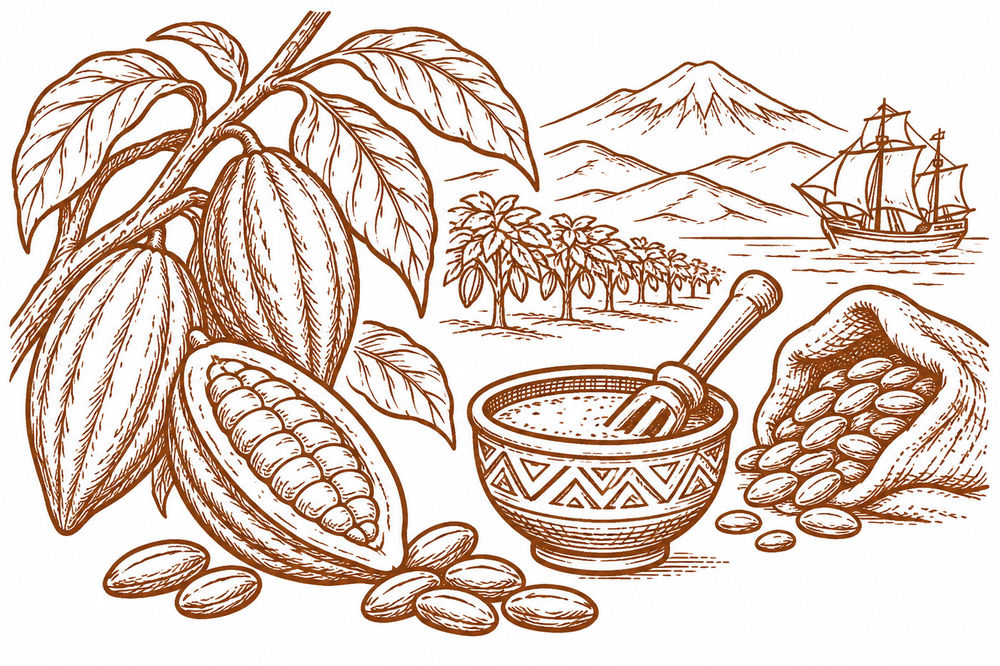
Editorial line illustration for “From the Food of the Gods to the Golden Seed.”
Editorial illustration for “From the Food of the Gods to the Golden Seed.”Original editorial illustration created for Ecuador Informa with OpenAI image generation.

04

From the Food of the Gods to the Golden Seed

Ecuador's 5,300-year journey with cacaoBreak open a ripe cacao pod and the contents bear little resemblance to chocolate. Inside the thick, colourful shell, rows of seeds are surrounded by soft, white pulp with a sweet, slightly acidic flavour. For the ancient inhabitants of Ecuador's tropical forests, the fruit offered possibilities beyond the bitter seeds from which chocolate is made today.

Open this article separately →

Over thousands of years, cacao would become a ceremonial drink, a form of currency, a European luxury and an industrial food. It would build fortunes, transform cities and help shape the economy of an independent Ecuador. Its earliest documented chapter begins in a forested valley in the south of the country.

Before there was chocolate

Near Palanda, in Zamora Chinchipe province, the Andean mountains descend towards the Amazon basin. In 2002, a Franco-Ecuadorian archaeological team led by Francisco Valdez discovered the remains of Santa Ana–La Florida, a settlement belonging to the ancient Mayo-Chinchipe civilization.

Among its ceremonial structures and burial sites were finely crafted ceramic bottles and bowls. Although their contents had disappeared thousands of years earlier, microscopic traces remained within the pottery.

In October 2018, an international team published its findings in Nature Ecology & Evolution. Cacao starch grains, traces of a naturally occurring chemical called theobromine and fragments of ancient DNA provided three independent lines of evidence that cacao was being used approximately 5,300 years ago.

The discovery placed the upper Amazon at the centre of cacao's early domestication history, challenging the long-held association of its origins with Mexico and Central America.

Exactly how the inhabitants of Palanda consumed cacao remains uncertain. The sweet pulp could be eaten fresh or fermented into an alcoholic beverage. A 2007 archaeological study in Honduras suggested that fermented drinks made from cacao pulp may have preceded beverages prepared from ground seeds.

Chocolate may have emerged from a much older tradition of making drinks from tropical fruit.

A commodity before Columbus

Long before Europeans crossed the Atlantic, cacao was travelling across the Americas. Seeds exchanged between communities were planted in new environments, where generations of cultivation produced varieties with different characteristics.

A 2024 study of residues from 352 archaeological objects, associated with 19 ancient cultures, revealed extensive movement and mixing of cacao populations across South and Central America.

Cacao also reached the Ecuadorian highlands. Research published in 2025 identified cacao starch grains in a pre-Hispanic ceramic vessel from Chillogallo, in present-day Quito. Communities living far above the tropical forests had access to cacao and may have consumed it as a beverage.

In Mesoamerica, cacao developed into a sophisticated culinary tradition. Fermented and roasted beans were ground and mixed with water, sometimes flavoured with maize, chilli or vanilla. Pouring the liquid between vessels produced a prized layer of froth.

Among the Maya and Aztecs, cacao was associated with hospitality, marriage, religious ceremonies and political authority. Its beans also served as currency.

Columbus and the mysterious beans

During his fourth voyage to the Americas in 1502, Christopher Columbus encountered a large Indigenous trading canoe near Guanaja, off the coast of present-day Honduras.

His son Ferdinand recorded a curious incident. Among the canoe's cargo were objects resembling almonds. When some fell to the floor, the traders hurried to recover them, treating each one as something precious.

They were cacao beans.

The Europeans had encountered a commodity with an established commercial value and a culinary history stretching back thousands of years, yet they barely understood its significance.

From a bitter drink to a European luxury

During the 16th century, chocolate gradually entered Spanish society. European consumers adapted Indigenous recipes, adding sugar, cinnamon and other ingredients. By the 17th and 18th centuries, drinking chocolate had become fashionable among wealthy Europeans, with specially designed pots and cups appearing in aristocratic households.

Growing demand encouraged the expansion of cacao and sugar plantations across the Americas, many dependent on enslaved labour.

For centuries, however, chocolate remained primarily a beverage. Industrialization changed that. In 1828, the Van Houten cocoa press made it possible to separate cocoa butter from ground cacao. In 1847, England's Fry & Sons introduced a commercially produced solid chocolate. Milk chocolate followed in the 1870s, and new processing techniques created smoother textures.

These innovations in chocolate manufacturing transformed an expensive luxury into an increasingly affordable food, opening an enormous international market for cacao.

The rivers that carried Ecuador's wealth

The origins of Ecuador's celebrated Nacional cacao can be traced to the southern Amazon. A genetic study published in 2012 identified wild populations in this region as ancestors of the aromatic variety that would establish Ecuador's international reputation.

During the colonial period, cultivation expanded along the Guayas River and its tributaries. These waterways carried sacks of dried beans from inland plantations to the port of Guayaquil. The designation Arriba, still associated with Ecuador's fine-flavour cacao, reflected its origins upriver.

Guayaquil's merchants supplied not only Europe but also Mexico, where chocolate consumption remained rooted in local culture. By the late 18th century, shipments of Ecuadorian cacao through Acapulco were helping meet Mexican demand and keep cacao prices affordable.

Thousands of years after cacao had spread northwards through the Americas, the same regions were once again connected through trade.

By the late 19th century, Ecuador had become the world's leading cacao exporter. Wealthy plantation-owning families, known as the Gran Cacao, invested their fortunes in banking, commerce and property, helping transform Guayaquil into a major trading city.

The prosperity extended inland. In Los Ríos province, towns such as Vinces acquired elegant buildings influenced by European architecture, while cacao revenues supported the development of public services, including telegraph networks, libraries, markets and docks.

Behind these fortunes were generations of rural workers who planted the trees, harvested the pods, fermented the beans and dried them under the tropical sun. As Ecuador's Central Bank Museum documents, the prosperity of the cacao industry was accompanied by concentrated land ownership.

Cacao had become Ecuador's pepa de oro — the golden seed.

When the golden age ended

During the early decades of the 20th century, two fungal diseases devastated Ecuador's plantations. Moniliasis, or frosty pod rot, attacked the fruit, while witches' broom damaged growing shoots and flowers.

Disruptions to international trade, falling prices and growing competition from African cacao producers compounded the crisis.

The consequences extended far beyond the plantations. A scientific review of cacao diseases in the Americas connects the collapse of Ecuador's cacao industry with the economic crisis and social unrest that culminated in Guayaquil's tragic events of November 1922.

An agricultural disease had helped undermine an entire national economy.

Cacao cultivation survived, but the era of the Gran Cacao was coming to an end.

Rediscovering an ancient heritage

More than two decades after the archaeological discovery at Palanda, Ecuadorian scientists continue to uncover new chapters in cacao's history.

On November 26, the National Institute of Cultural Heritage and Quito's Casa del Alabado Museum opened Tiempo de Cacao, an exhibition bringing together archaeological vessels, historical photographs and recent laboratory discoveries. It runs until January 28, 2027.

Ecuador has also placed its Cacao Cultural Landscape on UNESCO's World Heritage Tentative List, recognizing the landscapes, communities and traditions associated with centuries of cultivation.

From the ancient ceramic vessels of Palanda to the plantations of Los Ríos, cacao has shaped Ecuador's history in ways that extend far beyond agriculture.

The next time you break a piece of Ecuadorian chocolate, remember that its story began long before European chocolate makers, colonial merchants or even Columbus. More than 5,000 years ago, people living in the forested valleys of southern Ecuador had already discovered the possibilities hidden inside that colourful tropical fruit.

Back to contents ↑
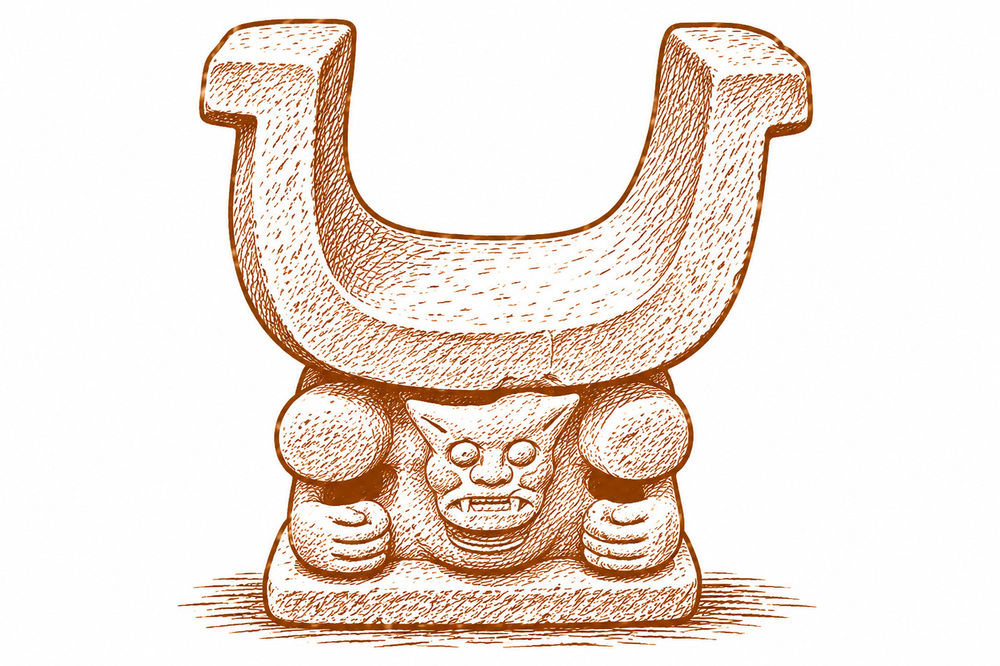
Editorial line illustration for “A Seat of Power: The Story Behind Manabí's Manteño Chair.”
Editorial illustration for “A Seat of Power: The Story Behind Manabí's Manteño Chair.”Original editorial illustration created for Ecuador Informa with OpenAI image generation.

05

A Seat of Power: The Story Behind Manabí's Manteño Chair

The distinctive U-shaped stone chair is one of Manabí's most recognizable cultural symbols. Its curved seat, supported by a carved human or animal figure, appears in museums and public spaces throughout Manta. Centuries before it became a symbol of regional identity, however, the chair occupied a very different place in the lives of the people who inhabited Ecuador's central coast.

Open this article separately →

From approximately 800 AD until the arrival of Europeans in the 16th century, the Manteño people built settlements in the coastal hills, cultivated the surrounding land and established maritime trading networks along the Pacific. Their stone chairs offer a glimpse into how these communities were governed.

More than a place to sit

Carved from single blocks of stone, the chairs vary considerably in design. Some rest on crouching human figures, others on animals resembling jaguars. The choice of figures and the care taken in carving them suggest that their purpose extended beyond providing somewhere to sit.

Archaeologists have discovered chairs arranged in circles and along the sides of ancient buildings. Rather than a single ruler seated above everyone else, these arrangements suggest gatherings of people who shared positions of authority.

In an essay published by the Metropolitan Museum of Art, Ecuadorian archaeologist Florencio Delgado Espinoza examines the relationship between these objects and political power. The seats may have been occupied by community leaders during gatherings where decisions were made, disputes resolved and religious ceremonies performed.

Lords of land and sea

In the hills between Manta, Montecristi and Portoviejo lies the archaeological complex of Cerros Hojas-Jaboncillo. Stone foundations, agricultural terraces and ceremonial platforms reveal the remains of extensive settlements where the Manteño people organized community life and cultivated the surrounding slopes.

Their world extended far beyond these hills. Using large sailing rafts, coastal traders transported goods along the Pacific. Among the most prized was the Spondylus shell, whose brilliant red and orange colours held religious and ceremonial significance for societies across the ancient Americas.

These maritime connections brought coastal Ecuador into contact with distant communities. Farmers, fishermen, merchants and specialized artisans formed part of a society whose wealth depended on both the land and the sea.

The stone chairs, found within its ceremonial and political spaces, provide a tangible connection to the people who exercised authority in this society.

Rediscovering the Manteño

In 1906, American archaeologist Marshall H. Saville began investigating archaeological sites in Manabí. His discoveries attracted international attention, and stone chairs recovered during early expeditions eventually found their way into museum collections overseas.

More than a century later, residents of Manta are helping those museums interpret the objects. During 2024 and 2025, representatives of Manta's Civic Committee for Historical Memory visited the American Museum of Natural History in New York, bringing local knowledge and cultural perspectives to the interpretation of a Manteño chair in the museum's collection.

Back in Manabí, modern technology is revealing structures that earlier archaeologists could not see. Researchers from Ecuador's National Institute of Cultural Heritage have used LiDAR laser scanning to identify archaeological features concealed beneath vegetation. Subsequent fieldwork led to the recovery of fragments of another stone chair from a pre-Hispanic platform.

A heritage that lives on

At Ligüiqui, south of Manta, stone fishing enclosures become visible as the tide recedes. Local fishermen continue to use these structures to trap fish, drawing on generations of knowledge about the ocean and its rhythms.

In 2026, Ecuador added Manteño Culture: Lordships of Land and Sea to its UNESCO World Heritage Tentative List. The proposal brings together archaeological settlements, traditional fishing practices and craftsmanship, connecting the achievements of an ancient coastal civilization with the cultural heritage of present-day communities.

The next time you encounter a Manteño stone chair in Manabí, look closely at the figure supporting its curved seat. Centuries ago, an artisan carved that figure for someone who occupied a position of importance within their community. Today, the chair itself occupies a place of honour in the region's cultural identity.

Back to contents ↑
Editorial line illustration for “From Ancient Books to Gamma Rays.”
Editorial illustration for “From Ancient Books to Gamma Rays.”Original editorial illustration created for Ecuador Informa with OpenAI image generation.

06

From Ancient Books to Gamma Rays

A book printed in Europe in 1538, just four years after the Spanish foundation of Quito, has become part of a modern scientific investigation in Ecuador. Fragments of its pages, alongside those of centuries-old religious and legal texts and a Guayaquil newspaper from 1916, have been exposed to gamma radiation as researchers explore new ways to preserve Ecuador's documentary heritage.

Open this article separately →

During 2026, approximately 400 volumes from the Eugenio Espejo National Library underwent irradiation through a partnership between Ecuador's National Institute of Cultural Heritage (INPC) and the Escuela Politécnica Nacional (EPN). This week, heritage specialists presented Ecuador's experience in Mexico as part of a regional cooperation programme supported by the International Atomic Energy Agency (IAEA).

The enemies of old books

Ecuador's National Library traces its origins to the collections left behind following the expulsion of the Jesuits in 1767. In 1792, Eugenio Espejo, the physician, writer and intellectual whose name now appears on schools, hospitals and streets throughout Ecuador, became the director of Quito's first public library.

Preserving historical collections is a constant battle against humidity, fungi and insects. Certain fungi break down the cellulose in paper, weakening its fibres, while insects can tunnel through entire volumes. Ecuador's historic books and manuscripts are particularly difficult to treat because their paper, inks and bindings were produced using materials and techniques that have changed considerably over the centuries.

Gamma radiation offers conservators another tool. It penetrates materials and damages the genetic material of microorganisms, preventing them from reproducing. Unlike surface treatments, irradiation can reach contamination deep within a book. The process does not make the treated objects radioactive.

Putting centuries-old paper to the test

In a scientific study published in January 2026, Ecuadorian researchers examined fragments that had naturally detached from five historical documents held in Quito. Among them were a 16th-century legal text, a work of ecclesiastical history published in 1599 and a copy of El Guante, a newspaper that once circulated in Guayaquil.

The researchers tested different radiation doses to determine whether treatment altered the historical paper. They found no statistically significant changes in its colour, acidity or the chemical properties examined. The findings provide a foundation for further research into the long-term effects of irradiation and its effectiveness against biological contamination.

From strawberries to an ancient mummy

Ecuador's experience with nuclear technology extends well beyond its libraries. The irradiation centre at the Escuela Politécnica Nacional began operating in the 1980s. After suspending irradiation activities in 2014, it resumed operations in 2023 with international technical support.

Its applications have ranged from sterilizing medical materials to investigating ways of extending the shelf life of strawberries. One of its more unusual subjects was the Mummy of Guano, discovered in Chimborazo, which underwent irradiation to combat biological deterioration.

The experience gained through these projects is helping Ecuador develop technical procedures for treating historical collections, with assistance from international specialists.

Nearly five centuries after the oldest of those books came off European printing presses, Ecuadorian scientists are using a technology their original printers could never have imagined to help preserve them for future generations.

Back to contents ↑